Copying instead of checking. The mistake I would warn every beginner about is taking a printed date, an accepted hint or a family story as proof without reading the page it came from. Every other mistake on this list is a version of that one.
A thread on r/Genealogy asked its members exactly this question, and the same handful of habits tend to come up wherever it is asked. None of them are stupid. They are the natural way to start, which is why almost everyone starts that way. Here is each one, what it costs, and what I do instead.
Why is copying someone else's tree the mistake that costs the most?
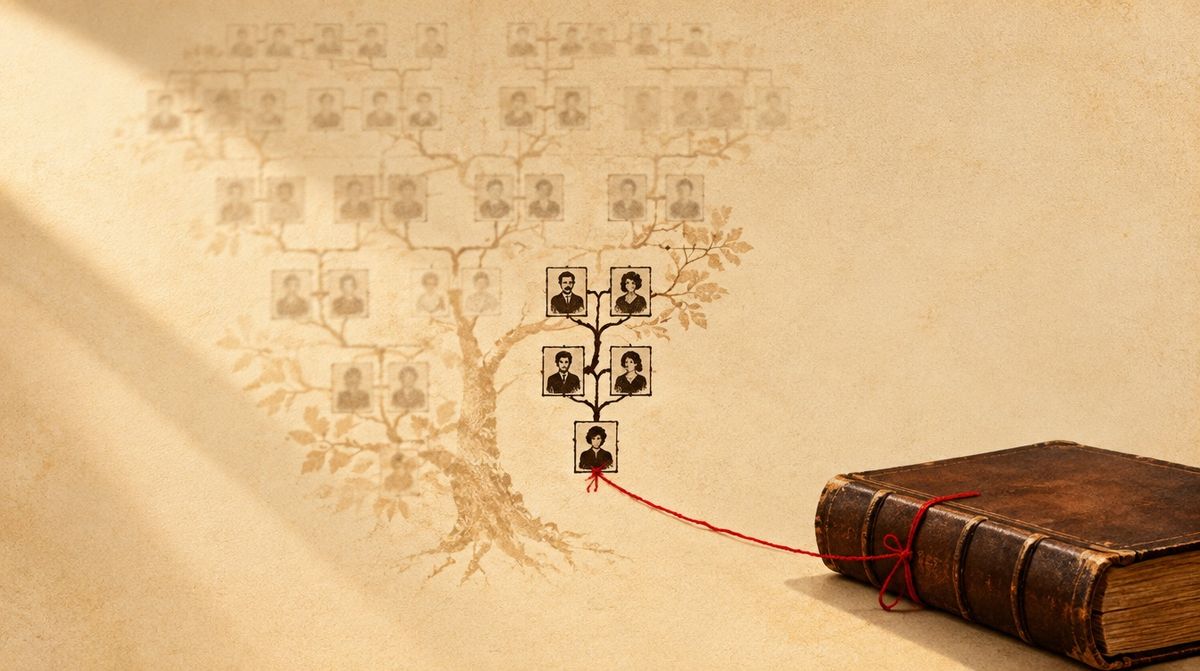
Because a tree is a claim, not a record. When you accept a hint (the match Ancestry suggests) or merge someone's tree into yours, you inherit every assumption the other person made, and you cannot see which ones they checked. A 2015 post on Genea-Musings put it simply: do not believe everything you read in online family trees. The Ancestor Hunt's checklist for judging an online tree says to treat trees as clues, not facts, and lists the warning signs: no sources, suspiciously exact dates with nothing behind them, and famous ancestors with no proof. A thread on r/Genealogy puts the same warning to new genealogists as a PSA.
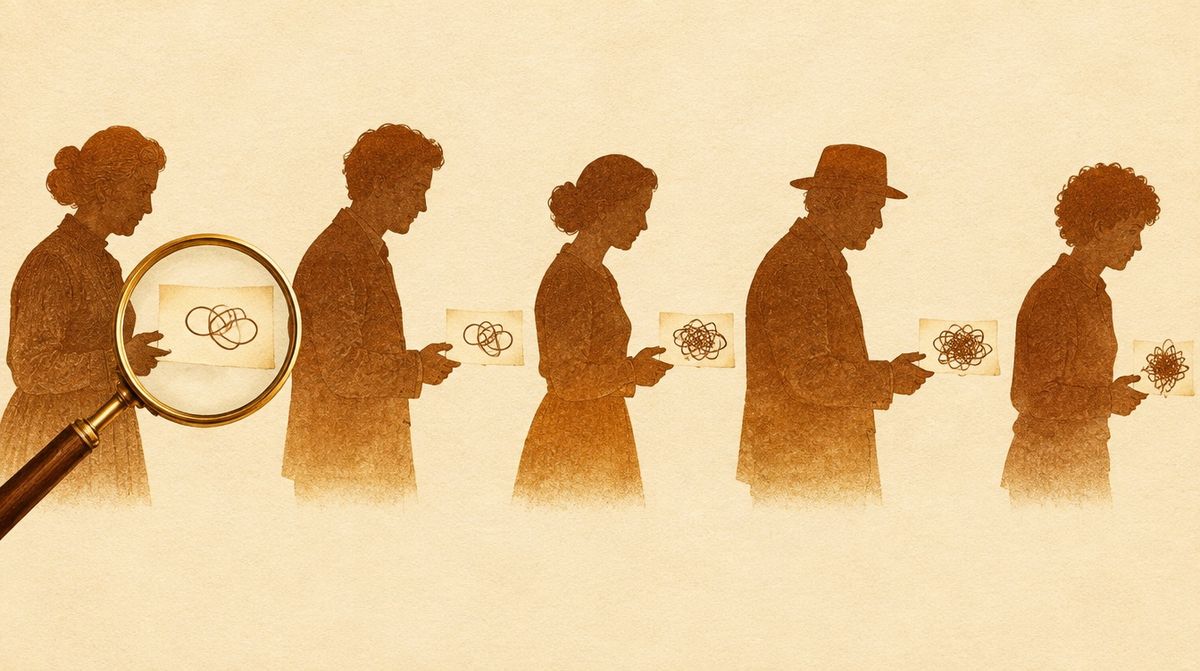
The cost is not the one wrong fact. It is everything you build on it. One wrong father means a wrong grandfather, a wrong birthplace, a wrong parish, and months spent in the wrong records. And because online trees copy from each other, the wrong fact will be waiting for you in fifty trees by the time you doubt it, each one looking like confirmation.
My rule is the one the whole business runs on: nothing goes in the tree until the record image sits under it. A hint is a lead. A tree is a lead. The record is the evidence. If you want the full argument, I wrote it up in can you trust other people's family trees and Ancestry hints?
What happens when everyone copies the same wrong date?
This is the worked example, and it is public. Padre José Nicolás Ballí is the priest Padre Island is named for. Every history of him, from the Handbook of Texas to the National Park Service, prints his death date as April 16, 1829. When I opened File 001, that was the only death date on offer, and no published account had cited the burial register behind it.
What every history printed
April 16, 1829, repeated for about a century and a half: in the Handbook of Texas, in the park's materials and, as far as I can find, in every history that mentions him. It had the look of a settled fact: many sources, all agreeing.
What the register said
The parish register of Nuestra Señora del Refugio in Matamoros is digitized on FamilySearch, but the Padre's entry is not indexed, so no name search finds it, and I read the book page by page. His burial entry is there, dated April 16, 1829, with the parish's highest rites and a cause of death, a stroke, that as far as I can find no published source had mentioned. Five days earlier, in an entry of April 11, the same register already calls him el finado, the deceased. So April 16 is the day he was buried. He was dead by April 11. The "death date" every history printed was never the death date. It was the burial date, and the register that shows the difference was uncited in any published account, which tells you how the date traveled: from print to print, never back to the page.
What it took to fix
Reading the original. That is the whole lesson. The correction went to the Texas State Historical Association and the National Park Service with the register as evidence. The public FamilySearch profile, which carried an unsourced birth year and the burial date as a death date, now has the register and his 1807 signature attached as sources. The entry, the film numbers and the rest of the case are on the File 001 page.
Note what the mistake was not. It was not laziness. Serious historians printed that date. The mistake was trusting agreement among copies as if it were evidence. Fifty trees agreeing, or five history books agreeing, is one source if they all drew from the same place.
Why do beginners skip the siblings?
Because the goal looks like a straight line: you, your parents, their parents, up. So the natural move is to chase the direct ancestor and ignore the brothers, sisters, in-laws and neighbors around them. That is the second mistake, and it is the one that makes brick walls, the ancestors you cannot get past.
Genealogists call the fix the FAN club: friends, associates and neighbors. The idea is that people moved in groups, witnessed each other's documents and married each other's cousins, so the record that names your ancestor's parents is often in a sibling's file, not his own. The FamilySearch wiki's guide to brick walls says the same thing: research the kin, neighbors and associates, trace the children to find clues about the parents, and find out who the witnesses on a document are.
In the Ballí file that is how the generations get tied together. His mother's 1798 will carries his grandfather's name, his own 1828 will names his parents in his own words, and the 1828 survey file names his nephew. Those side documents are what let me check the parent-child links instead of assuming them.
In practice: record every person in a census household, not just your ancestor; note the godparents on a baptism; and when two men share a name in one town, use the siblings and witnesses to tell them apart. I cover the checks in how do I know if a record is really about my ancestor?
Which dates on a record are not the date you think?
The third mistake is reading every date as the date of the event. Records carry at least two kinds of dates: the date something happened and the date someone wrote it down. The Ballí burial is the clean case: the register's date is the burial, and the death had to be read out of a different entry.
Other common ones:
- A will is dated when it was written, proved after the death, and sometimes recorded much later. The Padre's 1828 will survives as a typescript, a typed copy, at the Texas General Land Office and as a certified copy recorded in Cameron County in 1909, eighty-one years after he signed it. The 1909 date tells you when a clerk copied it, nothing more.
- A delayed birth certificate is dated by the filing, not the birth. The FamilySearch wiki notes that many were created in the 1940s, when adults with no birth record applied for Social Security or a passport, and that they were proved with affidavits, school records, census pages, Bible entries and church records. The birth date on one is someone's sworn memory, backed by whatever paper they could find, not a record made at the time.
Write both dates down and label which is which: born or baptized, died or buried, written or recorded. It costs a few seconds and it is the difference between a date and a fact.
Which family stories should you test before you build on them?
The fourth mistake is starting from the legend. Two come up more than any other.
The family crest. Companies will sell you your surname's coat of arms on a mug, a plaque or a wall chart, and it is almost always meaningless, because arms were granted to individuals, not to surnames. The FamilySearch wiki on English heraldry spells it out: the Crown granted arms to a person, the right passed to that person's legitimate male descendants, and most English people never had arms at all. The wiki's general page on heraldry is blunter: a coat of arms identified only by a surname is usually bogus. If you want to know whether your line carries arms, you have to prove descent from the specific man who was granted them, which is a genealogy problem, not a shopping one.
The Native American ancestor. It is one of the most common family stories there is, and I will not tell you yours is false; I don't know. What I can tell you is how it gets tested, and that the test is paper, not a DNA pie chart. The Cherokee Nation's registration office states its basic requirement plainly: documents that directly connect you to a lineal (direct-line) ancestor listed on the Dawes Rolls. Those are the final rolls of the Five Civilized Tribes, held and digitized by the National Archives. A consumer DNA result is not the route in. A 2014 Genetic Literacy Project article notes that most Native communities do not accept DNA tests for enrollment, and that some nations are open to a result as additional proof of membership. So the story becomes a research question like any other: which ancestor, which nation, which roll, and does a document put that person on it.
If a story is true, the records will still be there after you test it. If it is false, you have saved yourself from building a tree on it.
What should you do on day one instead?
- Write down where every fact came from, starting with the first name you type. Genealogy Explained's beginner guide puts it as keeping track of who told you what, and asking relatives how they know. "Grandma said" is a source. "Found online" is not.
- Work one generation at a time, from yourself backward, and do not attach a parent until a record names both people.
- Record the whole household: every sibling, every godparent, every witness.
- Label every date by what it is.
- Keep a log of what you searched and did not find. A dead end you wrote down is a result; a dead end you forgot is next year's repeated search.
- Treat every family story and every printed date as a lead to test, including the ones in books.
If you are starting from zero, how do I get started with family history research for free? is the week-one plan.
If you'd rather have this done, or you suspect the tree you inherited already has one of these mistakes in it, start with the $300 Discovery assessment. It is a brick-wall check and a written research plan, and it is credited in full toward any package. Start with the Discovery assessment
Questions people also ask
Why shouldn't I copy other people's trees?
Because a tree is somebody's conclusion, not a record, and you cannot see which parts they checked. Online trees copy from each other, so fifty trees agreeing can all trace back to one guess. Use them as leads, then put the record image under every fact before it goes in your tree.
What is the FAN club and why do siblings matter?
FAN stands for friends, associates and neighbors, the people who lived beside your ancestor, witnessed his documents and married into his family. People moved in groups, so the record that names your ancestor's parents is often in a sibling's or neighbor's file rather than his own. Recording the whole household, the godparents and the witnesses is how you get past a wall, and how you tell two men with the same name apart.
What's the difference between a filing date and an event date?
The event date is when something happened; the filing date is when someone wrote it down, which can be days, years or decades later. A burial entry is dated by the burial, not the death; a will is dated when it was written and recorded when a clerk copied it; a delayed birth certificate can be filed decades after the birth on the strength of affidavits. Record both dates and label which is which.
Are family crests real?
Coats of arms are real, but they were granted to individuals and inherited by their legitimate male descendants, not attached to a surname. A "family crest" sold by surname is decoration, not evidence, and in England most people never had arms at all. To claim arms you would have to prove descent from the specific person they were granted to.
Is the Native American ancestor story usually true?
I can't tell you the odds for your family, but I can tell you it is tested on paper, not with a DNA percentage. The Cherokee Nation, for example, requires documents connecting you to a lineal ancestor on the Dawes Rolls, and most Native communities do not accept DNA tests for enrollment. Treat the story as a research question, which ancestor, which nation, which roll, and which document puts them there.
Sources
- A thread on r/Genealogy, what was the biggest mistake you made when you started
- A thread on r/Genealogy, PSA for all our new genealogists (do not trust any...)
- Genea-Musings, Advice for Beginning Genealogists (2015)
- The Ancestor Hunt, Questions to Ask Before Accepting an Online Tree
- Genealogy Explained, How to Start Genealogy Research
- FamilySearch Wiki, Solving Tough Research Problems, Overcoming Brick Walls
- FamilySearch Wiki, England Heraldry
- FamilySearch Wiki, Heraldry
- FamilySearch Wiki, United States Delayed Birth Records
- Cherokee Nation, Tribal Registration
- National Archives, Dawes Records of the Five Civilized Tribes
- Genetic Literacy Project, Proving Native American ancestry is more complicated than a DNA test (2014)
- Skeleton Files, File 001, The Padre Ballí Birthdate
- Skeleton Files, The Ballí Family Archive (sample family site), the 1798 will, the 1828 will and the island survey file