The case files.
Every investigation I take on gets a file: the question, the archives, the running log, and the proof. The public investigations live here for as long as the site does — starting with File 001. Client files are built the same way but stay private: yours belongs to you, and nobody else sees it. This is also where you'll find the answer to the question every client asks first: what do I actually get?
All files
The Padre Ballí Birthdate
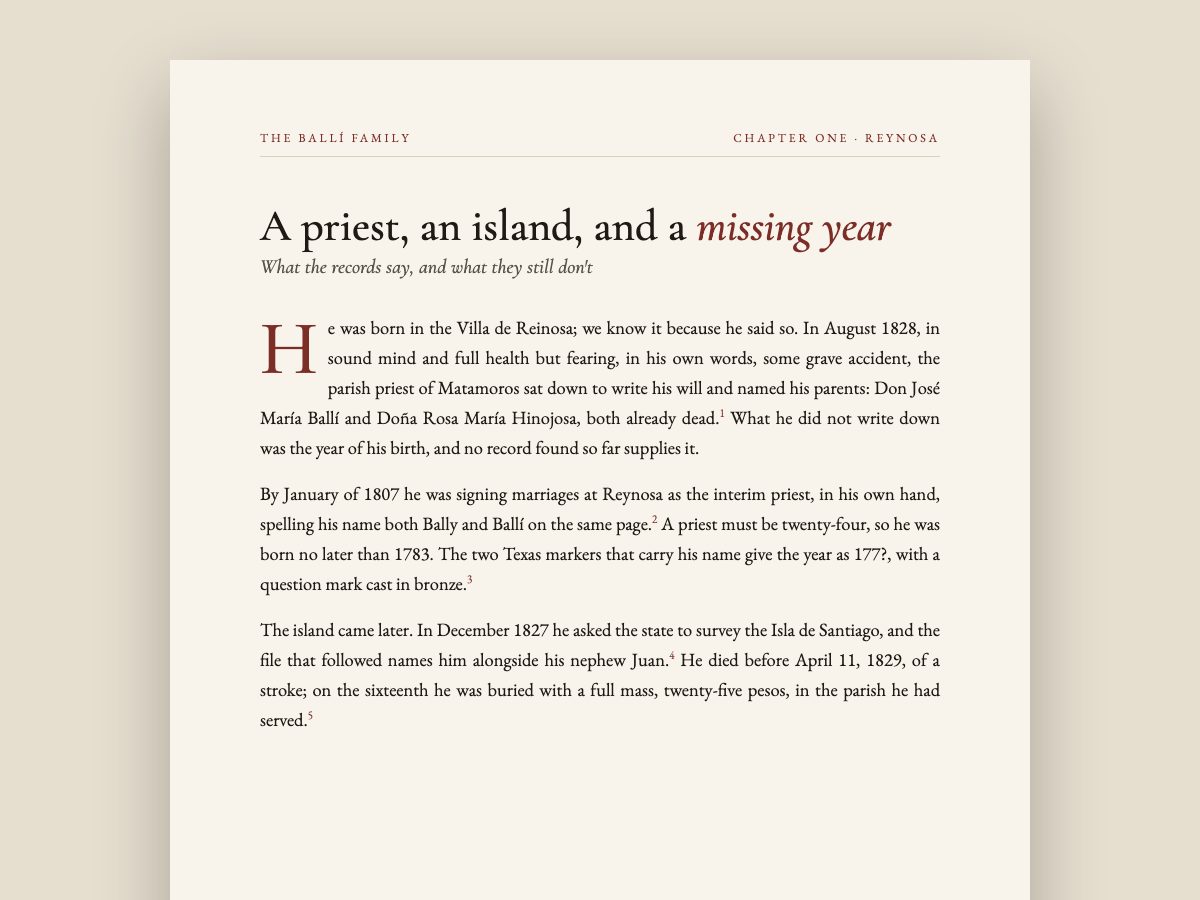
Padre Island is named for a priest whose birth year nobody has ever documented — the statue at the causeway is said to read "177?". This file goes around the lost baptism record: burial books, his 1828 will, his own signature, and the ordination archive in Monterrey.
Open the file → File 002 · Opened Sep 2026 Research completeTartaria, checked against the archives
A lost world empire, buried cities, an erased history. The theory's biggest claims, tested one at a time against contracts, city ordinances, maps, encyclopedias and photographs: 32 tests, 157 verified sources, 67 archive images.
Open the file → File 003 · Opened Apr 2026 Research completeIs the Gospel of John a new Genesis?
One thesis, tested across the whole Bible: John mirrors Genesis, and the resurrection in John 20 reverses the fall in Genesis 3. Nineteen Old Testament types, each rated by a stated rule, every quotation and original-language word checked against a source, and every note cross-referenced in an interactive graph.
Open the file →Your family's file
Every case starts with one question nobody in the family can answer. A missing great-grandfather. A legend that might be true. A line that dead-ends at the border. Bring me yours.
Open a CaseEvery working session on Files 001 and 002, and the hours behind File 003, are in the public research ledger.
Not a PDF. A living case file.
Most genealogists hand you a report, a PDF or a printed chart, and stop there. It's out of date the day it arrives, and nobody in the family opens it twice. Your report is only the start. I build what you see below: a fully organized, cross-referenced case file for your family, and a website for it to live in. And for something you can hold, there's a printed family binder of your records and photos, included in the 1700s and 1600s packages and an add-on for the rest.
Every case is delivered the way this one is being worked. The screenshots on this page are the actual working vault behind File 001 — not a mockup.
01 Your tree, rebuilt and corrected
Your full ancestry traced from primary records — not copied from other people's online trees. Errors found, documented, and fixed; every person tied to the record that proves them.
02 A living family graph
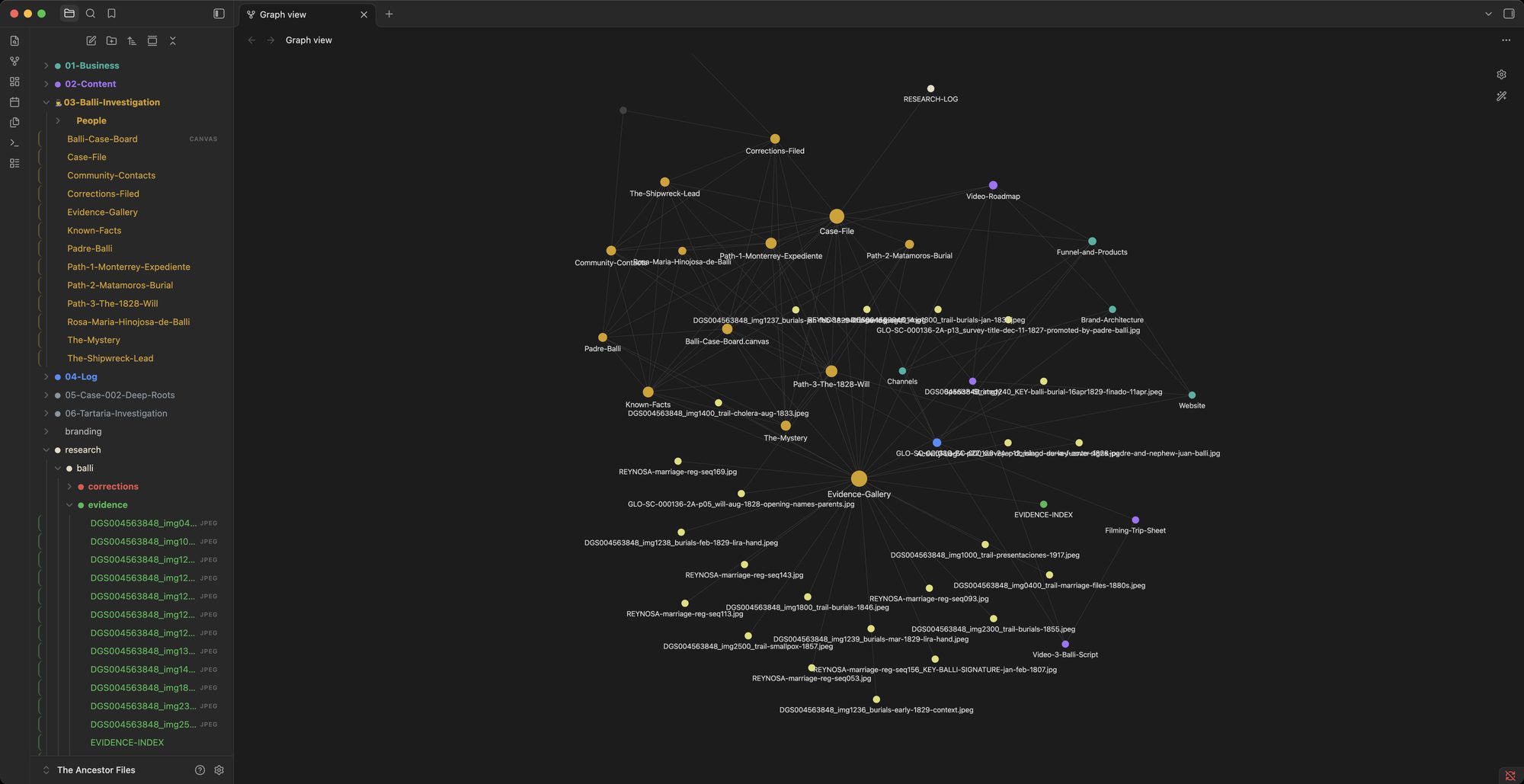
Your family as an interactive, color-coded, cross-referenced graph — people, places, documents, and open questions all linked together and organized like an investigation, not a chart. Included from the 1800s package; an add-on for 1900. See it live ↓
03 A family website that's yours
Built for you and yours forever — a living site online that you share with the whole family with one link. Want it private? It can be password-protected, for family eyes only.
04 The full chain of proof
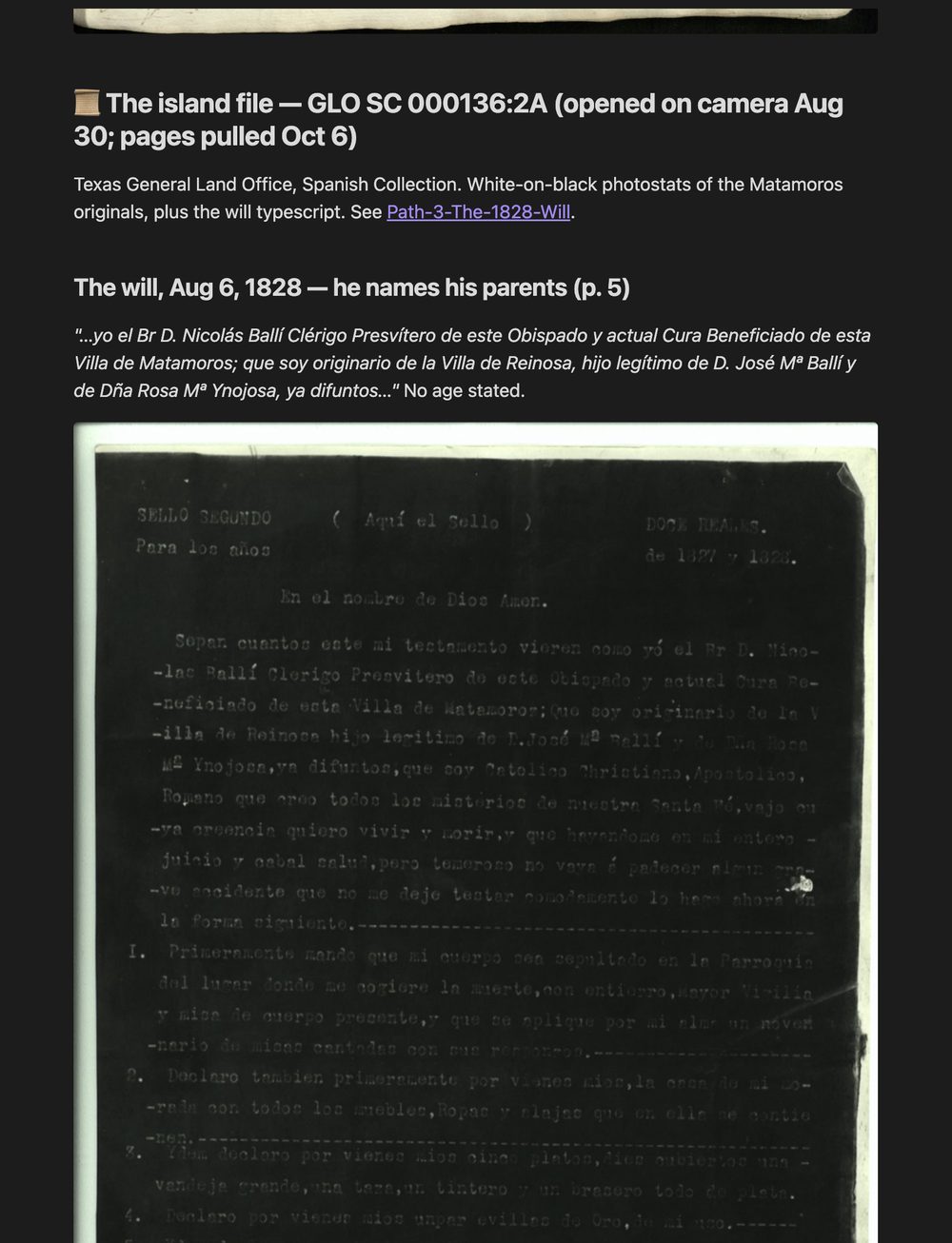
The records themselves — parish books, wills, census pages — embedded exactly where they're cited, so anyone in the family can follow the reasoning and check it.
02 Try deliverable 02: touch the graph
This is File 001’s own case graph, live, not a screenshot. It is drawn only from what the File 001 page already publishes. Tap a dot to see what it is and everything it touches. Drag to move around, scroll or pinch to zoom, search, or switch types on and off. Every record is tied to the archive that holds it, and claims that cite nothing are marked as such.
Deliverable 02 works like this, drawn from your family’s own records: people, places, documents and open questions, rather than File 001’s claims and published accounts. Included in the 1800s, 1700s and 1600s packages, and an add-on for 1900. On a myth and mystery investigation, the case vault with its graph and board is a $250 add-on.
What each package includes → · Open File 001, the Padre Ballí case →
A Your tree on Ancestry
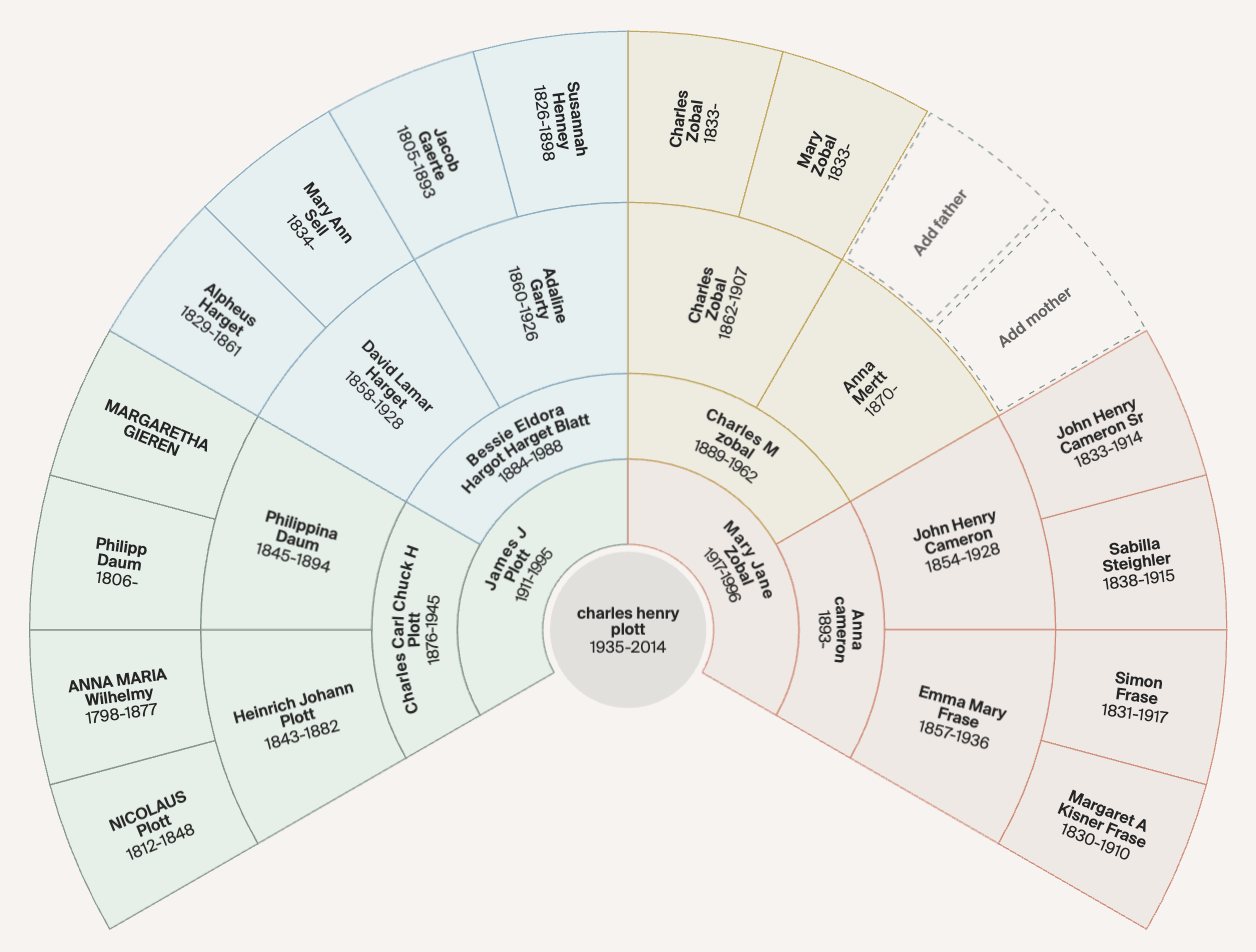
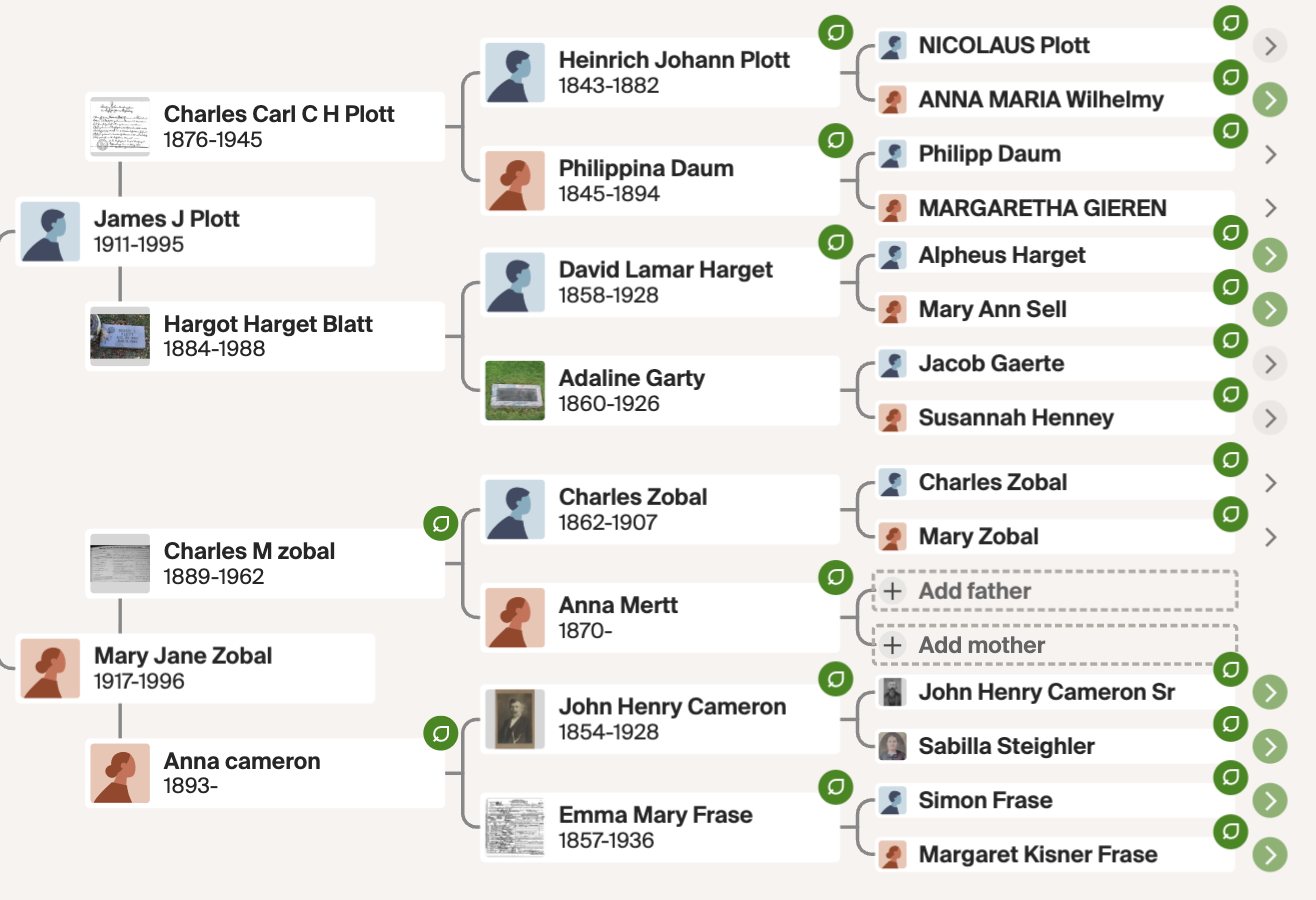
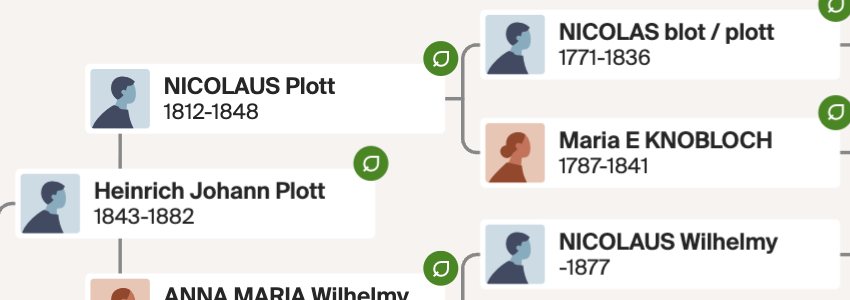
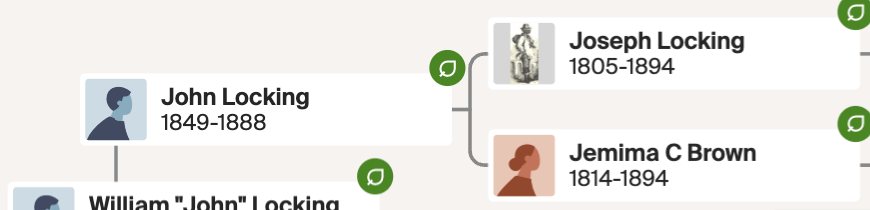
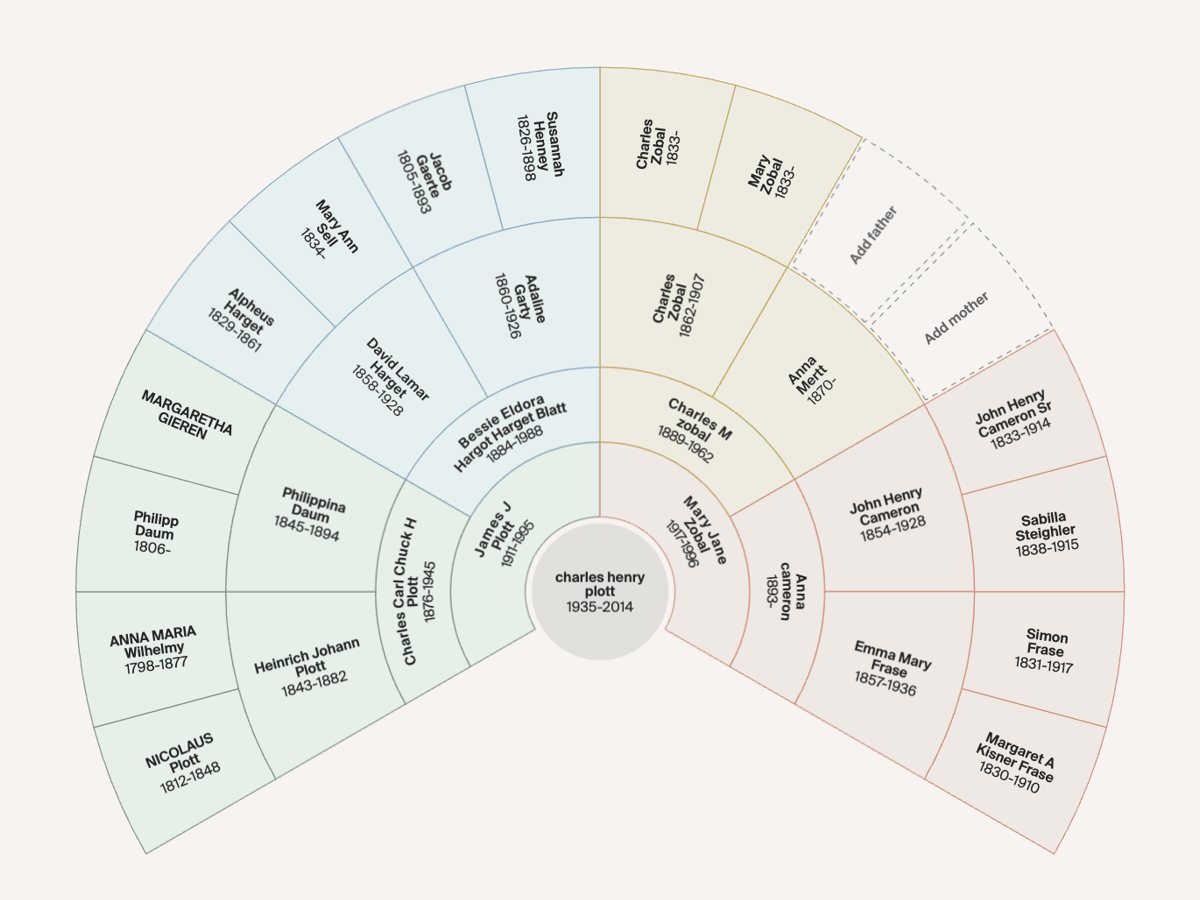
Deliverable 01 lives where your family already looks: Ancestry.com. These are four views of my own tree, with the living generations cropped out. Every box opens to the records behind it, and the hint leaves you see are checked one at a time, never accepted blind. Where a record hasn't been found yet, the box stays empty.
B Inside the vault
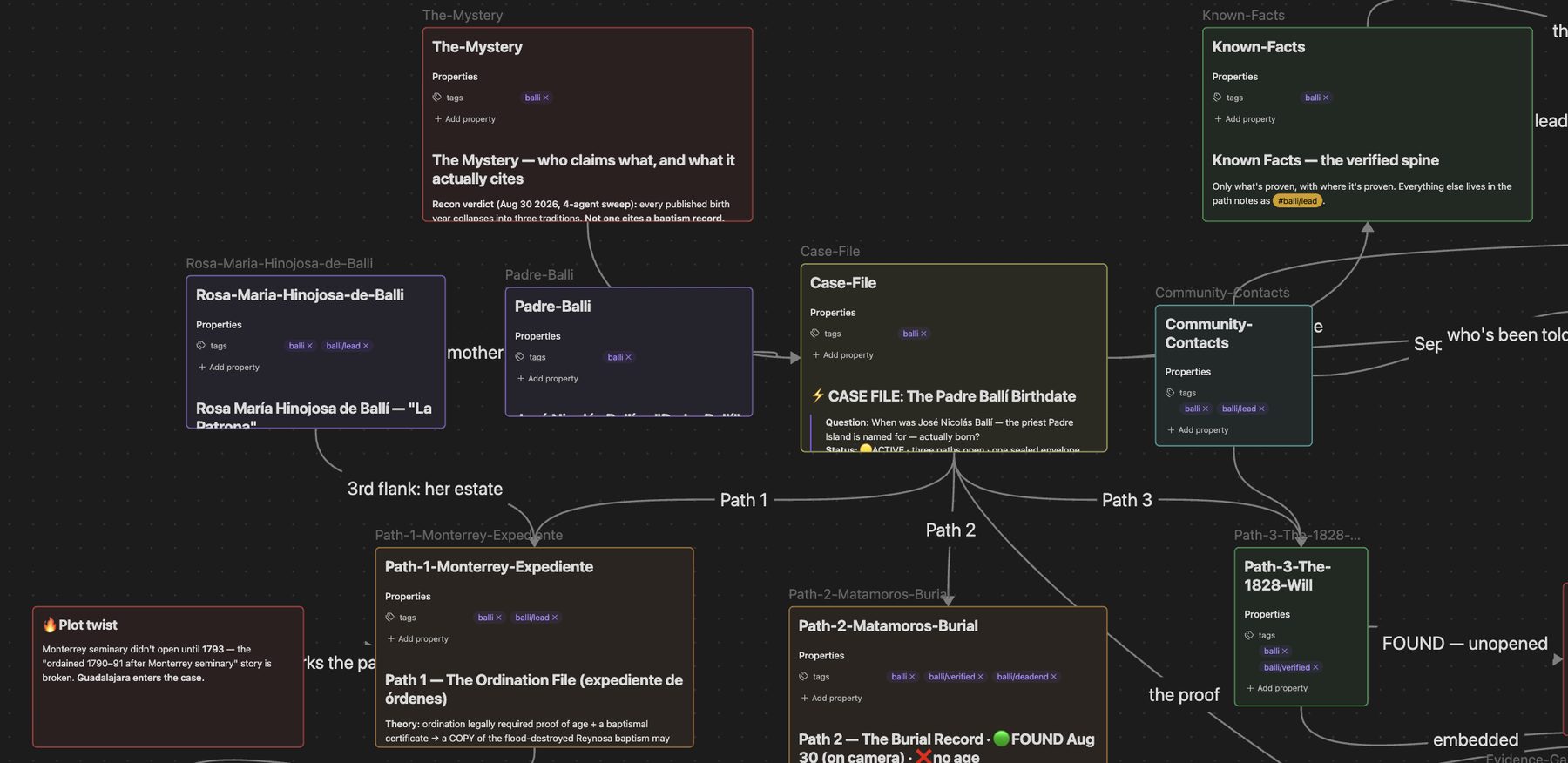
This is the actual working file behind File 001, open on my desk. Every folder is color-coded by what it holds, every claim links to the record that proves it, and every record shows you every note that cites it.
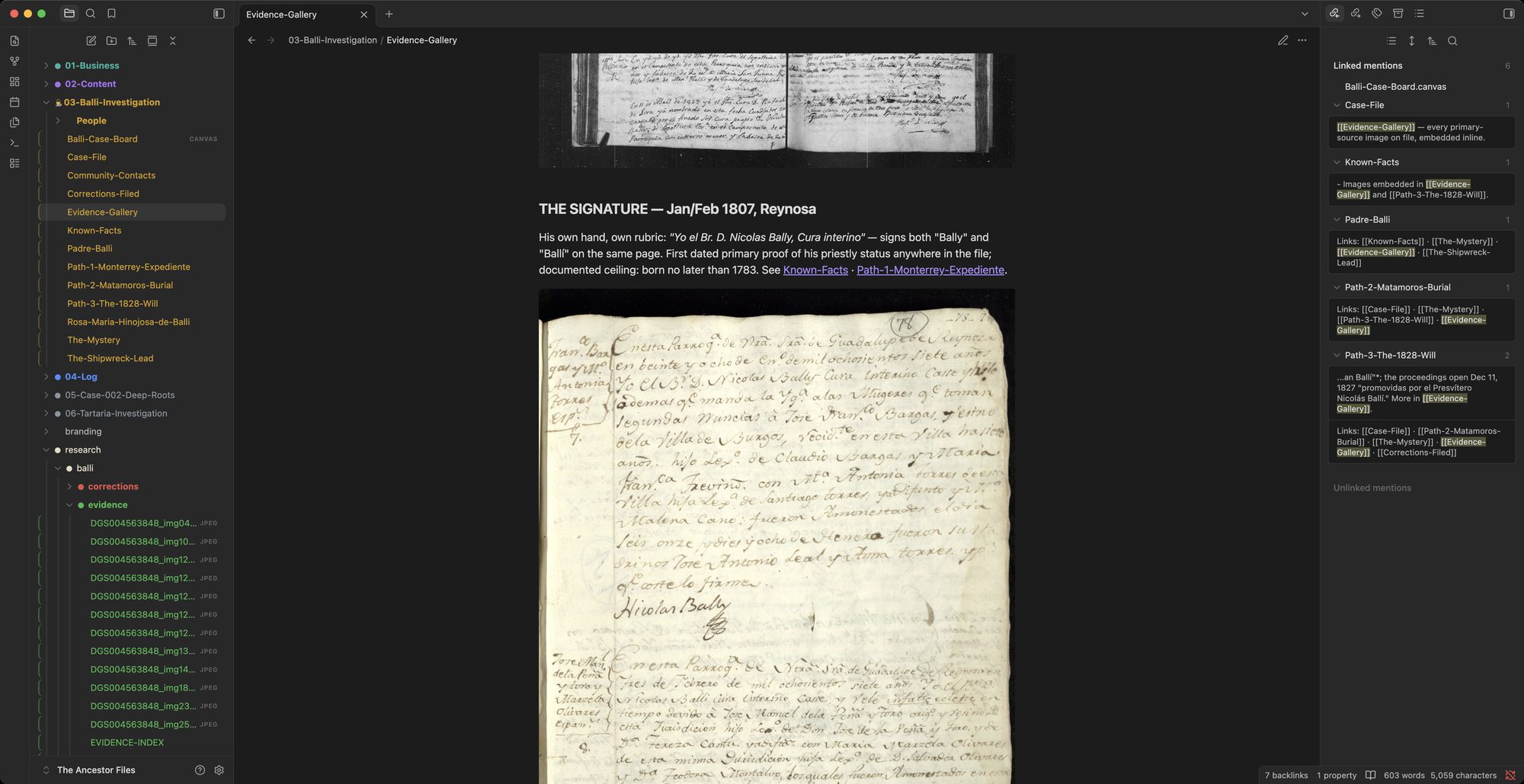
- The case: question, people, research paths
- Evidence: the scanned records
- Letters and corrections sent to archives
- Research log and sources
- Activity log
- Video and publication
- Every record gets a home. Each parish page, will, and land file is saved once, named for what it proves, and filed in the evidence folder.
- Every claim points to its record. A date, a name, a relationship: each one links straight to the page that shows it. No link, no claim.
- Every record points back. Open any document and you see every person, place, and question it touches. That's how errors in old trees get caught.
C The proof, embedded
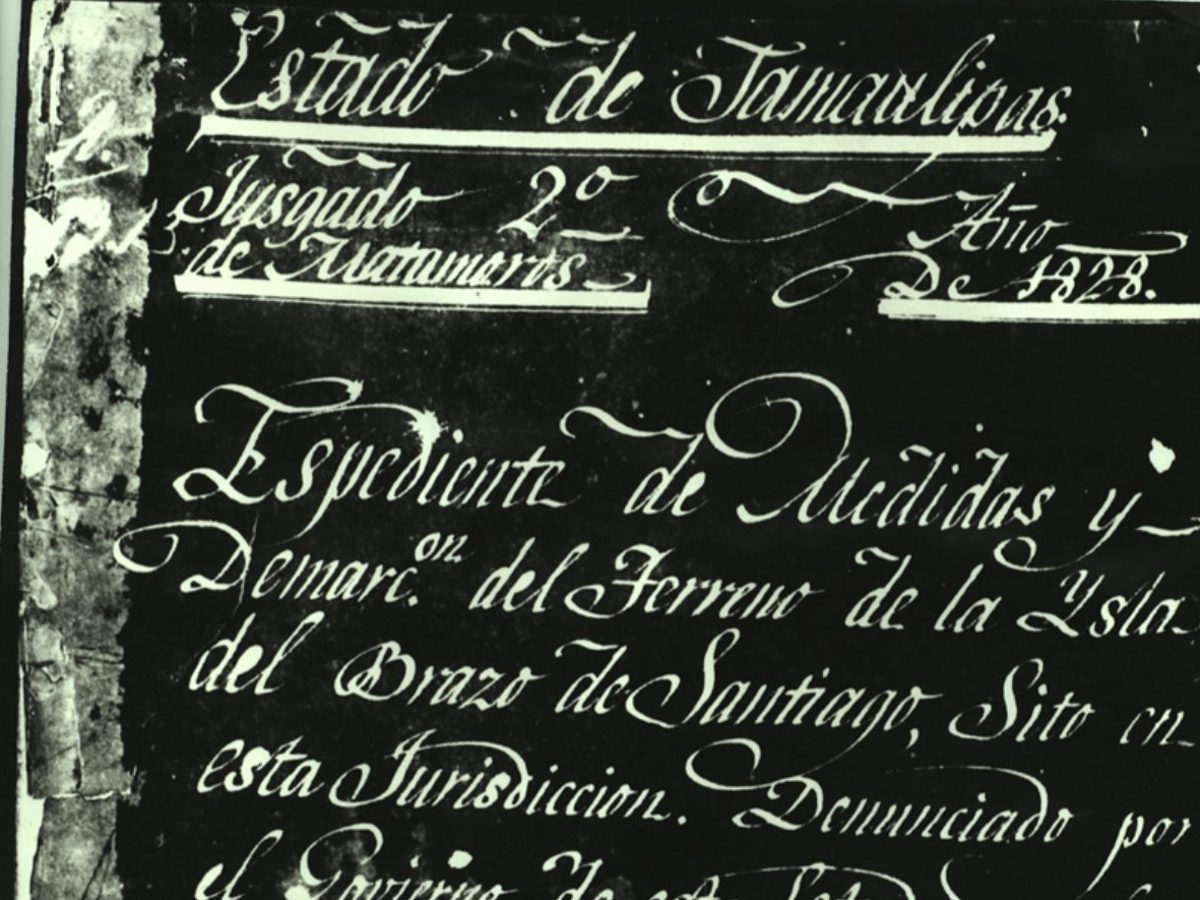
Most family trees cite "Ancestry.com" and stop there. In your file, the record itself sits under the claim it proves, with its archive and page number. Four pages from File 001:
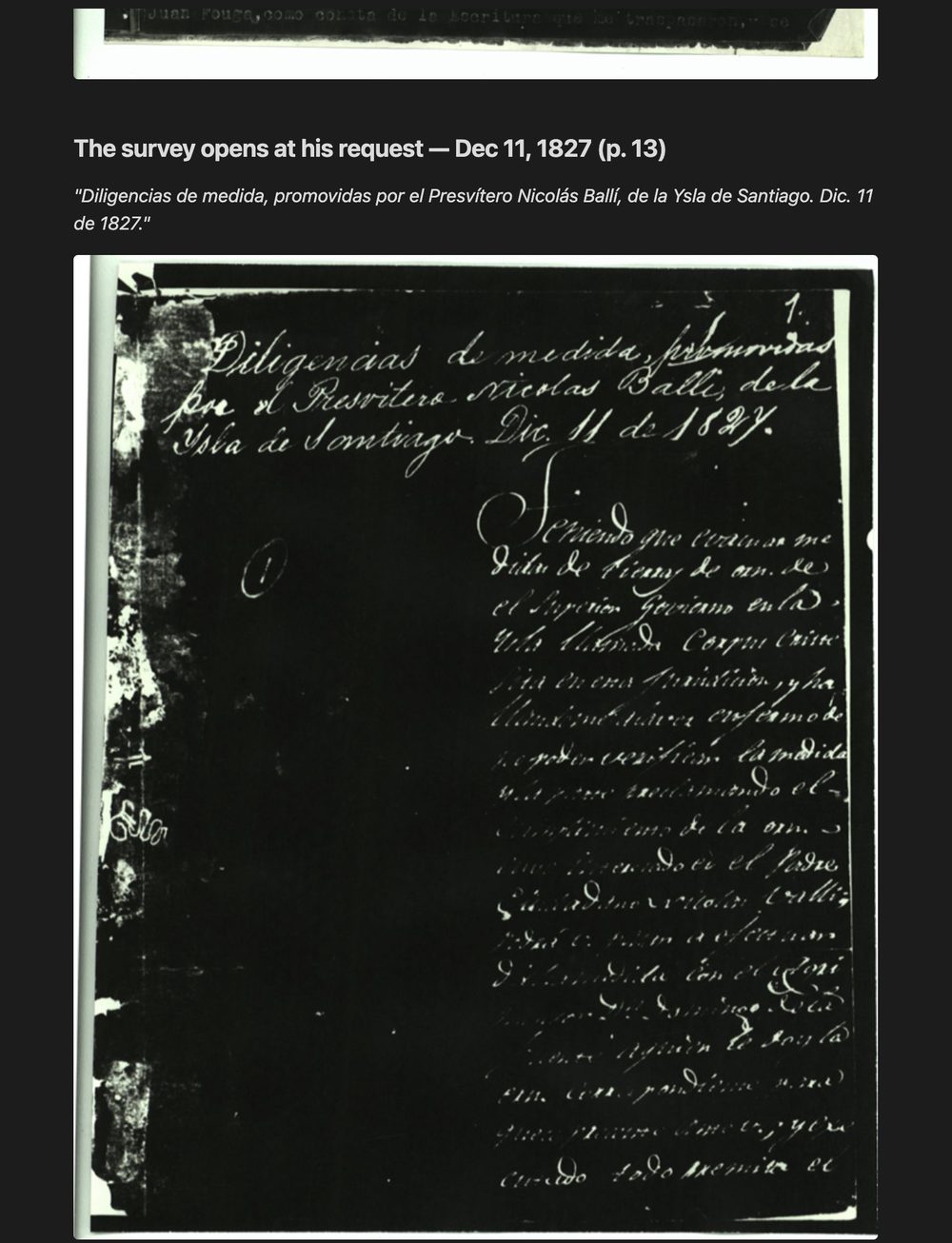
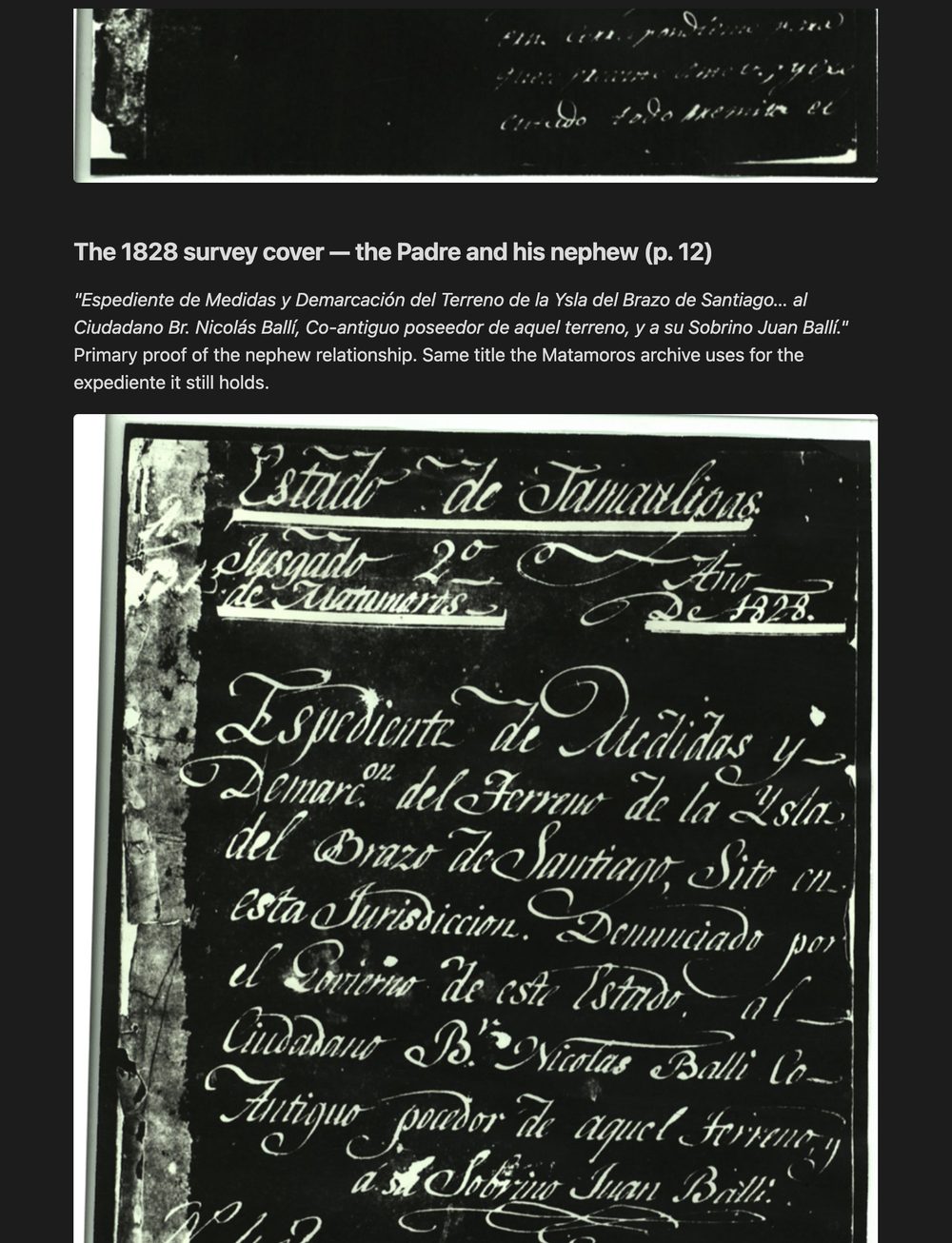
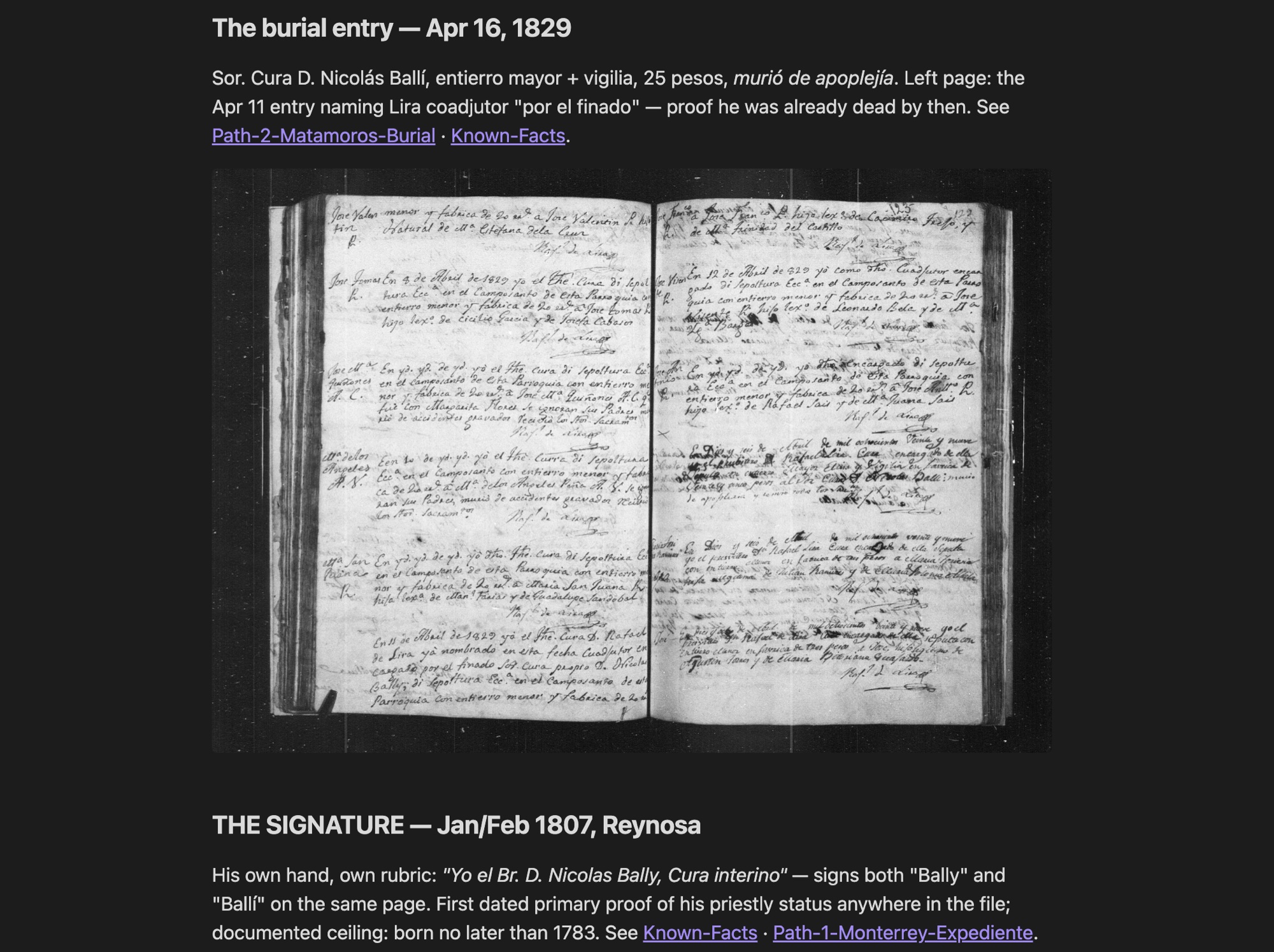
D Your family's website
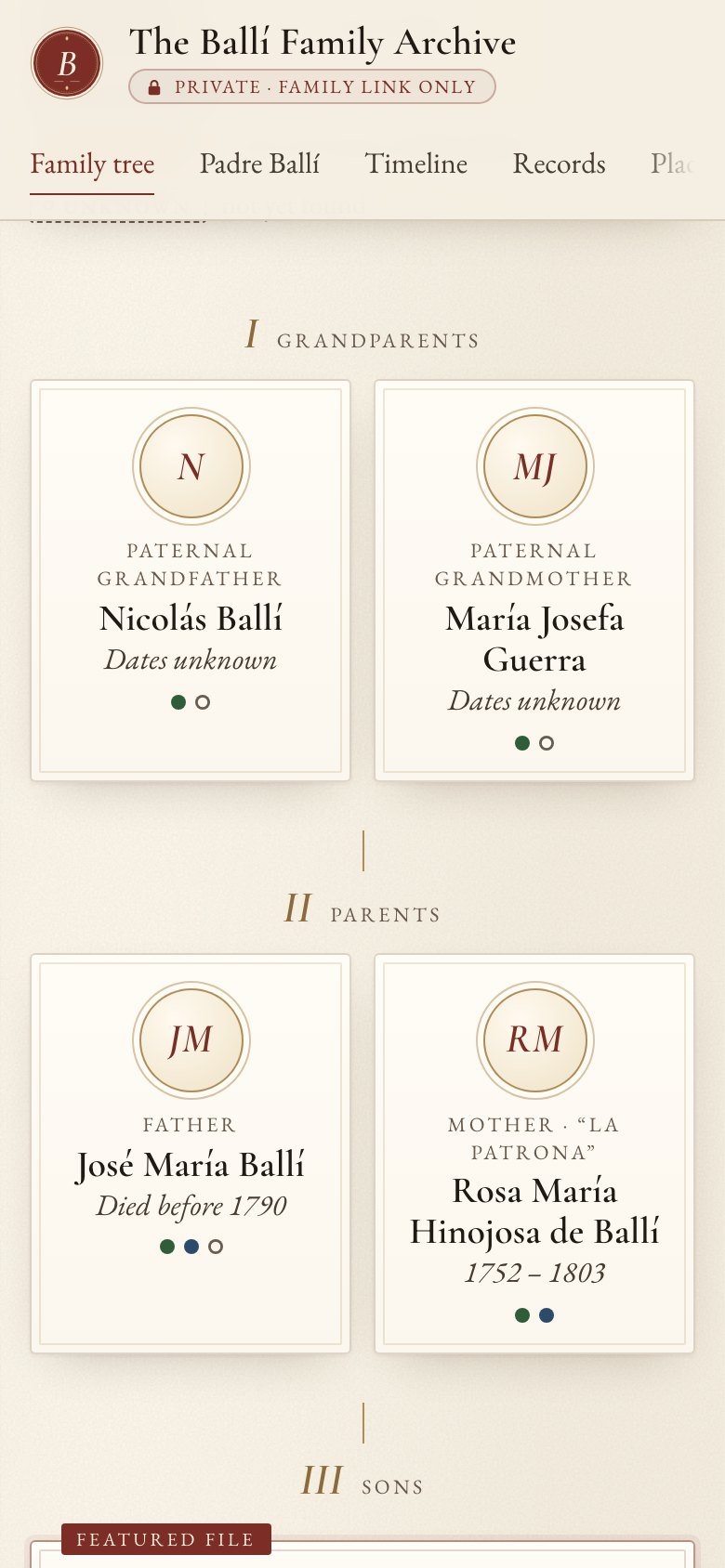
Every case ends with a website built for your family. A family tree you can click through, a page for every ancestor with the records that prove them, a timeline, the places they lived, and the questions still open.
One link for the whole family, on any phone. Private and password-protected if you want it that way.
The sample is built from File 001's public records, so every fact in it is real.
Open the sample family site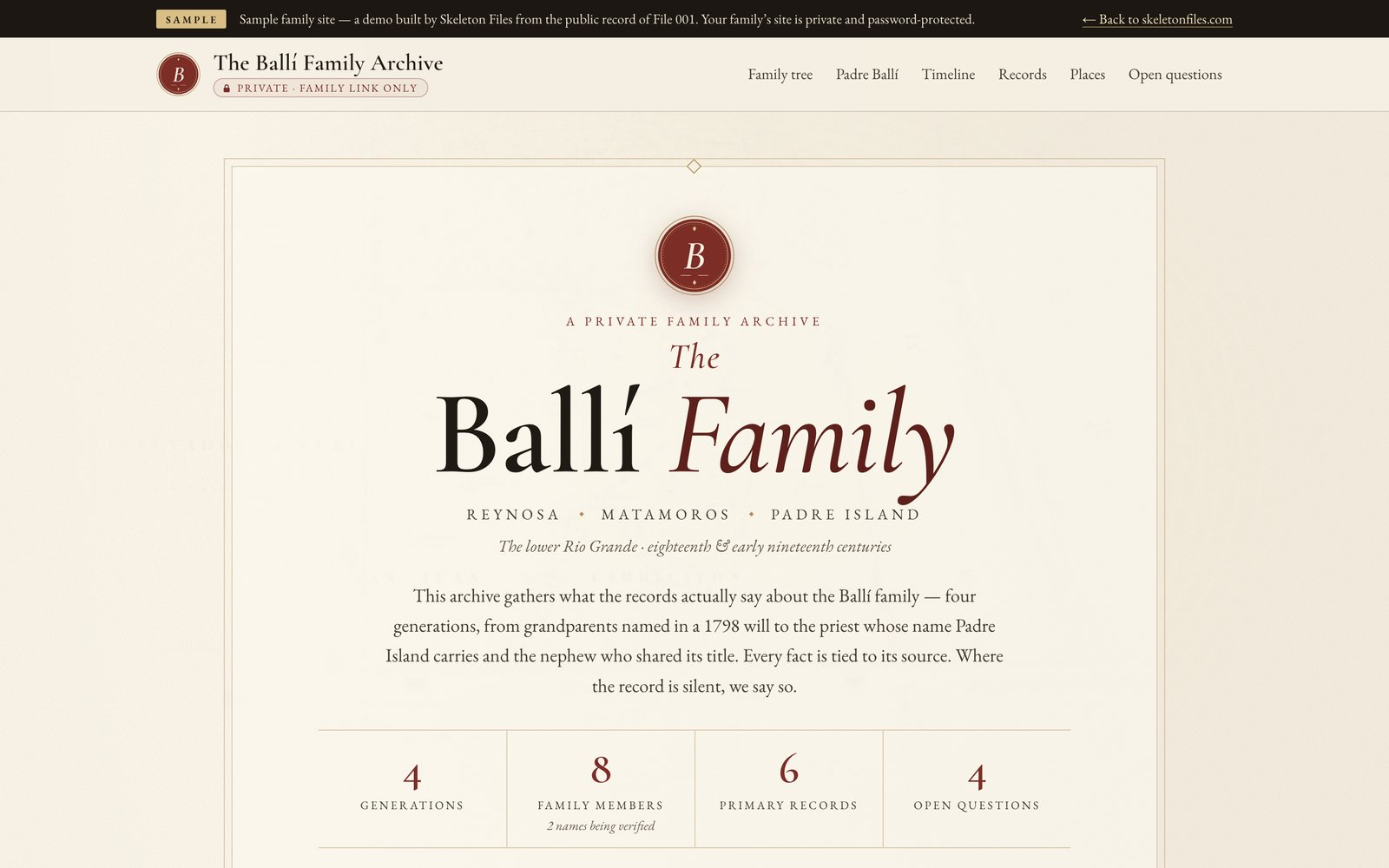
E What you can add
Every package can carry more. These are the add-ons you choose at checkout; the deeper packages include most of them, and the flagship includes them all.
 Recommended first · order the kit today
AncestryDNA, tied into your file
The strongest thing you can add. Your matches confirm or break the paper trail and lead to the cousins who hold the photos and the stories. Order the kit the day you start, because results take six to eight weeks; when they land I tie them into your file. Included in the 1700s and 1600s packages.
$250plus your kit from Ancestry
 Something to hold
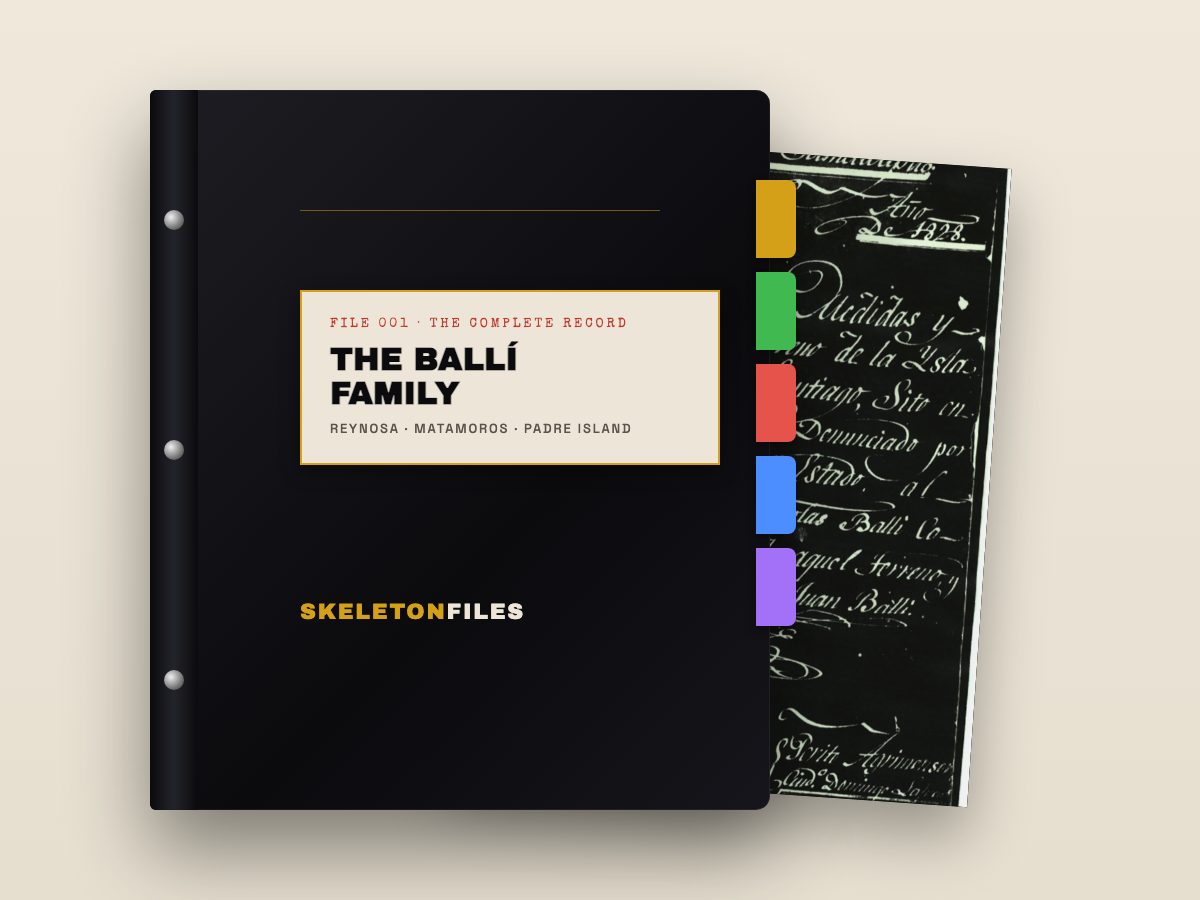
Printed family binder
Your records and photos, printed and organized in a binder you can page through. Included from the 1700s package up.
$250
 On Ancestry.com
Your Ancestry tree, verified and corrected
Your tree on Ancestry, rebuilt line by line from primary records, every copied error found and fixed, in the app you already use. Included in the 1700s and 1600s packages.
$350
 The story
Written family narrative
The story of your family, written from the records as a readable narrative, every claim sourced. Included in the flagship.
$1,500
 The real thing
Physical documents
Official paper copies of the records that prove your line. Included from the 1700s package up; archive fee plus $10 each on the smaller packages.
Included or per document
See packages & pricingBuild your file
Your own file is built the same way, with the same rule: if it can't be tied to a document, it doesn't go in.
Open your case
Pick how far back you want to go, pay 25% to start or pay in full, and upload what you have on your private foundation page. Within two business days I'll email you to set up a short call, by phone or video, so I can hear in your own words what you want to find. Right after the call you get the exact scope and total in writing.