Hire a professional genealogist when three things are true at once: you can write your question in one sentence, you have used the free records on that line until they ran out, and the next record is one you can't reach, can't read, or can't wait for. Before that point, keep digging. A professional who starts from your own name is spending your money on the part you could do for free.
How far should I get on my own first?
Far enough to know what you are asking. Genealogy Explained's beginner guide puts it first: before anything else, set a goal, and a good first goal is a pedigree chart, a chart of your direct ancestors, from yourself back three or four generations. Then talk to the oldest relatives while you can, and go through the papers at home: the family Bible, old invitations and programs, school records. None of that costs money, and nobody can do it for you. A professional can't interview your grandmother.
Then take each line as far as the free records go. FamilySearch is free, and the Matamoros burial book that figures below is on it. My walkthrough is in How do I get started with family history research for free?. The easy generations teach you what records look like, and that lets you write a question a professional can answer: the person, the record, and the place. "I want to know about my family" buys you a bill. "I need Padre Ballí's baptism, which should be in the Reynosa parish books in the 1760s or 1770s" buys you an answer, or a documented reason there isn't one.
The Association of Professional Genealogists (APG), the profession's trade body, lists the situations its members get hired for, and several are versions of those three conditions: a brick wall you can't solve, records on site outside your area, documents in a language or a hand you can't read, a lineage society application (a hereditary society that admits you on a proven line of descent) or citizenship in an ancestral country, or no time or interest to do it yourself. Be honest about that last one. If you like the search, hiring takes away the part you enjoy; I wrote about that trade in Is it worth hiring a professional genealogist?.
What is a documented brick wall?
A brick wall is where a line stops because you can't find the record that names the next parent. A documented brick wall is one where you can say exactly what you searched, what each record said and didn't say, and why the record you still need is out of reach.
"I looked on Ancestry and nothing came up" is not a brick wall; it's a search that hasn't started. The record may be unindexed, meaning it is online as a page image that no search box will ever find. It may be filed under a spelling you haven't tried, or in a courthouse book that was never filmed. A documented wall has ruled those out, one at a time, in writing.
So write down the searches that found nothing. A dead end you wrote down is evidence; one you remember is a hunch. If you can hand someone the books you read, the years you covered, and the spellings you tried, you have a documented wall, and you have already cut a professional's bill; none of it gets repeated. The records side is in Why can't I find my ancestors before 1800?.
Should I hire someone for a reunion or a citizenship deadline?
It depends on which one. The APG list includes planning a family reunion and gaining citizenship in an ancestral country, and those are different problems.
A citizenship or lineage-society application is judged by someone else's rules: a specific chain of documents in a specific form, where a line that is probably right fails. That is a case for hiring early, because a rejected application costs you the wait as well as the fee.
A reunion is a date, not a standard, and the honest numbers are not encouraging. Legacy Tree Genealogists, whose packages I compare against on my pricing page, says in its FAQ that full-service projects are averaging four to six months, and that waiting on records from government agencies or foreign archives can add weeks or months, as of October 2026. My own pricing page says the same about paper: official copies from an archive can take months, sometimes arriving after the rest of the case is delivered. If the reunion is in six weeks, don't plan on a deep package, and anyone who says otherwise is selling you a chart.
What fits a short deadline is a narrow job: a brick-wall check and a written plan the family can read at the table, which is what the assessment is. At my checkout your card is authorized but not charged, and within two business days you get the exact scope and total in writing. If the scope can't meet your date, say no; the hold is released and nothing is charged. I'd rather tell you a date can't be met than invent one.
Can I hire someone for just one line?
Yes, and for a brick wall it is usually the right purchase. The regret I'd warn you about is buying a general trace-my-family project when you wanted one answer on one line.
Legacy Tree's FAQ says the firm sets goals with you at the start and strictly adheres to them; that is the shape of most of the trade, a research goal and a block of hours against it.
I price by depth and by line instead, and the single-line options are on the pricing page. One or two direct lines pushed into the 1700s is from $5,500, billed in four equal parts, so from $1,375 to start. One direct line to the 1600s, about twelve generations, is $6,500, with $1,625 to start. The both-sides packages, from $900 to the $9,500 flagship, are on the same page.
In the deep packages, depth is a target, not a promise. Payments land at the start, when the line reaches 1800, when it reaches 1700, and on delivery. If the line hits a true wall, such as a burned courthouse, billing stops at the last milestone reached and you keep everything found.
How do I know it's time to hire?
Here is the test I'd put to anyone who writes to me, scored against the one file I can show in public.
The five questions
- Can you write the question in one sentence, naming the person, the record, and the place it should be?
- Have you done the part only you can do: the chart back three or four generations, the relatives interviewed, the papers at home read?
- Have you taken that line as far as the free records go, including the unindexed page images, not just the search box?
- Can you list the searches that found nothing, with the books, the years, and the spellings?
- Is the next record somewhere you can't reach, in a hand or a language you can't read, or needed by a date you can't move?
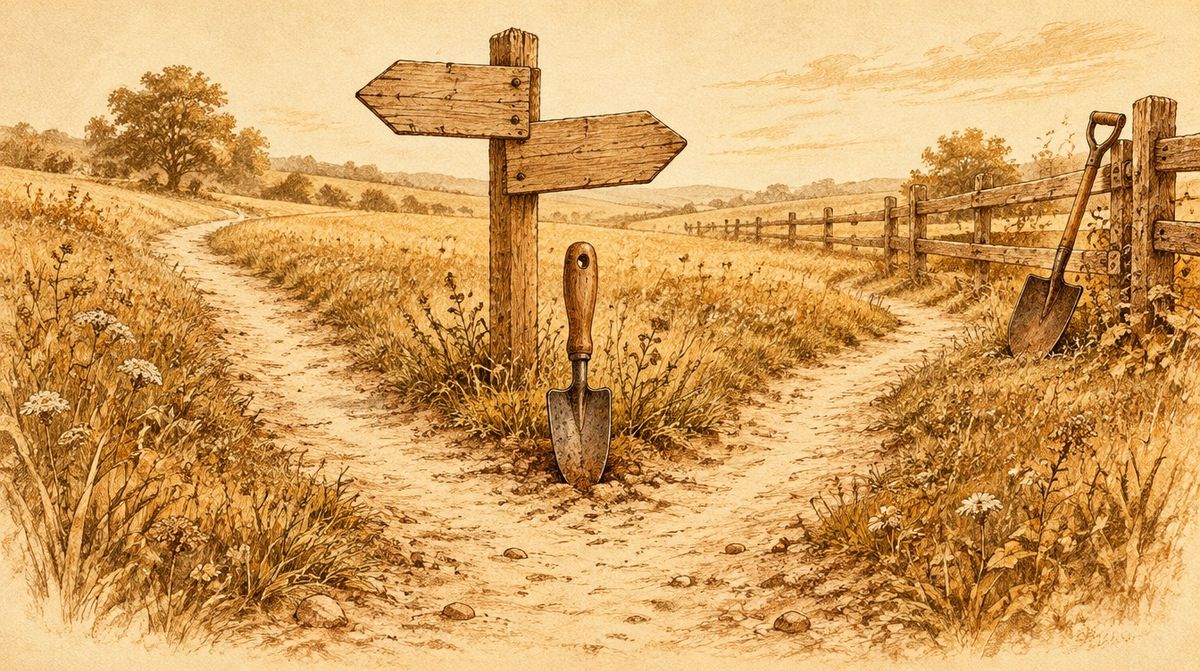
No to any of the first three: keep digging; you will get there for free. Yes to the first four and no to the fifth: you have a to-do list, not a wall, and the unindexed images are probably where the answer is. Yes to all five: bring a second shovel.
Scored against the Padre Ballí file
Padre José Nicolás Ballí is the priest Padre Island is named for, and nobody has ever documented when he was born. The state marker says the 1770s, the National Park Service says about 1768, and the statue at the causeway reads "177?". His baptism, the record that would settle it, was most likely lost when a flood destroyed Reynosa in 1800. That is question one in a sentence, and the dated log is on the case page.
The file went around the lost baptism on three paths. Two have been walked to the end of their paper, on camera, with the documents in hand. One is still open.
- The burial. The Matamoros parish register is online, but his entry was unindexed and uncited. Read page by page, it gave the parish's highest funeral rites, a cause of death, and the discovery that the date every history book prints as his death is actually his burial date; the register calls him the deceased five days earlier. It does not settle his birth year.
- The will. The original 1828 will is not in the Matamoros archive; the archive confirmed in September 2026 that it went missing decades ago. What survives is a typed copy in his 132-page file at the Texas General Land Office, read cover to cover, and a certified copy recorded in Cameron County in 1909. He names his parents and declares himself in full health; he does not settle his birth year.
- The ordination file. Canon law, the church's own law, required a baptismal certificate before ordination, so his file in the archdiocesan archive in Monterrey is the one document that legally had to record his age. The archive's director replied that it is open to the research but could not confirm the file survives; the formal access letter is in. Whether the file exists, I don't know.
One more find put a boundary on the question. In the Reynosa marriage register, free online, his signature appears twice, on marriages he performed in January and February 1807 as interim priest. Canon law set the minimum age for ordination at 24, so a dated page signed as a priest gives a documented boundary on a birth year everyone had only guessed at.
That is a documented brick wall: every search written down, every record's silence recorded, one named target left. It is five yeses. The baptism is gone, the archive is in another country, the registers are in two-hundred-year-old Spanish handwriting, and the open path needs a formal letter and a visit. If this were your family rather than a public case, this is where hiring stops being a luxury and becomes the practical route.
The low-risk first step
At five yeses, or if you can't tell whether you're past three, start with the Discovery assessment; it is also where every 1600s request begins. If the brick-wall check says the record probably no longer exists, you have paid $300 to learn that instead of a package price, and the written plan tells you what is still worth doing yourself.
If you'd rather have this done, start with the $300 Discovery assessment. It's a brick-wall check and a written research plan, credited in full toward any package. Start with the Discovery assessment.
Questions people also ask
How far should I get on my own before hiring a genealogist?
Do the part only you can do first. Set one goal, build a chart from yourself back three or four generations, interview the oldest relatives while you can, and read the papers at home. Then take the line you care about as far as the free records go, including the unindexed page images, not just the search box. A professional who has to start from your own name is spending your money on the easy generations.
What is a documented brick wall in genealogy?
A brick wall is where a line stops because you can't find the record that names the next parent. A documented one is where you can list what you searched, what each record said and didn't say, and why the record you still need is out of reach. "I looked on Ancestry and nothing came up" is not a wall yet. A written list of searches that found nothing is, and it cuts a professional's bill because none of those searches get repeated.
Should I hire a genealogist for a family reunion or a citizenship deadline?
For a citizenship or lineage-society application, hire early, because the reviewer judges your line by their rules and a line that is probably right fails. For a reunion, be realistic about time. Legacy Tree Genealogists says its full-service projects average four to six months as of October 2026, and official paper copies from archives can take months on their own. What fits a short deadline is a narrow job, such as a brick-wall check and a written plan, not a deep package.
Can I hire a genealogist to research just one line?
Yes, and for a brick wall it is usually the right purchase. My 1700s package takes one or two direct lines you choose, from $5,500, and the one-line 1600s package is $6,500, both billed in four equal parts, at the start and as the research reaches 1800, 1700, and delivery. If the line hits a true wall, billing stops at the last milestone reached and you keep everything found. Buying a general trace-my-family project when you wanted one answer is the regret I would warn you about.
What is a Discovery assessment?
It is the $300 first step on my pricing page, one payment, credited in full toward any package. You get a brick-wall check on the line that has you stuck and a written research plan, and it is where every request into the 1600s begins. If the check says the record probably no longer exists, you have paid $300 to learn that instead of a package price, and the plan tells you what is still worth doing yourself.