Between 1995 and 1999, the share of Americans who said they went online grew from 14% to 41%, and U.S. mobile phone subscribers went from about 5 million to 86 million. The Soviet Union ended, the Web arrived, Dolly the sheep was born and Titanic passed $1 billion. The decade of the modem and the mall, as a case file: every fact sourced, and what it means for the records your family left behind.
248.7 millionpeople counted in the 1990 U.S. census (248,709,873 on April 1, 1990), up 9.8% from the 1980 census count[1]
5.27 → 5.98 billionworld population, 1990 vs 1999 (United Nations Population Division estimates; the UN placed the six billion mark on 12 October 1999)[2]
14% → 41%share of Americans who said they go online, 1995 vs Pew's January 1999 report (the 1999 figure is an average of four recent national surveys)[3]
5.3 million → 86.0 millionmobile telephone subscribers in the United States, December 1990 vs December 1999 (5,283,055 and 86,047,003, CTIA estimates reported by the FCC)[4]
75.4 → 76.7 yearslife expectancy at birth in the United States, 1990 vs 1999 (the 1999 figure equals the 1998 record high)[5]
Researched by James Duncan. Every fact links to its source.
Year by year
Ten years, one tap at a time
Tap a year to see its moments, its words of the year, its biggest song and film, and what everyone was doing.
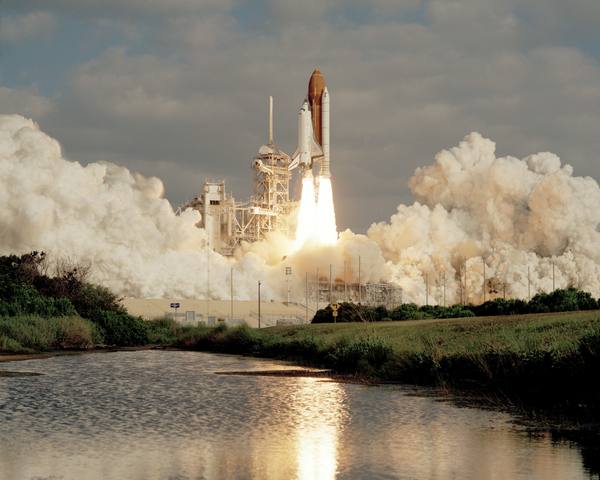
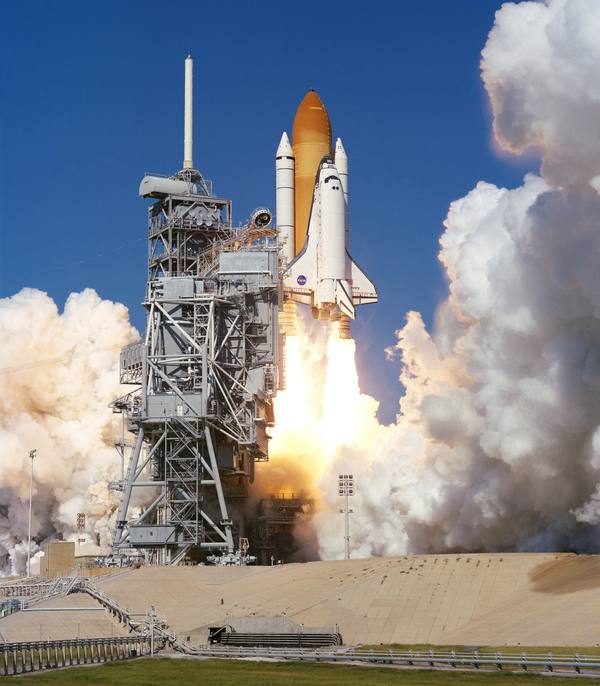
Space Shuttle Discovery lifts off from Launch Pad 39-B at 8:33 a.m. EDT on April 24, 1990, carrying a crew of five and the Hubble Space Telescope.
1990
February 11, 1990Nelson Mandela is released from prison
Nelson Mandela was released from Victor Verster Prison, near Paarl, on Sunday 11 February 1990. His release came nine days after the ANC and the PAC were unbanned.[6]
Vladimiramax, via Wikimedia Commons · CC BY-SA 3.0
April 24, 1990Hubble Space Telescope is launched
Space Shuttle Discovery launched on April 24, 1990, on the STS-31 mission to deploy the Hubble Space Telescope. The telescope was deployed in a 380-statute-mile orbit, and Discovery and its crew of five landed on April 29.[7]
July 26, 1990Americans with Disabilities Act is signed
President George H. W. Bush signed the Americans with Disabilities Act into law on July 26, 1990. GovInfo calls it the first comprehensive civil rights law addressing the needs of people with disabilities.[8]
August 2, 1990Iraq invades Kuwait
On August 2, 1990, a force of 100,000 Iraqi troops invaded Kuwait and overran the country in a matter of hours. The invasion led to a United Nations embargo and sanctions on Iraq, and to a U.S.-led coalition war that began in January 1991.[9]
October 3, 1990Germany is reunified
On October 3, 1990, the German Democratic Republic joined the Federal Republic of Germany under the Unification Treaty, which had been signed on August 31, 1990. The treaty unified Berlin as a federal state and the capital of Germany. It also established five new federal states: Mecklenburg-Vorpommern, Brandenburg, Saxony, Saxony-Anhalt and Thuringia.[10]
The Simpsons The Simpsons became a half-hour Fox series with a Christmas special on December 17, 1989, and began airing regularly in January 1990. The show was slow to gain an audience, but its popularity took off later in the year. Britannica says it helped establish the upstart Fox network as a major competitor on broadcast television.[14]
Joe Mabel · CC BY-SA 3.0
Twin Peaks Twin Peaks, created by Mark Frost and David Lynch, aired on ABC in 1990 and 1991. It began with the discovery of the body of a murdered teenage prom queen in a small Washington town and followed the FBI investigation that came next. Its two-hour pilot was a massive success in the ratings, and the show won critical acclaim and a cult following.[15]
A U.S. Air Force photograph of F-16A, F-15C and F-15E aircraft flying over burning oil wells during Operation Desert Storm in 1991. It is a representative picture of the air war, not a photograph of the opening night of the campaign.
1991
January 16, 1991The Gulf War air campaign begins
After the deadline for Iraq to withdraw from Kuwait passed, a U.S.-led coalition attacked Iraq by air on January 16, 1991, and controlled the skies within 24 hours. A land campaign by forces from 34 countries began on February 24 and lasted four days, and the war ended with an Iraqi defeat and retreat from Kuwait on February 28, 1991.[9]
June 15, 1991Mount Pinatubo erupts
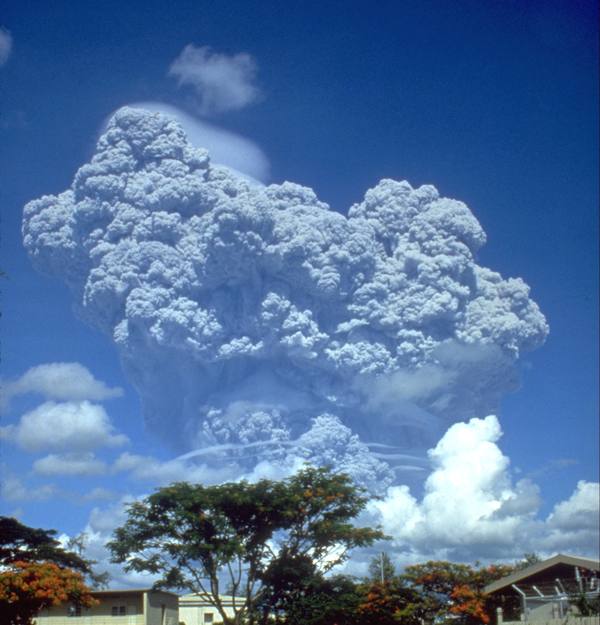
Mount Pinatubo in the Philippines erupted on June 15, 1991, in what the U.S. Geological Survey calls the second-largest volcanic eruption of the 20th century; its ash cloud rose 22 miles (35 kilometers). Forecasts by Philippine and U.S. scientists let people near the volcano evacuate, saving at least 5,000 lives, and the eruption temporarily lowered global temperatures by about 1°F (0.5°C) from 1991 to 1993.[16]
November 7, 1991Magic Johnson announces he has HIV
On November 7, 1991, Magic Johnson of the Lakers announced that he had tested positive for the HIV virus and was retiring from the NBA. At the time he was the league's all-time leader in assists, with 9,981.[17]
December 25, 1991The Soviet Union comes to an end
On December 25, 1991, Mikhail Gorbachev resigned as president of the Soviet Union, and the Soviet flag was lowered for the last time over the Kremlin and replaced by the Russian tricolor. In early December, Boris Yeltsin and the leaders of Ukraine and Belarus had met in Brest to form the Commonwealth of Independent States, which effectively declared the end of the Soviet Union.[18]
RIA Novosti archive, image #848095 / U. Ivanov · CC BY-SA 3.0
Nirvana's Nevermind Nirvana released Nevermind in 1991, its first album for the major label Geffen. It featured the hit "Smells Like Teen Spirit" and announced a new musical style, grunge. Britannica says it gave voice to the young adults known as Generation X and was the first full expression of punk concerns to reach mass-market success in the United States.[19]
Sonic the Hedgehog Sega's Sonic the Hedgehog (1991) introduced a new mascot, a speedy blue hedgehog with attitude, designed to seem more modern than Nintendo's Mario. Britannica says Sonic helped establish Sega's console with a slightly older audience, spawned many popular games and became the face of the company.[20]
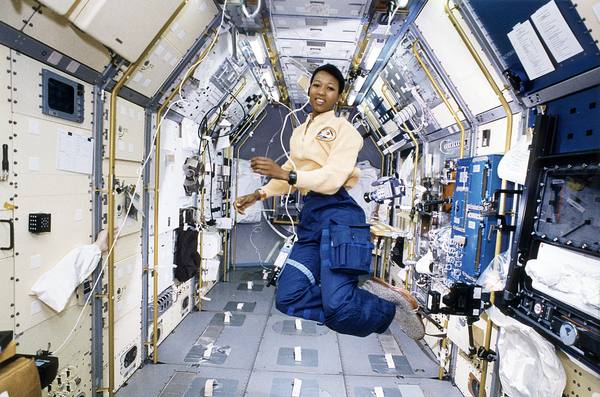
Astronaut Mae Jemison, mission specialist, working in the Spacelab-J module aboard Space Shuttle Endeavour during mission STS-47 in September 1992. NASA's description notes she was the first African American woman in space.
1992
April 29, 1992Los Angeles unrest follows the Rodney King verdict
On April 29, 1992, four Los Angeles police officers were acquitted of all charges in a Simi Valley courtroom for the beating of Rodney King, an unarmed Black motorist. Around 5 p.m., crowds gathered at Florence and Normandie in South Central Los Angeles; the National Archives says six days of unrest left 63 people dead, more than 7,000 arrested and an estimated $1 billion in property damage.[21]
Craig Dietrich · CC BY 2.0
July 25, 1992Barcelona Olympics open
The Barcelona Olympics opened on 25 July 1992. Olympedia lists 9,385 participants from 169 countries in 257 medal events; the former Soviet republics except the Baltic states competed as the Unified Team for the only time, South Africa competed for the first time since 1960, and the U.S. basketball team of NBA players won the gold medal.[22]
Txllxt TxllxT · CC BY-SA 4.0
August 24, 1992Hurricane Andrew strikes Florida
Hurricane Andrew made landfall on Elliott Key and then near Homestead, Florida, on the morning of August 24, 1992, as a Category 5 hurricane with winds up to 165 mph; it made a second U.S. landfall in Louisiana on August 26 as a Category 3 hurricane. The National Weather Service counts 23 direct deaths in the United States and three in the Bahamas, and $27 billion in U.S. damage in 1992 dollars; at the time it was the costliest hurricane ever to hit the country.[23]
September 12, 1992Mae Jemison becomes the first African American woman in space
Space Shuttle Endeavour launched on the STS-47 Spacelab-J mission on September 12, 1992. NASA says the seven-person crew included Mae Jemison, the first African-American woman to fly in space, the first Japanese astronaut to fly aboard the shuttle, and the first married couple to fly on the same space mission.[24]
November 3, 1992Bill Clinton is elected president
On November 3, 1992, Democrat Bill Clinton defeated President George H.W. Bush, receiving more than twice as many Electoral College votes. Independent candidate Ross Perot won about 19 percent of the popular vote but no electoral votes, and 55 percent of the electorate voted, a higher share than in 1988, 1984 or 1980.[25]
Kenneth C. Zirkel, via Wikimedia Commons · CC BY-SA 4.0
Johnny Carson signs off On May 22, 1992, Johnny Carson made his final appearance as host of The Tonight Show. Britannica says an estimated 50 million viewers watched, the largest audience in the program's history.[26]
Nick-D · CC BY-SA 4.0
Grunge fashion Designer Marc Jacobs's grunge collection for Perry Ellis, inspired by the emerging grunge music scene, paired flowered girlish dresses with combat boots for a disheveled, individualistic look. Women's Wear Daily called him the guru of grunge, and the Council of Fashion Designers of America named him Womenswear Designer of the Year for 1992.[27]
Yitzhak Rabin and Yasser Arafat shake hands as President Bill Clinton looks on at the Middle East peace agreement signing ceremony on the White House South Lawn, September 13, 1993. The photograph shows the handshake, not the signing of the document.
1993
February 26, 1993Bomb explodes under the World Trade Center
At about 17 minutes past noon on February 26, 1993, a bomb exploded in the parking garage beneath the World Trade Center in lower Manhattan. Six people were killed and more than a thousand were hurt; four men were later tried, convicted and sentenced to life in prison.[28]
April 19, 1993The Waco standoff ends
On April 19, 1993, federal law enforcement officers in Waco, Texas, ended a 51-day standoff with a religious group led by David Koresh. The Miller Center says fires destroyed the group's compound and killed at least 75 people.[29]
April 30, 1993CERN makes the Web's source code free
On 30 April 1993, CERN made the source code of WorldWideWeb available on a royalty-free basis, making it free software. Early that year the NCSA at the University of Illinois had released a first version of its Mosaic browser, and by late 1993 there were over 500 known web servers.[30]
Henry Mühlpfordt · CC BY-SA 3.0
September 13, 1993Israel and the PLO sign the Oslo Accord
On September 13, 1993, Israeli Prime Minister Yitzhak Rabin and PLO negotiator Mahmoud Abbas signed a Declaration of Principles at the White House, known as the Oslo Accord. Israel accepted the PLO as the representative of the Palestinians, and the PLO renounced terrorism and recognized Israel's right to exist in peace. Both sides agreed that a Palestinian Authority would be established and take on governing responsibilities in the West Bank and Gaza Strip over a five-year period, followed by permanent status talks.[31]
December 8, 1993President Clinton signs NAFTA
On December 8, 1993, President Bill Clinton signed the North American Free Trade Agreement, which the Miller Center says eliminated nearly every trade barrier between the United States, Canada and Mexico and created the world's largest free trade zone. The House had approved it on November 17 by a vote of 234 to 200.[29]
Words of the year
information superhighwayAmerican Dialect Society[11]
No. 1 songI Will Always Love You · Whitney Houston[12]
The Mosaic web browser Mosaic, a web browser, was released in 1993. Britannica says it used point-and-click controls and was the first browser to display both text and images on a single page. The team behind Mosaic went on to create Netscape Navigator, which was built for home users on slow dial-up modems.[33]
The X-Files The X-Files began on Fox in 1993 and ran until 2002, with returns in 2016 and 2018. It followed FBI agents Fox Mulder and Dana Scully as they investigated unusual and unsolved cases involving the paranormal. The show attracted a huge cult following and won three Golden Globe Awards for best drama.[34]
The Union Buildings in Pretoria, where Nelson Mandela was inaugurated as South Africa's president on 10 May 1994. This photograph was taken in January 2011. Digr · CC BY-SA 3.0
1994
January 17, 1994Northridge earthquake
A magnitude 6.7 earthquake struck Northridge, California, on January 17, 1994. The U.S. Geological Survey lists sixty people killed, more than 7,000 injured, 20,000 homeless and more than 40,000 buildings damaged in Los Angeles, Ventura, Orange and San Bernardino counties, and collapsed overpasses closed sections of several freeways.[35]
April 6, 1994Genocide begins in Rwanda
The United Nations says that on 6 April 1994 the deaths of the Presidents of Burundi and Rwanda in a plane crash caused by a rocket attack ignited several weeks of intense and systematic massacres. It says more than one million people are estimated to have died and that the killings were acts of genocide; they continued until 4 July 1994, when the Rwandan Patriotic Front took military control of Rwanda.[36]
Jenny Paul · CC BY-SA 4.0
May 6, 1994The Channel Tunnel opens
The Channel Tunnel was inaugurated on 6 May 1994; the first shuttle carried Queen Elizabeth II and French President François Mitterrand. Getlink describes the tunnel as 50 km long, with 37 km of it undersea.[37]
Florian Fèvre (Mobilys) · CC BY-SA 4.0
May 10, 1994Nelson Mandela becomes president of South Africa
On 10 May 1994, Nelson Mandela was inaugurated as South Africa's first democratically elected president. On 27 April 1994 he had voted for the first time in his life.[6]
July 17, 1994Brazil wins the World Cup in the United States
The scoreless final at the Rose Bowl in Pasadena on July 17, 1994, went to penalty kicks, and Brazil beat Italy 3-2 to become the first country to win the World Cup four times. It was the first World Cup hosted by the United States, and total attendance of 3,587,538 broke the previous record by more than 1 million, according to U.S. Soccer.[38]
Friends Friends first aired on NBC in 1994 and ran until 2004. It followed six young adults in New York's Greenwich Village, with the Central Perk café as a regular meeting spot. It won six Emmy Awards, including outstanding comedy series, and from its second season on it stayed in the Nielsen top five, reaching number one in its eighth season.[39]
King of Hearts · CC BY-SA 4.0
Forrest Gump Forrest Gump, released in 1994, follows 30 years in the life of an intellectually disabled man, played by Tom Hanks, from the 1950s through the early 1980s. Britannica says the film earned critical praise, large audiences and six Academy Awards, including best picture.[40]
Oriole Park at Camden Yards in Baltimore during a 1996 game against the California Angels, with Cal Ripken Jr. at bat and his name on the scoreboard. Ripken broke Lou Gehrig's consecutive-games record at this ballpark on September 6, 1995. Jerry Reuss · CC BY-SA 2.0
1995
April 19, 1995Oklahoma City bombing
On the morning of April 19, 1995, a bomb in a rented truck exploded in front of the Alfred P. Murrah Federal Building in downtown Oklahoma City. It killed 168 people, including 19 children, and injured several hundred more; the FBI calls it the worst act of homegrown terrorism in the nation's history.[41]
September 6, 1995Cal Ripken Jr. breaks Lou Gehrig's record
On September 6, 1995, Baltimore Orioles shortstop Cal Ripken Jr. played in his 2,131st consecutive game, breaking Lou Gehrig's record for most consecutive games played. He went on to play 2,632 games in a row before removing himself from a game on September 19, 1998.[42]
October 3, 1995O.J. Simpson is acquitted
On October 3, 1995, a jury found O.J. Simpson not guilty of the 1994 murders of his estranged wife, Nicole Brown Simpson, and her friend, Ronald Goldman, after a 252-day trial. The jury took about four hours to reach its verdict, and an estimated 150 million Americans listened on radio or watched on television as it was delivered.[43]
Coolcaesar · CC BY-SA 4.0
November 21, 1995Dayton Peace Accords reached on Bosnia
The Dayton Peace Accords, an agreement between Bosnia and Herzegovina, Croatia and Serbia, were initialed in Dayton, Ohio, on November 21, 1995, and formally signed in Paris on December 14, 1995. The Miller Center says they sought to end a four-year conflict that had made refugees of more than two million people, and that President Clinton sent 20,000 American troops, part of a larger NATO deployment, to enforce a cease-fire.[29]
Words of the year
World Wide Web / newt (tie)American Dialect Society[11]
Toy Story Toy Story opened in theaters in 1995, directed by John Lasseter. It was the first feature-length film created entirely with computer-generated imagery. According to Pixar, it took 114,240 frames of computer animation and 800,000 machine hours to render.[45]
eBay begins as AuctionWeb In September 1995, after a Labor Day weekend spent writing code, Pierre Omidyar launched AuctionWeb, the site that became eBay. The first item he listed was a broken laser pointer. By June 1996 the total value of goods sold on the site had reached $7.2 million, and in September 1997 AuctionWeb was officially renamed eBay.[46]
Dolly the sheep, born on 5 July 1996 and the first mammal cloned from an adult cell. Her preserved body is on display at the National Museum of Scotland in Edinburgh; photographed in 2017. Mike McBey · CC BY 2.0
1996
February 10, 1996Deep Blue beats Kasparov in a game
In the first game of a six-game match, IBM's Deep Blue chess computer defeated world champion Garry Kasparov; no computer had ever won a game against a world champion. Kasparov went on to win the match 4-2, but lost to Deep Blue in a rematch a year later.[47]
Christina Xu · CC BY 2.0
March 20, 1996UK reports a possible link between BSE and a human disease
On 20 March 1996, Health Secretary Stephen Dorrell told the House of Commons that 10 cases of Creutzfeldt-Jakob disease in people aged under 42 showed a previously unrecognised pattern. He said there was no scientific proof that BSE can be transmitted to humans by beef, but that the Spongiform Encephalopathy Advisory Committee had concluded the most likely explanation was exposure to BSE before the 1989 specified bovine offal ban.[48]
Julian Herzog · CC BY 4.0
July 5, 1996Dolly the sheep is born
Dolly was born on 5 July 1996, the result of an experiment at the Roslin Institute; she was cloned from a mammary gland cell of a six-year-old Finn Dorset sheep and an egg cell from a Scottish Blackface sheep. The Roslin Institute says she was the first mammal cloned from an adult cell, which no one at the time thought was possible.[49]
July 19, 1996Atlanta Olympics open
The Atlanta Olympics opened on 19 July 1996. Olympedia lists 10,340 participants from 197 countries in 271 medal events, and says all IOC member nations competed for the first time. A bomb exploded in Centennial Olympic Park shortly after midnight on 27 July, killing two people and injuring several more.[50]
Marc Merlin · CC BY-SA 4.0
November 5, 1996Bill Clinton is re-elected
On November 5, 1996, President Bill Clinton, with 49 percent of the vote, defeated Senator Bob Dole of Kansas, who had 41 percent. Clinton became the first Democratic president since Franklin Roosevelt to win reelection to a second term.[29]
Words of the year
mom (as in soccer mom)American Dialect Society[11]
No. 1 songMacarena (Bayside Boys Mix) · Los Del Río[12]
Tickle Me Elmo Tyco was licensed to make a new line of Sesame Street toys in 1996, and inventor Ron Dubren was asked to add his laughing technology to an Elmo doll. Tickle Me Elmo was an instant success and became the most desired toy of the 1996 holiday shopping season. Because supplies were short, retailers were besieged by shoppers willing to pay anything for one.[51]
Razzladazzla · CC BY-SA 3.0
The Spice Girls The Spice Girls' first single, "Wannabe," was released in July 1996 and held the top of the British singles chart for most of the summer. Their first album, Spice (1996), sold some 19 million copies worldwide in its first year. The group promoted Girl Power and became known as Ginger, Sporty, Posh, Scary and Baby.[52]
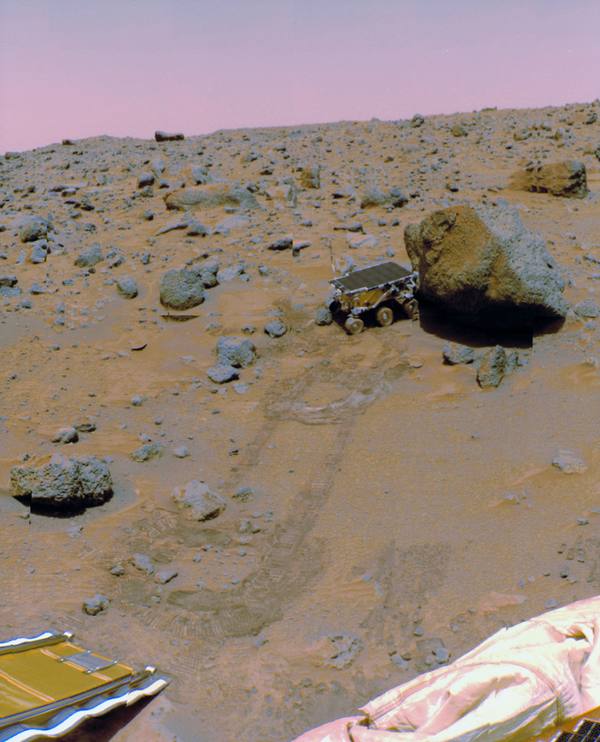
Mars Pathfinder photographed the Martian surface and the Sojourner rover in 1997. Here the rover is taking an APXS (alpha proton X-ray spectrometer) measurement of the rock named Yogi on sol 17-18 of the mission.
1997
July 1, 1997Hong Kong returns to Chinese rule
July 1, 1997, marked the start of Hong Kong's new era as a Special Administrative Region of China and the end of 156 years of British administration. At the handover ceremony, which began shortly before midnight on June 30 with 4,000 invited guests and speeches by President Jiang Zemin and the Prince of Wales, the British and Hong Kong flags were lowered just before midnight and the Chinese national and Hong Kong SAR flags were raised at midnight.[53]
Minghong · CC BY-SA 4.0
July 4, 1997Mars Pathfinder lands on Mars
NASA's Mars Pathfinder landed on July 4, 1997, using an air bag landing system, and delivered the Sojourner rover to the surface. Sojourner explored for 83 days of a planned seven-day mission, and Pathfinder returned more than 16,500 images from the lander and 550 from the rover.[54]
August 31, 1997Princess Diana dies in Paris
Diana, Princess of Wales, was in a car crash at the entrance of the Pont de l'Alma tunnel in Paris shortly after midnight on August 31, 1997. She was declared dead at the Pitié-Salpêtrière hospital at 6:00 a.m., at the age of 36. Dodi Fayed and the driver, Henri Paul, also died. HISTORY says her funeral in London on September 6 was watched by more than 2 billion people.[55]
Maxwell Hamilton, 'Flowers for Princess Diana's Funeral' · CC BY 2.0
December 11, 1997Kyoto Protocol is adopted
The Kyoto Protocol, the first international treaty to set legally binding targets to cut greenhouse gas emissions, was adopted on 11 December 1997 in Kyoto, Japan. It required 37 industrialized nations plus the European Community to cut emissions by an average of 5 per cent below 1990 levels, and entered into force in 2005.[56]
663highland · CC BY-SA 4.0
December 19, 1997Titanic opens in theaters
Director James Cameron's film Titanic, about the real-life ocean liner that struck an iceberg and sank on its maiden voyage in 1912, opened in theaters on December 19, 1997. It brought international fame to its young stars Leonardo DiCaprio and Kate Winslet and won 11 Academy Awards, including Best Picture and Best Director.[57]
Harry Potter Harry Potter and the Philosopher's Stone, the first novel in J.K. Rowling's series, was first published in Britain in 1997. It appeared in the United States the next year as Harry Potter and the Sorcerer's Stone. Britannica says its story of a boy wizard made it an enduring hit with both children and adults.[58]
Beanie Babies eBay's company history says Beanie Babies, Ty Warner's line of stuffed animals, took the world by storm in May 1997. It reports that $500 million worth were sold on eBay alone, more than 6% of the site's total volume.[46]
Space Shuttle Discovery lifts off from Launch Pad 39B at the Kennedy Space Center on October 29, 1998, beginning the nine-day STS-95 mission. Senator John Glenn was aboard, making his second spaceflight and his first in 36 years.
1998
April 10, 1998Good Friday Agreement is reached
On the late afternoon of 10 April 1998, Good Friday, it was announced that the Good Friday Agreement had been reached, after 700 days of negotiations. In referendums on 22 May 1998, majorities of 71% in Northern Ireland and 94% in the Republic of Ireland voted yes. The Irish Government says the Troubles lasted three decades and cost over 3,500 lives.[59]
William Murphy, 'Stormont - Belfast - Northern Ireland' · CC BY-SA 2.0
September 8, 1998Mark McGwire hits his 62nd home run
On September 8, 1998, Mark McGwire hit his 62nd home run of the season, off Cubs pitcher Steve Trachsel. Roger Maris's mark of 61 home runs in 1961 had stood as a record for 37 years, until a home run chase between McGwire and the Cubs' Sammy Sosa in 1998; McGwire finished with 70.[60]
Jon Gudorf Photography, 'Mark McGwire touching home after homer 1998-65' · CC BY-SA 2.0
October 29, 1998John Glenn returns to space
Space Shuttle Discovery launched on the STS-95 mission on October 29, 1998, carrying John Glenn back into orbit. At 77, Glenn became the oldest person to go to space, and the nine-day mission landed on November 7, 1998.[61]
December 19, 1998House of Representatives impeaches President Clinton
On December 19, 1998, the House of Representatives voted to impeach President Bill Clinton on charges of perjury and obstruction of justice. The Senate acquitted him on February 12, 1999.[29]
Furby Furby, a $35 toy that was half owl and half hamster, was the must-have gift of the 1998 holiday season. It responded to touch, light and sound and spoke an invented language, Furbish. Resale prices went well over $100, and the Federal Aviation Administration issued an alert that Furbys should not be on when a plane is below 10,000 feet. The Computer History Museum says more than 40 million were sold in the first three years of production.[62]
Librarygroover · CC BY 2.0
Seinfeld ends Seinfeld aired for nine seasons on NBC, from 1989 to 1998, and anchored the network's must-see Thursday night lineup. It ranked first or second in the Nielsen ratings from the 1994-95 season to the 1997-98 season. It was nominated for 68 Emmy Awards and won 10.[63]
Pokémon arrives in the United States Pokémon, a Nintendo game series, debuted in Japan in February 1996 as Pokémon Green and Pokémon Red for the Game Boy. It reached the United States in 1998 with two titles, Red and Blue. Britannica says it inspired a cartoon series, movies, a toy line and a popular trading-card game, and became one of the most successful video game franchises in the world.[64]
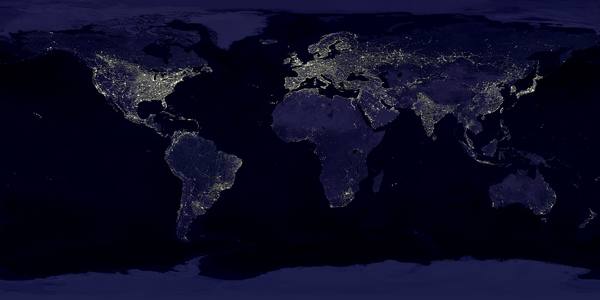
A NASA composite of Earth's city lights, built from satellite data gathered between October 1994 and March 1995, a few years before world population reached six billion. NASA notes that the brightest areas are the most urbanized, not necessarily the most populated.
1999
January 1, 1999The euro is launched
The euro was launched on 1 January 1999, when it became the currency of more than 300 million people in Europe. For its first three years it was used only for accounting purposes, such as electronic payments, until euro cash was introduced on 1 January 2002.[65]
Epizentrum, 'Frankfurt Eurotower.20130603' · CC BY-SA 3.0
March 24, 1999NATO begins its air campaign over Kosovo
NATO says it launched Operation Allied Force on 24 March 1999, after talks in Rambouillet and Paris failed, to halt a humanitarian catastrophe in Kosovo; more than 300,000 Kosovars had already fled their homes by the end of 1998. The air campaign was suspended on 10 June 1999 after 78 days, when the Federal Republic of Yugoslavia accepted the withdrawal of its forces and the deployment of an international presence.[66]
April 20, 1999Shooting at Columbine High School
On April 20, 1999, two teenage gunmen killed 12 students and a teacher at Columbine High School in Littleton, Colorado, and wounded another 23 people; they died by suicide shortly after noon. The shooting prompted a national debate on gun control and school safety.[67]
Seraphimblade, 'Columbine memorial.png' · CC BY-SA 4.0
July 10, 1999U.S. wins the Women's World Cup
On July 10, 1999, the United States beat China 5-4 on penalty kicks after a grueling 120 minutes in the Women's World Cup final, before a sell-out crowd at the Rose Bowl in Pasadena. U.S. Soccer says the U.S. became the first nation to win the Women's World Cup on its home soil, in a tournament expanded to 16 teams for the first time.[68]
Ted Eytan, '2018.06.17 Over the Rose Bowl, Pasadena, CA USA 0040' · CC BY-SA 2.0
October 12, 1999World population reaches six billion
According to United Nations estimates, world population reached the six billion mark on 12 October 1999. The UN says it took just 12 years to add the most recent billion, the shortest time in history; the world had reached one billion in 1804 and five billion in 1987.[2]
Top film worldwideStar Wars: Episode I - The Phantom Menace[32]
Everyone was talking about
rfdigitalwpg · CC BY 2.0
Napster Napster, created in 1999 by college student Shawn Fanning, let people share electronic copies of music stored on their personal computers over the Internet. Britannica says it marked the emergence of decentralized peer-to-peer music sharing. At its 2001 peak, as many as 1.5 million people were sharing files at once. It was shut down in 2001 after the Recording Industry Association of America won a court injunction.[69]
Who Wants to Be a Millionaire Regis Philbin began hosting the game show Who Wants to Be a Millionaire in 1999. Based on a British program, it dominated the ratings and made ABC the most-watched network on television. Philbin's question asking contestants whether that was their final answer became a national catchphrase.[70]
Acroterion · CC BY-SA 4.0
The Blair Witch Project The Blair Witch Project premiered at the Sundance Film Festival in January 1999, and the studio Artisan Entertainment bought its distribution rights for $1.1 million. A website with missing-person posters and a message board helped build the idea that the story was real. Made on a shoestring budget, the film grossed approximately $249 million worldwide.[71]
Things that arrived or took off in the 1990s. Swipe through them.
NewApril 24, 1990The Hubble Space Telescope
Space Shuttle Discovery launched on April 24, 1990, with the Hubble Space Telescope as its primary payload. Hubble was deployed in a 380-statute-mile orbit. The crew of five landed at Edwards Air Force Base in California on April 29, 1990, after a mission of 5 days, 1 hour and 16 minutes.[72]
Photo by Geni · CC BY-SA 4.0
NewAugust 6, 1991The World Wide Web
On 6 August 1991, Tim Berners-Lee announced his World Wide Web software on the alt.hypertext newsgroup, and interest spread beyond the physics community. The first website, hosted on his NeXT computer at CERN, was about the Web project itself. The first web server outside Europe was installed at the Stanford Linear Accelerator Center in California on 12 December 1991. On 30 April 1993, CERN put the Web software in the public domain.[73]
Photo by fra.iesus · CC BY-SA 4.0
NewDecember 3, 1992The first text message
Neil Papworth, a 22-year-old software programmer in the UK, sent the first text message on 3 December 1992. It said 'Merry Christmas' and went from a computer to his colleague Richard Jarvis. Papworth was building a Short Message Service for his client, Vodafone. Early texts had a 160-character limit, and in 1999 texts could finally be exchanged across multiple networks.[74]
Photo by SounderBruce · CC BY-SA 4.0
NewJuly 1995Amazon.com
Amazon.com opened its virtual doors on the Web in July 1995, according to its annual report for 1998. By then it offered more than 4.7 million book, music CD, video, DVD, computer game and other titles. It reported about 6.2 million cumulative customer accounts at the end of 1998, up from about 1.5 million a year earlier.[75]
NewJuly 17, 1995GPS reaches full operation
The Global Positioning System reached Full Operational Capability on July 17, 1995, according to the U.S. Coast Guard Navigation Center. GPS is a satellite-based radionavigation system whose space segment has a minimum of 24 operational satellites in six orbits. It lets users on land, at sea and in the air find their position, velocity and time 24 hours a day, in all weather, anywhere in the world.[76]
Photo by Ruben de Rijcke · CC BY-SA 4.0
NewAugust 24, 1995Windows 95
Microsoft launched Windows 95 on August 24, 1995. Its Start button put applications, recent documents and important settings in one place, and NBC News called it perhaps the most important addition. Windows 95 also introduced the Microsoft Network, a rival to AOL that introduced many people to email and the Web.[77]
Photo by Cristiano Tomás · CC BY-SA 4.0
NewSeptember 1995eBay
eBay was formed as a sole proprietorship in September 1995 and incorporated in California in May 1996, according to its 1998 stock-offering prospectus. The prospectus called eBay the world's largest and most popular person-to-person trading community on the Internet. It said the number of registered users grew from about 340,000 to over 850,000 in the first half of 1998.[78]
NewSeptember 9, 1995The PlayStation
Sony's PlayStation launched in North America on September 9, 1995, after launching in Japan on December 3, 1994. Shawn Layden of Sony, writing for its 20th anniversary, described it at launch as a stylish, powerful, developer-friendly console that popularized polygonal 3D graphics and CD playback of games and music.[79]
Photo by Jordiipa · CC BY-SA 3.0
NewAugust 1998Google
Google says Larry Page and Sergey Brin built a search engine at Stanford that used links to judge the importance of web pages, first calling it Backrub. In August 1998, Sun co-founder Andy Bechtolsheim wrote them a check for $100,000, and Google Inc. was officially born. The newly incorporated team moved from the dorms into its first office, a garage in Menlo Park, California.[80]
Photo by Raimond Spekking · CC BY-SA 4.0
NewSeptember 28, 1998Pokémon in the United States
Pokémon.com's U.S. site gives September 28, 1998 as the release date of Pokémon Red and Pokémon Blue for the Game Boy. Players began as fledgling Trainers in the region of Kanto, capturing Pokémon and competing in Gyms. No single version held every Pokémon, so players had to trade with friends over the Game Link Cable to collect them all.[81]
Gone
What went away
Things the 1990s ended. Swipe through them.
Photo by Lothar Weber · CC BY-SA 4.0
GoneOctober 3, 1990East Germany
The Unification Treaty entered into force on October 3, 1990, and East Germany, the German Democratic Republic, joined the Federal Republic of Germany. The Law Library of Congress says this was not a merger of two states into a new one: the GDR acceded to the existing Federal Republic, and the GDR ceased to exist. The treaty, signed on August 31, 1990, also unified Berlin as a federal state and the capital of Germany.[10]
Photo by Aero Icarus · CC BY-SA 2.0
GoneDecember 4, 1991Pan Am
Pan American World Airways shut down on Wednesday, December 4, 1991, after Delta refused to provide an expected $25 million in refinancing. UPI described it as an airline that began shuttling gamblers to Havana more than 60 years earlier and grew into America's flagship international airline. Its reorganization plan under Chapter 11 had collapsed at a bankruptcy court hearing the day before. Transportation Secretary Samuel Skinner called it the unexpected end of the 64-year-old airline that pioneered scheduled international flights across the oceans.[82]
Photo by sussexbirder · CC BY 2.0
GoneDecember 25, 1991The Soviet Union
On December 25, 1991, the Soviet flag was lowered for the last time over the Kremlin and replaced by the Russian tricolor. Earlier that day Mikhail Gorbachev resigned as president of the Soviet Union, leaving Boris Yeltsin as president of the newly independent Russian state. In early December, Yeltsin and the leaders of Ukraine and Belarus had met in Brest and formed the Commonwealth of Independent States. President Bush recognized all 12 independent republics.[18]
Photo by christopher simon (Flickr user simonsayz315) · CC BY 2.0
GoneMay 22, 1992Johnny Carson's last Tonight Show
On May 22, 1992, Johnny Carson made his final appearance as host of The Tonight Show. Britannica says it drew an estimated 50 million viewers, the largest audience in the program's history. Carson had replaced Jack Paar as host in 1962, and Jay Leno replaced Carson.[26]
Photo by High Contrast · CC BY 3.0
GoneJanuary 1, 1993Czechoslovakia
On January 1, 1993, Czechoslovakia separated peacefully into two new countries, the Czech Republic and Slovakia. The country, made up of Bohemia, Moravia and Slovakia, had been formed in 1918 from provinces of the collapsing Austria-Hungary. Parliamentary elections in June 1992 highlighted differences between the two halves, and talks between Czech and Slovak leaders later that year ended the federation. The split is called the Velvet Divorce.[83]
GoneJanuary 25, 1993The Sears catalog
On January 25, 1993, Sears, Roebuck and Co. said it would scrap its catalog business, shut down more than 100 unprofitable stores and eliminate 50,000 jobs. UPI reported that Sears had started with a small catalog house in 1894. Sears said it would discontinue its U.S. catalog operations by the end of the year, though it would keep some specialty catalogs. Ending the principal catalog would eliminate 3,400 full-time and 16,500 part-time positions.[84]
JukoFF · CC BY-SA 4.0
GoneApril 27, 1994Apartheid
South Africa held its first democratic elections on 27 April 1994, which South African History Online says marked the end of apartheid. A new Constitution and Bill of Rights took effect that day, and the system of 'homelands' for the Black population was abolished. A total of 19.5 million South Africans voted. On 9 May the National Assembly elected Nelson Mandela the first Black South African President, and he was inaugurated the next day.[85]
GoneAugust 1994Polio in the Americas
In 1975, before widespread immunization, almost 6,000 children were paralyzed by polio in the Americas. The last six cases were reported in 1991. On 24 and 25 August 1994, after three years without cases, an international commission told the Pan American Health Organization that wild poliovirus transmission had been interrupted. PAHO says the Americas became the first region in the world certified polio-free.[86]
Photo by Famartin · CC BY-SA 4.0
GoneNovember 28, 1995The national 55 mph speed limit
On November 28, 1995, President Bill Clinton signed the National Highway System Designation Act of 1995 (Public Law 104-59). Among other things, it repealed the national maximum speed limit compliance program. President Nixon had signed the Emergency Highway Energy Conservation Act on January 2, 1974, in response to the 1973 oil crisis; it prohibited speed limits higher than 55 miles per hour.[87]
GoneJuly 1, 1997British rule in Hong Kong
July 1, 1997, marked the start of Hong Kong's new era as a Special Administrative Region of the People's Republic of China and the end of 156 years of British administration, the Hong Kong government's annual report for 1997 says. The Handover Ceremony began at 11:30 pm on June 30, with speeches by President Jiang Zemin and the Prince of Wales. Just before midnight, the British and Hong Kong flags were lowered.[53]
Photo by dbking (Washington, DC) · CC BY 2.0
GoneJuly 17, 1997Woolworth stores in the U.S.
On July 17, 1997, Woolworth Corporation announced the closing of its 400-store domestic Woolworth general merchandise business, recording a charge of $310 million before tax. The remaining stores and its distribution center in Denver, Pennsylvania closed in November 1997. The company expected to convert about 130 of the prime locations and had converted 28 stores to Athletic Group formats by year-end.[88]
Photo by Felix Winkelnkemper · CC BY-SA 4.0
GoneFebruary 1998The Apple Newton
Apple launched the Newton MessagePad handheld in August 1993. In February 1998, Apple ended Newton development, according to Macworld's timeline of Apple's first 30 years.[89]
In memory
Who we lost
Public figures who died in the 1990s, in date order. Tap a photo to see it full size.
Died November 24, 1991[94]Carl Lender (CC BY-SA 3.0), via Wikimedia Commons; dust removal and levels adjustment by a Wikimedia Commons editor · CC BY-SA 3.0
Big numbers from the decade of the modem and the mall.
Erkaha · CC BY-SA 4.0
42%Share of U.S. adults who had never heard of the internet in 1995, in a Pew Research Center survey. Another 21% were vague on the idea, and 14% had internet access.[126]
htomari, “Sun SPARCstation IPX” · CC BY-SA 2.0
130 → 100,000Web sites found by Matthew Gray's MIT survey, June 1993 compared with January 1996. His table counts 623 sites in December 1993 and 10,022 in December 1994, and estimates 650,000 by January 1997.[127]
Joost J. Bakker IJmuiden, “Dell Dimension XPS D 266 & Compaq Presario 7150” · CC BY 2.0
7 millionCopies of Windows 95 sold in its first five weeks, according to Microsoft, which says this made it the world's most popular operating system.[128]
Stephen Hackett (512 Pixels) · CC BY-SA 4.0
22.8% → 42.1%Share of U.S. households with a computer, 1993 compared with December 1998 (Census Bureau). It was 8.2% in 1984 and 51.0% in August 2000. In 1997, the first year the Census Bureau collected the data, 18.0% of households had internet access.[129]
Marcin Wichary · CC BY 2.0
2.2 millionPublicly accessible web sites in June 1999, about triple the 800,000 of June 1997, found by OCLC's Web Characterization Project. OCLC counted about 3.6 million web sites in all.[130]
Digitalsignal, “Analog Modem 56K” · CC BY-SA 3.0
20.5 millionAOL service subscribers at December 31, 1999, including 17.4 million in the United States and 3.1 million elsewhere, according to America Online's filing with the Securities and Exchange Commission. The company was founded in 1985.[131]
$1 billionTitanic (1997) became the first film to gross more than $1 billion worldwide, and it won a record-tying 11 Academy Awards after 14 nominations.[132]
10,006.78Where the Dow Jones industrial average closed on March 29, 1999, up 184.54 points, the first close above 10,000. CNNfn said it had topped 10,000 during trading on three earlier occasions but fell back before the close.[133]
Words the decade gave us
World Wide WebA part of the Internet accessed through a graphical user interface and containing documents often connected by hyperlinks; also called the web. Merriam-Webster dates the first known use to 1990.[134]
spamUnsolicited, usually commercial, messages such as e-mails or Internet postings sent to a large number of recipients. Merriam-Webster dates the first known use of the noun to 1990 and of the verb to 1994.[135]
grungeA style of clothing. The American Dialect Society named it the most useful word of 1992.[11]
information superhighwayA network linking computers, television, telephone and other electronic means of communication. The American Dialect Society chose it as its 1993 Word of the Year.[11]
dot-comA company that markets its products or services, usually exclusively online, through a website. Merriam-Webster dates the first known use to 1994.[136]
soccer momMom, as in soccer mom, was the American Dialect Society's 1996 Word of the Year, described as a newly significant type of voter.[11]
blingFlashy jewelry worn especially as an indication of wealth or status, and more broadly expensive and ostentatious possessions; also bling-bling. Merriam-Webster dates the first known use to 1999.[137]
blogA website that contains an online personal journal with reflections, comments, and often hyperlinks provided by the writer; also the contents of such a site. Merriam-Webster dates the first known use of the noun and the verb to 1999.[138]
Your records
The paper trail of the 1990s
What changed for family history this decade.
September 1990Ellis Island reopens as a museum
Ellis Island, closed in November 1954, opened as an immigration museum in September 1990. Its main theme was the 12 million immigrants who were processed there. During the restoration, requests went out in the news media for former Ellis Island immigrants to record oral history interviews and donate the possessions they carried. Since the mid-1980s, immigrants, their families and descendants have donated textiles, luggage and other items to the museum collection.[139]
October 1, 1990The Human Genome Project begins
In April 1990, NIH and the Department of Energy published a plan for the first five years of an expected 15-year project. Its goals included mapping the human genome and determining the sequence of all its 3.2 billion letters. On October 1, 1990, the project officially began, and NIH allocated its first funds to research grants for the needed approaches, technologies and resources.[140]
March 2, 19921920 U.S. census opens
The National Archives opened the 1920 census on March 2, 1992. The 1920 census was taken in winter rather than the usual spring, so the Archives could open the records earlier in the year. They were available in the Washington, DC, reading rooms and the 12 regional archives, and through microfilm sales and rental programs. Researchers lined up around the block at several facilities, and regional archive visits rose by 250 percent.[141]
1995Find a Grave starts
Jim Tipton started Find a Grave in late 1995, launching a site with about 100 famous graves he had visited. To get the site found, he had to submit it by hand to Netscape's What's new section. Early members mailed him thousands of snapshots, and he scanned each one on a flatbed scanner, uploaded it and mailed many back to their owners. Find a Grave calls itself one of the internet's earliest examples of crowdsourcing.[142]
1996Ancestry.com launches
Ancestry Publishing, founded in 1983 and publishing over 40 family history magazine titles and genealogy reference books, launched Ancestry.com in 1996. Ancestry says this paved the way for online family history. In 1997 Ancestry.com offered family history information on CD-ROM.[143]
SounderBruce · CC BY-SA 4.0
March 4, 1996Cyndi's List begins
Cyndi Ingle published her personal website on March 4, 1996 and, as an afterthought, added her list of bookmarks. The original list fit on one categorized web page with more than 1,025 links. It had begun as a one-page set of bookmarks she shared with fellow members of the Tacoma-Pierce County Genealogical Society.[144]
June 1996The USGenWeb Project begins
In spring 1996, genealogists led by Jeff Murphy organized the Kentucky Comprehensive Genealogy Database Project, which became KyGenWeb. In June 1996, as it neared 100% county coverage, volunteers decided to create similar pages for all states, establishing The USGenWeb Project. By July 1996 most states were online with state homepages, and volunteers were sought to build and maintain a website for every county in the United States.[145]
May 24, 1999FamilySearch.org launches
The Church of Jesus Christ of Latter-day Saints formally launched FamilySearch.org after seven weeks of public testing. The site started with nearly 400 million names of deceased people, a search engine and the catalog of the Family History Library. It had no advertising and charged no fees. The church said the site saw 7 million hits per day during testing.[146]
How your family will be found in 100 years
1990What the 1990 U.S. census asked
The Census Bureau says the 1990 census used two questionnaires: a short form with 13 questions for 100 percent of the population and a long form with 45 questions for 20 percent. Everyone was asked name, relationship, sex, race, age and year of birth, marital status, and whether they were of Hispanic or Spanish origin. Place of birth, citizenship, year of arrival in the U.S. and ancestry or ethnic origin were asked only of a sample.[147]
1996The Internet Archive is founded
Brewster Kahle founded the Internet Archive in 1996. The Archive's mission is Universal Access to All Knowledge. Its crawlers captured their first web pages, including MTV, in October 1996.[148]
Zalasem1 · CC BY 4.0
June 3, 2017Home videotapes are fading
NPR reported in June 2017 that research suggests videotapes will not last beyond 15 to 20 years, a problem some call the magnetic media crisis. Most tapes were recorded in the 1980s and '90s, when video cameras first became widely available to Americans, so even the best-kept tapes will eventually be unwatchable. Local stores, online services, public libraries and universities offer to digitize tapes, some free and some costly.[149]
December 15, 2017AOL Instant Messenger chats
AOL, then part of Oath, shut down AOL Instant Messenger on December 15, 2017, saying it had been building the chat app since 1997. AOL said a Buddy List could not be saved or exported and that data associated with AIM would be deleted after that date. Chat logs had to be saved before December 15, while images and files were not saved with the logs. Logs already saved on a user's computer stayed in an AIM Logs folder until the user deleted them.[150]
20621990 census records should open around 2062
Under the 72-year rule (Public Law 95-416, 5 October 1978), the U.S. government does not release personally identifiable information from the decennial census until 72 years after it was collected. The 1940 census was released on April 2, 2012, and the 1950 census on April 1, 2022. Counting 72 years from the 1990 census points to about 2062.[151]
Ask your family
Questions to ask while you can
Ask someone who lived it, and write the answers down. That’s how a family history starts.
Skeleton Files → your family
Do you remember getting the 1990 census form in the mail, and who was living in your home that spring?
When did our family first get a home computer or go online, and do you remember your first email address or screen name? Where are those old files and chats now?
Which family wedding, birth, move, graduation or trip of the 1990s do you remember most, and where are the photos and home videos from that day now: in an album, on a camcorder or VHS tape, or on a disk?
What from the 1990s is already gone that you miss, like a store, a TV show, a toy or a website, and what do you remember about it?
Start your family’s file
Get the free guide to hiring a genealogist, or open a case and let us trace your family back through the decades.
President Bush signs the ADA: White House Photograph Office, George H. W. Bush Presidential Photographs (U.S. National Archives, NARA 6037489). U.S. federal government work · Source
A blue U.S. Postal Service mailbox: Elliott R. Plack, CC0, via Wikimedia Commons. CC0 1.0 (license) · Source
Cape Town City Hall: Vladimiramax, via Wikimedia Commons, CC BY-SA 3.0. CC BY-SA 3.0 (license) · Source
Page 2 of the 1990 U.S. census questionnaire: U.S. Census Bureau, 1990 Census Questionnaire. U.S. federal government work · Source
Discovery lifts off with Hubble: NASA (image KSC-90PC-0629). U.S. federal government work · Source
A carton of a dozen eggs from a neighbor's chickens: Alan Levine (cogdogblog), CC0, via Wikimedia Commons. CC0 1.0 (license) · Source
A close-up of an American electric meter: Adam850 (English Wikipedia), public domain, via Wikimedia Commons. Public domain · Source
The Great Hall of the Ellis Island Immigration Museum: National Park Service (NPS), via NPGallery. U.S. federal government work · Source
Flag of Unity at the Reichstag: Lukas Beck, via Wikimedia Commons, CC BY-SA 4.0. CC BY-SA 4.0 (license) · Source
The Verona Apartments with a For Rent banner, Springfield, Massachusetts: John Phelan, CC BY-SA 3.0, via Wikimedia Commons. CC BY-SA 3.0 (license) · Source
Hubble Space Telescope in the cargo bay of Space Shuttle Discovery: NASA (NASA Hubble Space Telescope Flickr stream), via Wikimedia Commons. U.S. federal government work · Source
Jet Gas station sign with unleaded price, Watertown, New York, 1995: John Margolies, John Margolies Roadside America photograph archive (1972-2008), Library of Congress, Prints and Photographs Division. No known restrictions on publication · Source
Jim Henson, creator, The Muppets: Bernard Gotfryd, photographer. Library of Congress, Prints and Photographs Division, LC-DIG-gtfy-01610. No known restrictions on publication.. No known restrictions on publication · Source
Maritime Pre-positioning ships offload at Jubail, Saudi Arabia (Operation Desert Shield): U.S. Department of Defense photograph (camera operator Staff Sgt. J. R. Ruark), via the U.S. National Archives (NAID 6474388) and Wikimedia Commons. U.S. federal government work · Source
Leonard Bernstein rehearsing with the Concertgebouw Orchestra, 1987: Bart Molendijk / Anefo, Nationaal Archief (CC BY 4.0), via Wikimedia Commons. CC BY 4.0 (license) · Source
Aerial view of the National Institutes of Health campus, 1995: National Cancer Institute, National Institutes of Health (image ID 2708). U.S. federal government work · Source
Palace of the Republic, East Berlin: Photo by Lothar Weber, CC BY-SA 4.0, via Wikimedia Commons. CC BY-SA 4.0 (license) · Source
The Simpsons star on the Hollywood Walk of Fame: Rastrojo, “The Simpsons HWOF star”, CC BY-SA 4.0, via Wikimedia Commons. CC BY-SA 4.0 (license) · Source
A suburban cul-de-sac lined with brick houses: Carol M. Highsmith, Photographs in the Carol M. Highsmith Archive, Library of Congress, Prints and Photographs Division. No known restrictions on publication · Source
Twede's Cafe, North Bend, Washington: Joe Mabel, CC BY-SA 3.0, via Wikimedia Commons. CC BY-SA 3.0 (license) · Source
A homemade loaf of white bread, sliced: Evan Swigart, CC BY 2.0, via Wikimedia Commons. CC BY 2.0 (license) · Source
Signing the agreement that ended the USSR: RIA Novosti archive, image #848095 / U. Ivanov / CC-BY-SA 3.0, via Wikimedia Commons. CC BY-SA 3.0 (license) · Source
Coalition aircraft over burning oil wells: U.S. Air Force photo (af.mil). U.S. federal government work · Source
Children's author Ted Geisel (Dr. Seuss), seated at desk: Al Ravenna, New York World-Telegram and the Sun Newspaper Photograph Collection, Library of Congress (LC-DIG-ds-01037). No known restrictions on publication · Source
NeXTcube displayed as the first web server: Photo by Geni, CC BY-SA 4.0, via Wikimedia Commons. CC BY-SA 4.0 (license) · Source
Freddie Mercury performing in New Haven, Connecticut, November 1977: Carl Lender (CC BY-SA 3.0), via Wikimedia Commons; dust removal and levels adjustment by a Wikimedia Commons editor. CC BY-SA 3.0 (license) · Source
The Great Western Forum: Horge, via Wikimedia Commons (public domain). Public domain · Source
Soviet flag over the Kremlin, June 1991: Photo by sussexbirder, CC BY 2.0, via Wikimedia Commons (Flickr). CC BY 2.0 (license) · Source
Miles Davis at the North Sea Jazz Festival, 1984: Rob Bogaerts (ANEFO), Nationaal Archief NL (CC0), via Wikimedia Commons. CC0 1.0 (license) · Source
OK Hotel, Seattle: Joe Mabel, CC BY-SA 4.0, via Wikimedia Commons. CC BY-SA 4.0 (license) · Source
Pan Am Airbus A310 on approach, May 1990: Photo by Aero Icarus, CC BY-SA 2.0, via Wikimedia Commons (Flickr). CC BY-SA 2.0 (license) · Source
Pinatubo eruption column from Clark Air Base: Richard P. Hoblitt, U.S. Geological Survey. U.S. federal government work · Source
Sega Genesis Model 1 console: Evan-Amos, public domain, via Wikimedia Commons. Public domain · Source
Estadi Olímpic Lluís Companys on Montjuïc, Barcelona (2011): Txllxt TxllxT, CC BY-SA 4.0, via Wikimedia Commons (resized). CC BY-SA 4.0 (license) · Source
The Burbank Studios, home of The Tonight Show: Junkyardsparkle, CC0, via Wikimedia Commons. CC0 1.0 (license) · Source
Clinton campaigning in Raleigh: Kenneth C. Zirkel, via Wikimedia Commons, CC BY-SA 4.0. CC BY-SA 4.0 (license) · Source
Dr. Martens 1460 boots: Nick-D, CC BY-SA 4.0, via Wikimedia Commons. CC BY-SA 4.0 (license) · Source
Samsung SGH-100, an early GSM handset: Photo by fra.iesus, CC BY-SA 4.0, via Wikimedia Commons. CC BY-SA 4.0 (license) · Source
Florence Avenue and Normandie Avenue, South Los Angeles (2012): Craig Dietrich, CC BY 2.0, via Flickr and Wikimedia Commons. CC BY 2.0 (license) · Source
Aerial view of Hurricane Andrew damage: Bob Epstein, FEMA News Photo. U.S. federal government work · Source
Mae Jemison in Spacelab-J: NASA (JSC onboard photo, STS-47; NASA image 9265609, via NASA on The Commons). U.S. federal government work · Source
The National Archives Building, Pennsylvania Avenue view: Carol M. Highsmith, Photographs in the Carol M. Highsmith Archive, Library of Congress, Prints and Photographs Division. No known restrictions on publication · Source
NBC Studios in Burbank, California: Photo by christopher simon (Flickr user simonsayz315), CC BY 2.0, via Wikimedia Commons. CC BY 2.0 (license) · Source
UCLA tennis player Arthur Ashe, 1964: Art Rogers, Los Angeles Times Photographic Archive, UCLA Library (CC BY 4.0), via Wikimedia Commons. CC BY 4.0 (license) · Source
Audrey Hepburn, Bürgenstock, Switzerland: Hans Gerber, ETH-Bibliothek Bildarchiv (doi 10.3932/ethz-a-000105881), CC BY-SA 4.0, via Wikimedia Commons. CC BY-SA 4.0 (license) · Source
NeXT computer displayed as the first Web server, CERN: Henry Mühlpfordt, CC BY-SA 3.0, via Wikimedia Commons. CC BY-SA 3.0 (license) · Source
President Clinton signs the NAFTA supplemental agreements, September 14, 1993: Ralph Alswang, White House Photograph Office, via William J. Clinton Presidential Library and Wikimedia Commons. U.S. federal government work · Source
Former Federal Assembly building, Prague: Photo by High Contrast, CC BY 3.0 DE, via Wikimedia Commons. CC BY 3.0 (license) · Source
Branch Davidian compound near Waco: Federal Bureau of Investigation (multimedia.fbi.gov). U.S. federal government work · Source
Rabin and Arafat shake hands at the White House, September 13, 1993: Vince Musi, White House Photograph Office; National Archives and Records Administration, via the Digital Public Library of America and Wikimedia Commons. U.S. federal government work · Source
Tower of the Sears, Roebuck and Company Mail Order Plant, Chicago: Historic American Buildings Survey, National Park Service, via the Library of Congress (HABS ILL,16-CHIG,110A-4); cropped. U.S. federal government work · Source
A Sun SPARCstation IPX workstation: htomari, “Sun SPARCstation IPX”, CC BY-SA 2.0, via Wikimedia Commons (originally on Flickr). CC BY-SA 2.0 (license) · Source
Thurgood Marshall, 13 June 1967: Yoichi R. Okamoto, White House Photo Office, Lyndon B. Johnson Library; U.S. National Archives (NARA catalog ID 2803441, local ID C5695-11A). U.S. federal government work · Source
DEC VAXstation 4000 workstation with a Mosaic window: Brian Pitts, CC BY-SA 2.0, via Wikimedia Commons (originally on Flickr). CC BY-SA 2.0 (license) · Source
The World Trade Center from the air: Carol M. Highsmith, Library of Congress, Prints and Photographs Division (Carol M. Highsmith Archive, LC-DIG-highsm-12459). No known restrictions on publication · Source
Entrance of the Apartheid Museum, Johannesburg (2018): JukoFF, CC BY-SA 4.0, via Wikimedia Commons. CC BY-SA 4.0 (license) · Source
Eurotunnel freight shuttle at the Channel Tunnel exit, Coquelles (2014): Florian Fèvre (Mobilys), CC BY-SA 4.0, via Wikimedia Commons (resized). CC BY-SA 4.0 (license) · Source
Forrest Gump Point, Monument Valley (photographed 2018): King of Hearts, CC BY-SA 4.0, via Wikimedia Commons. CC BY-SA 4.0 (license) · Source
Central Perk set at Warner Bros. Studios (photographed 2012): Gga2015, CC BY-SA 4.0, via Wikimedia Commons. CC BY-SA 4.0 (license) · Source
Iron lung in the CDC museum collection: Photo: Jim Gathany, CDC (content provider: CDC/GHO/Mary Hilpertshauser), CDC Public Health Image Library, ID 6536. U.S. federal government work · Source
Mrs. Kennedy in the White House Diplomatic Reception Room, 5 December 1961: Abbie Rowe, National Park Service; John F. Kennedy Library collection, U.S. National Archives (NARA catalog ID 194176); contrast adjusted by a Wikimedia Commons editor. U.S. federal government work · Source
Kigali seen from the Genocide Memorial: Jenny Paul, CC BY-SA 4.0, via Wikimedia Commons. CC BY-SA 4.0 (license) · Source
Collapsed freeway bridge after the Northridge earthquake: Robert A. Eplett / FEMA News Photo (FEMA Photo Library), via Wikimedia Commons. U.S. federal government work · Source
Informal portrait of President Richard Nixon, 1973: White House Photo Office (Nixon administration), Richard Nixon Presidential Library, National Archives (NAID 66394332, WHPO-D1200-03). U.S. federal government work · Source
The Rose Bowl, Pasadena, from the air: Ted Eytan, CC BY-SA 2.0, via Flickr and Wikimedia Commons. CC BY-SA 2.0 (license) · Source
The Union Buildings, Pretoria: Digr, CC BY-SA 3.0, via Wikimedia Commons. CC BY-SA 3.0 (license) · Source
Amazon's first headquarters in Bellevue, Washington: Photo by SounderBruce, CC BY-SA 4.0, via Wikimedia Commons (cropped). CC BY-SA 4.0 (license) · Source
Monument over the grave of Lt. Gen. John Schofield, Arlington National Cemetery: U.S. Army photo by Elizabeth Fraser / Arlington National Cemetery. U.S. federal government work · Source
Two beige 1990s desktop PCs: Joost J. Bakker IJmuiden, “Dell Dimension XPS D 266 & Compaq Presario 7150”, CC BY 2.0, via Wikimedia Commons (originally on Flickr). CC BY 2.0 (license) · Source
Oriole Park at Camden Yards, 1996: Jerry Reuss, CC BY-SA 2.0, via Flickr and Wikimedia Commons. CC BY-SA 2.0 (license) · Source
Initialing the Dayton Peace Accords, November 21, 1995: U.S. Air Force photo by Staff Sgt. Brian Schlumbohm, via Wikimedia Commons. U.S. federal government work · Source
eBay's Silicon Valley headquarters in Willow Glen, San Jose: Photo by Cristiano Tomás, CC BY-SA 4.0, via Wikimedia Commons. CC BY-SA 4.0 (license) · Source
Clara Shortridge Foltz Criminal Justice Center, Los Angeles: Coolcaesar, CC BY-SA 4.0, via Wikimedia Commons. CC BY-SA 4.0 (license) · Source
Delta II rocket with the 24th Navstar GPS satellite on its pad: U.S. Department of Defense, American Forces Information Service, Defense Visual Information Center, 1994 (National Archives, NAID 6487495), via Wikimedia Commons. U.S. federal government work · Source
IBM Aptiva desktop PC, circa 1995: Photo by Ruben de Rijcke, CC BY-SA 4.0, via Wikimedia Commons. CC BY-SA 4.0 (license) · Source
Jonas Salk at the Centers for Disease Control, 1988: Centers for Disease Control and Prevention (CDC), Public Health Image Library, ID 7356. U.S. federal government work · Source
The Murrah Federal Building after the bombing: DoD photo by SSGT Mark A. Moore, U.S. Department of Defense, via Wikimedia Commons. U.S. federal government work · Source
Pixar headquarters entrance gate, Emeryville (photographed 2016): Sharon Hahn Darlin, CC BY 2.0, via Wikimedia Commons. CC BY 2.0 (license) · Source
Sony PlayStation SCPH-1000 with controller: Photo by Evan-Amos, public domain, via Wikimedia Commons. Public domain · Source
A Speed Limit 55 sign in Nevada: Photo by Famartin, CC BY-SA 4.0, via Wikimedia Commons. CC BY-SA 4.0 (license) · Source
U.S. Robotics Courier dial-up modem: Erkaha, CC BY-SA 4.0, via Wikimedia Commons. CC BY-SA 4.0 (license) · Source
Carl Sagan speaking at Cornell University, about 1987: Kenneth C. Zirkel, CC BY-SA 4.0, via Wikimedia Commons. CC BY-SA 4.0 (license) · Source
Centennial Olympic Park, Atlanta (2017): Marc Merlin, CC BY-SA 4.0, via Wikimedia Commons (cropped and resized). CC BY-SA 4.0 (license) · Source
President Clinton at a 1996 campaign rally, Little Rock: Sharon Farmer, White House Photograph Office, via the Clinton Presidential Library and Wikimedia Commons. U.S. federal government work · Source
A Compaq Presario 425 desktop computer: phreakindee, CC0, via Wikimedia Commons. CC0 1.0 (license) · Source
IBM Deep Blue chess supercomputer on museum display: Christina Xu, CC BY 2.0, via Flickr and Wikimedia Commons. CC BY 2.0 (license) · Source
Dolly the sheep at the National Museum of Scotland: Mike McBey, CC BY 2.0, via Flickr and Wikimedia Commons. CC BY 2.0 (license) · Source
Ella Fitzgerald, November 1946: William P. Gottlieb/Ira and Leonore S. Gershwin Fund Collection, Music Division, Library of Congress (hdl.loc.gov/loc.music/gottlieb.02871). Public domain · Source
The former Fourth Church of Christ, Scientist, San Francisco: Girl2k, public domain, via Wikimedia Commons. Public domain · Source
Russell County Courthouse, Jamestown, Kentucky: Nyttend, public domain, via Wikimedia Commons. Public domain · Source
The Palace of Westminster, London: Julian Herzog, CC BY 4.0, via Wikimedia Commons. CC BY 4.0 (license) · Source
The Spice Bus from Spice World (photographed 2014): Razzladazzla, CC BY-SA 3.0, via Wikimedia Commons. CC BY-SA 3.0 (license) · Source
Downtown Tacoma, Washington, looking down Pacific Avenue: SounderBruce, CC BY-SA 4.0, via Wikimedia Commons. CC BY-SA 4.0 (license) · Source
Tupac Shakur's star on the Hollywood Walk of Fame: Alexis Doine, via Wikimedia Commons. CC0 1.0 (license) · Source
Diana, Princess of Wales, at the White House, June 1997: Sharon Farmer / The White House, via the William J. Clinton Presidential Library (photo P53902-19), cropped. U.S. federal government work · Source
Floral tributes at Kensington Palace, September 1997: Maxwell Hamilton, 'Flowers for Princess Diana's Funeral', CC BY 2.0, via Flickr and Wikimedia Commons. CC BY 2.0 (license) · Source
Golden Bauhinia statue, Hong Kong: Photo by Bernard Spragg. NZ, CC0, via Wikimedia Commons. CC0 1.0 (license) · Source
Hong Kong Convention and Exhibition Centre: Minghong, CC BY-SA 4.0, via Wikimedia Commons. CC BY-SA 4.0 (license) · Source
Kyoto International Conference Center: 663highland, CC BY-SA 4.0, via Wikimedia Commons. CC BY-SA 4.0 (license) · Source
Mother Teresa with the Reagans in the Oval Office, 1985: White House Photographic Office (Reagan administration), National Archives and Records Administration, Ronald Reagan Presidential Library (NAID 75854169, C29916-8A). U.S. federal government work · Source
Sojourner rover and the rock Yogi on Mars: NASA/JPL, via NASA on The Commons (Flickr Commons) and Wikimedia Commons. No known restrictions on publication · Source
Platform 9 3/4 sign at King's Cross station (photographed 2014): Bert Seghers, CC0, via Wikimedia Commons. CC0 1.0 (license) · Source
The real RMS Titanic leaving Southampton, 1912: Francis Godolphin Osbourne Stuart (1912), public domain, via Wikimedia Commons. Public domain · Source
The bow of the Titanic wreck: Courtesy of NOAA/Institute for Exploration/University of Rhode Island (NOAA/IFE/URI), public domain, via Wikimedia Commons. Public domain · Source
Former F. W. Woolworth store, Greensboro, North Carolina: Photo by dbking (Washington, DC), CC BY 2.0, via Wikimedia Commons (Flickr). CC BY 2.0 (license) · Source
Florence Griffith Joyner with President Reagan, October 1988: White House Photographic Office, Ronald Reagan Presidential Library, via the National Archives (NAID 75856323). U.S. federal government work · Source
Frank Sinatra singing in the White House East Room, 1984: White House Photographic Office, Ronald Reagan Presidential Library, via the National Archives (NAID 75853467). U.S. federal government work · Source
Original Nintendo Game Boy (DMG-01): Photo by Raimond Spekking, CC BY-SA 4.0, via Wikimedia Commons. CC BY-SA 4.0 (license) · Source
Original Nintendo Game Boy: Evan-Amos, public domain, via Wikimedia Commons. Public domain · Source
The Menlo Park garage where Google began: Photo by Jordiipa, CC BY-SA 3.0, via Wikimedia Commons (cropped). CC BY-SA 3.0 (license) · Source
Original Bondi Blue iMac G3: Stephen Hackett (512 Pixels), CC BY-SA 4.0, via Wikimedia Commons. CC BY-SA 4.0 (license) · Source
Mark McGwire crossing home plate, Busch Stadium, 1998: Jon Gudorf Photography, 'Mark McGwire touching home after homer 1998-65', CC BY-SA 2.0, via Flickr and Wikimedia Commons. CC BY-SA 2.0 (license) · Source
Apple Newton MessagePad 100: Photo by Felix Winkelnkemper, CC BY-SA 4.0, via Wikimedia Commons. CC BY-SA 4.0 (license) · Source
Parliament Buildings at Stormont, Belfast: William Murphy, 'Stormont - Belfast - Northern Ireland', CC BY-SA 2.0, via Flickr and Wikimedia Commons. CC BY-SA 2.0 (license) · Source
Space Shuttle Discovery lifts off on STS-95: NASA Kennedy Space Center. U.S. federal government work · Source
Tom's Restaurant, a famous Seinfeld setting (photographed 2011): Librarygroover, CC BY 2.0, via Wikimedia Commons. CC BY 2.0 (license) · Source
The U.S. Capitol, west front, 1997: Architect of the Capitol. U.S. federal government work · Source
Burkittsville cemetery, Maryland (photographed 2013): Acroterion, CC BY-SA 4.0, via Wikimedia Commons. CC BY-SA 4.0 (license) · Source
The Columbine Memorial, Littleton, Colorado: Seraphimblade, 'Columbine memorial.png', CC BY-SA 4.0, via Wikimedia Commons. CC BY-SA 4.0 (license) · Source
A Trust 56K external analog modem: Digitalsignal, “Analog Modem 56K”, CC BY-SA 3.0, via Wikimedia Commons. CC BY-SA 3.0 (license) · Source
Earth's city lights, 1994-1995: NASA Earth Observatory (data: Marc Imhoff, NASA GSFC, and Christopher Elvidge, NOAA NGDC; image: Craig Mayhew and Robert Simmon, NASA GSFC). U.S. federal government work · Source
Eurotower, Frankfurt: Epizentrum, 'Frankfurt Eurotower.20130603', CC BY-SA 3.0, via Wikimedia Commons. CC BY-SA 3.0 (license) · Source
F-16s on an Operation Allied Force mission, April 1999: U.S. Air Force photo by Senior Airman Greg L. Davis. U.S. federal government work · Source
The Family History Library in Salt Lake City, 2006: Ricardo630, public domain, via Wikimedia Commons. Public domain · Source
Google corkboard production server, about 1999: Marcin Wichary, CC BY 2.0, via Wikimedia Commons (originally on Flickr). CC BY 2.0 (license) · Source
Joe DiMaggio shaking hands with President Reagan, 1981: White House Photographic Office, Ronald Reagan Presidential Library, via the National Archives (NAID 12008441). U.S. federal government work · Source
Trading floor of the New York Stock Exchange: Carol M. Highsmith, Photographs in the Carol M. Highsmith Archive, Library of Congress, Prints and Photographs Division. No known restrictions on publication · Source
Diamond Rio PMP300 portable MP3 players (photographed 2011): rfdigitalwpg, CC BY 2.0, via Wikimedia Commons. CC BY 2.0 (license) · Source
Aerial view of the Rose Bowl, Pasadena: Ted Eytan, '2018.06.17 Over the Rose Bowl, Pasadena, CA USA 0040', CC BY-SA 2.0, via Flickr and Wikimedia Commons. CC BY-SA 2.0 (license) · Source
An external dial-up modem: Frunze103, CC0, via Wikimedia Commons. CC0 1.0 (license) · Source
A Panasonic VHS-C camcorder with a VHS-C tape: Zalasem1, CC BY 4.0, via Wikimedia Commons. CC BY 4.0 (license) · Source
Archives II, the National Archives research and storage facility in Maryland: Carol M. Highsmith, Photographs in the Carol M. Highsmith Archive, Library of Congress, Prints and Photographs Division. No known restrictions on publication · Source