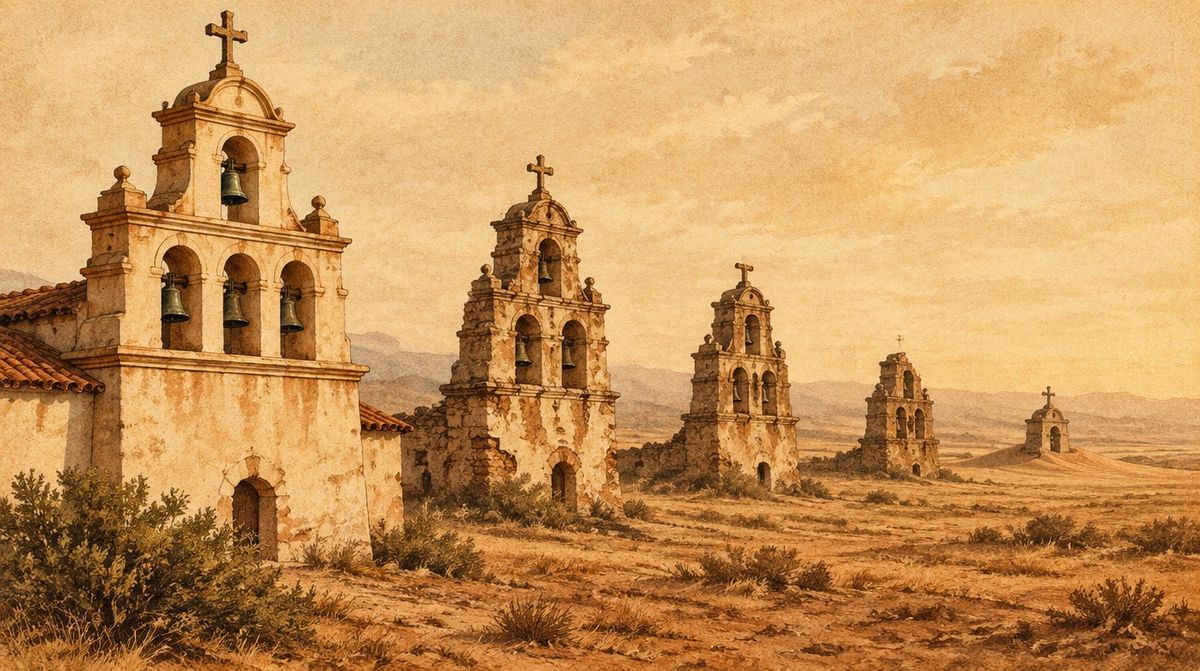
Often into the 1600s, and on some lines the 1500s. Mexico City's cathedral parish has baptisms from 1536. The ceiling on your own line is lower, and it is set by one thing: whether the books of your ancestors' parish survived.
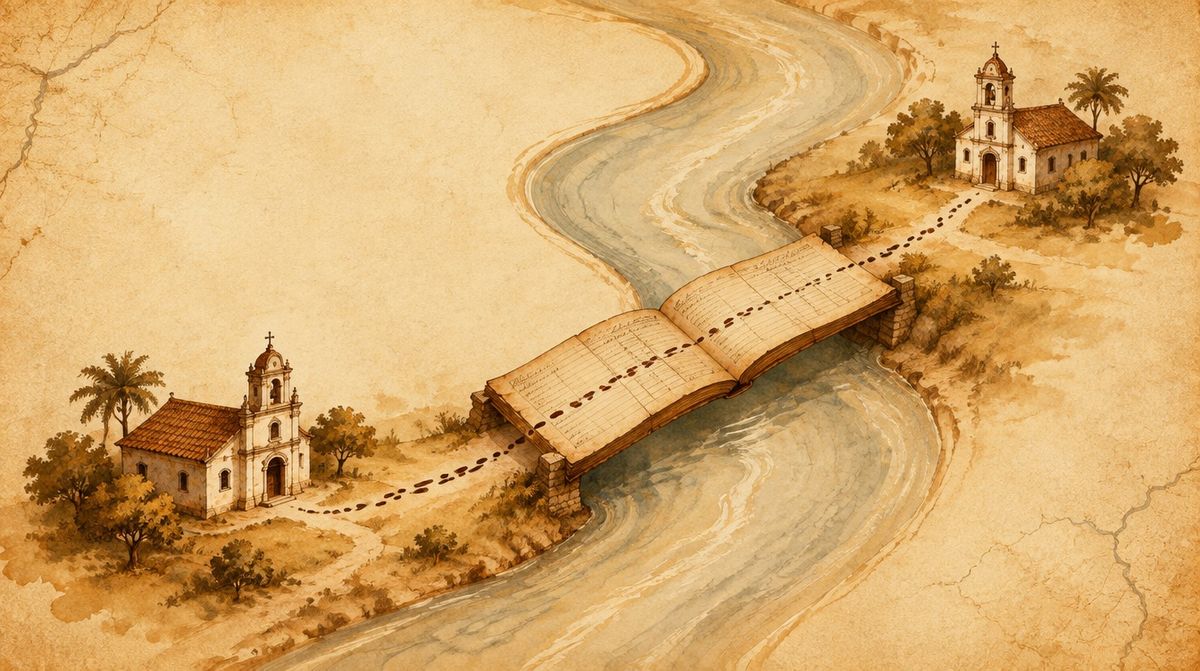
Set that against Reynosa, on the Rio Grande, founded on 14 March 1749 with forty families from Nuevo León. No Reynosa book can be older than that day. The gap from Mexico City's 1536 is 213 years, and it is where many Tejano trees start to run out.
When do Mexican parish registers start?
In the 1530s in the oldest cities, and later everywhere else.
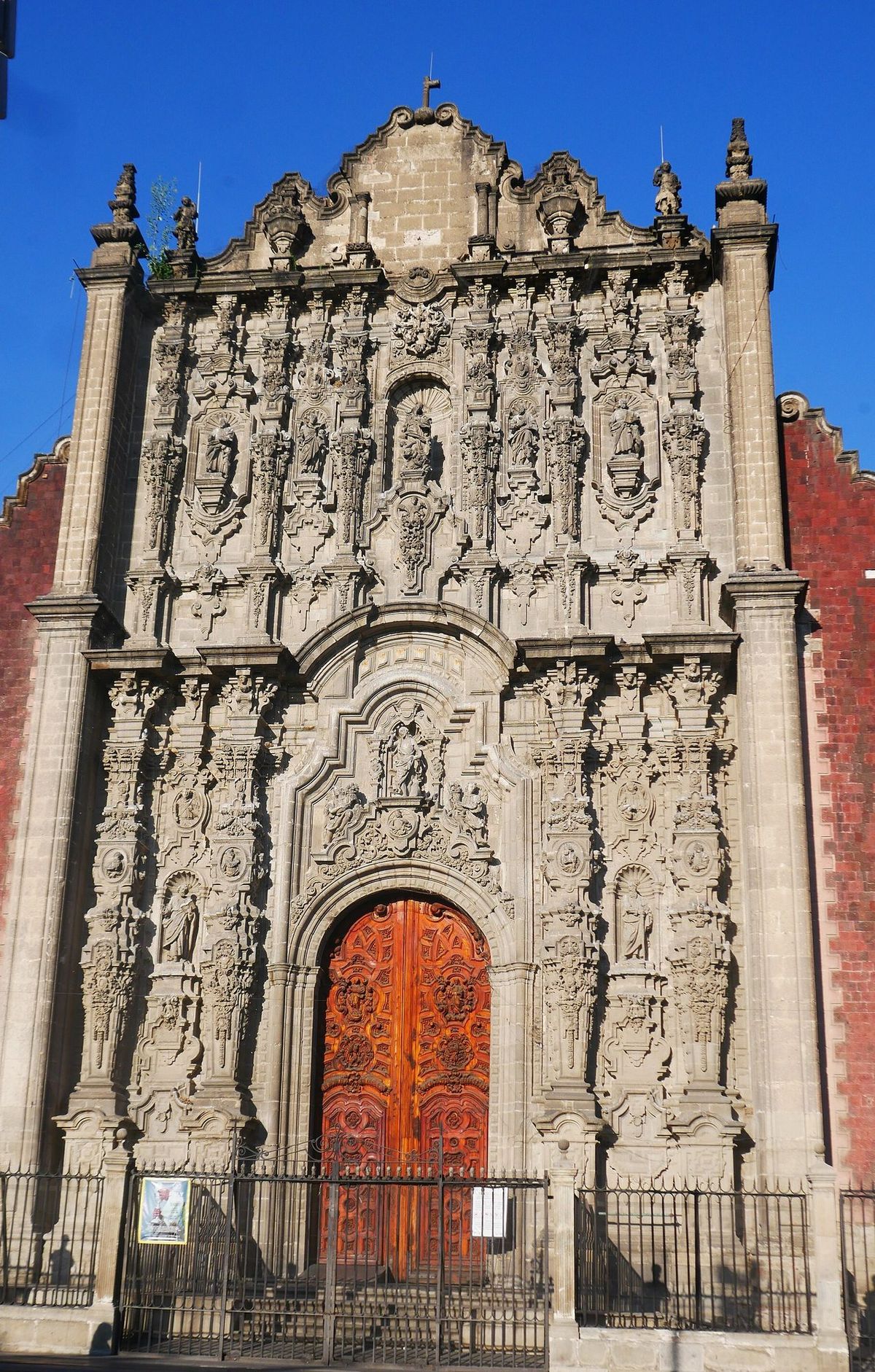
The Nuestros Ranchos guide to Mexican church records says some of the earliest recorded baptisms of the Sagrario Metropolitano, Mexico City's cathedral parish, started in 1536. Other parishes began early too: the Sagrario in Mérida in 1543, Puebla's in 1545 and Asunción in Pachuca in 1568.
In 1563 the Council of Trent, the Catholic Church's reform council, standardized the books, the guide says. Its marriage decree of 11 November says:
"The parish priest shall have a book" (Council of Trent, Session 24, 1563)
That is the rule behind marriage registers. The dates above are ceilings for the country, not for your parish. A town founded two centuries after the capital has books from the day its first priest arrived, at best.
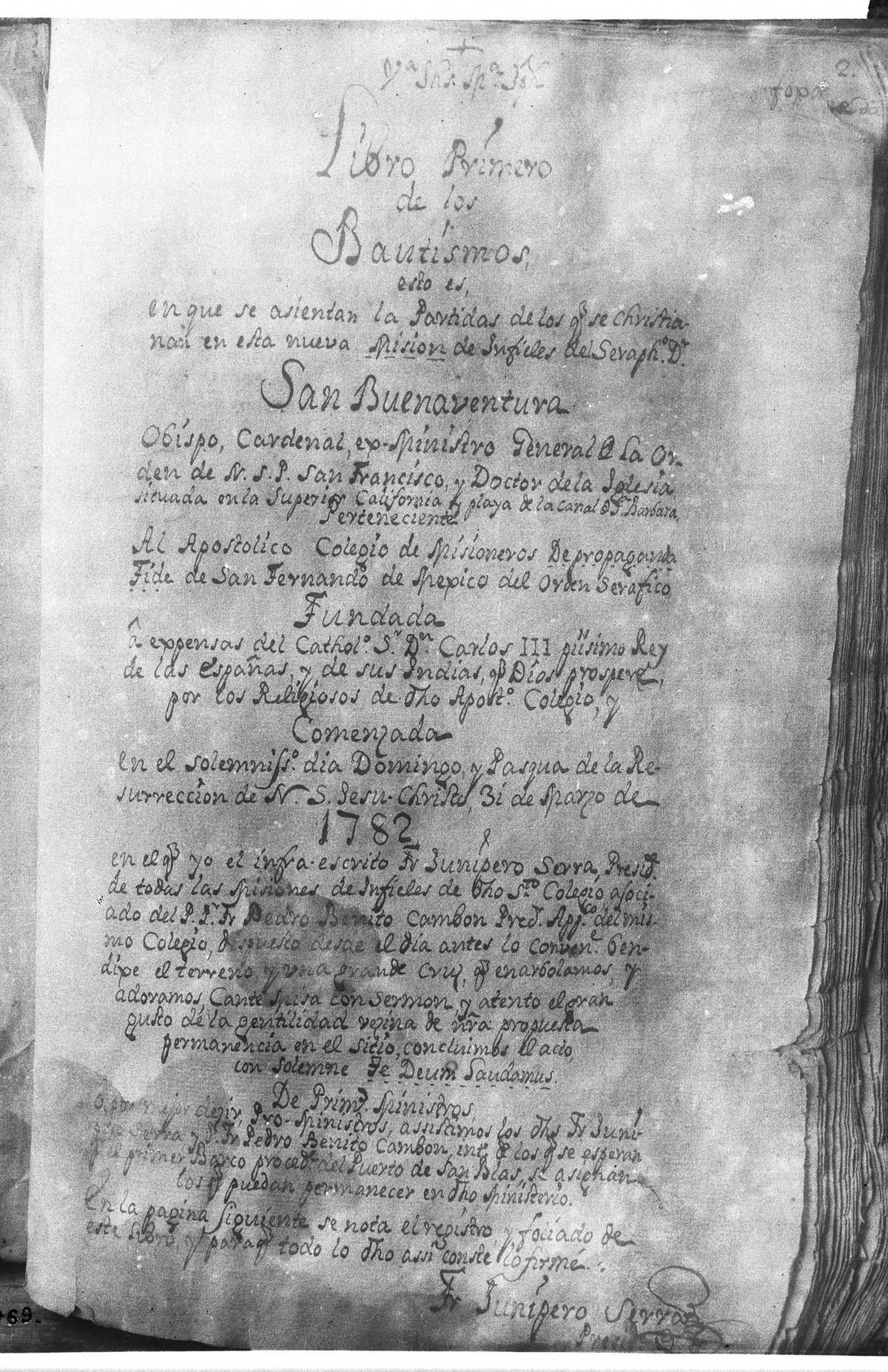
Here is a register opening: the first baptism book of Mission San Buenaventura, in what was then Spanish California. Look at the large 1782. Father Junípero Serra wrote on this title page that the mission was begun on Easter Sunday, 31 March 1782, the day he blessed the ground and raised a cross.
FamilySearch's national Mexican indexes are titled 1560 (baptisms), 1570 (marriages) and 1680 (deaths). They index selected records and include no images, so treat a hit as a lead and find the page. The free route is in how to find your Mexican ancestors for free.
When did civil registration begin in Mexico?
On paper in 1859, in Mexico City in 1861, and strictly enforced from 1867.
Civil registration is the government's own record of births, marriages and deaths, kept apart from the Church's. President Benito Juárez issued the Registro Civil law on 28 July 1859 at Veracruz. A 2015 study of the registry in Mexico City says it could not take effect until 1861, and FamilySearch says it was not strictly enforced until 1867.
The study says Mexico City's registry courts were closed on 31 May 1863 and reopened on 6 July 1867, yet registrations continued under Maximilian's French-backed empire, and a December 1867 decree validated its civil marriages and papers. After 1859, Nuestros Ranchos says, search both records, because the church book may list only the godparents while the civil one lists the grandparents.
Example: what an 1865 law says a civil birth entry must name
The record is a law, not an entry, and I would rather say so plainly. It is Emperor Maximilian's decree on civil registration, printed in the empire's official gazette on 18 December 1865 and reissued by Oaxaca's prefect in January 1866. The Library of Congress holds a copy, and this is its third page.
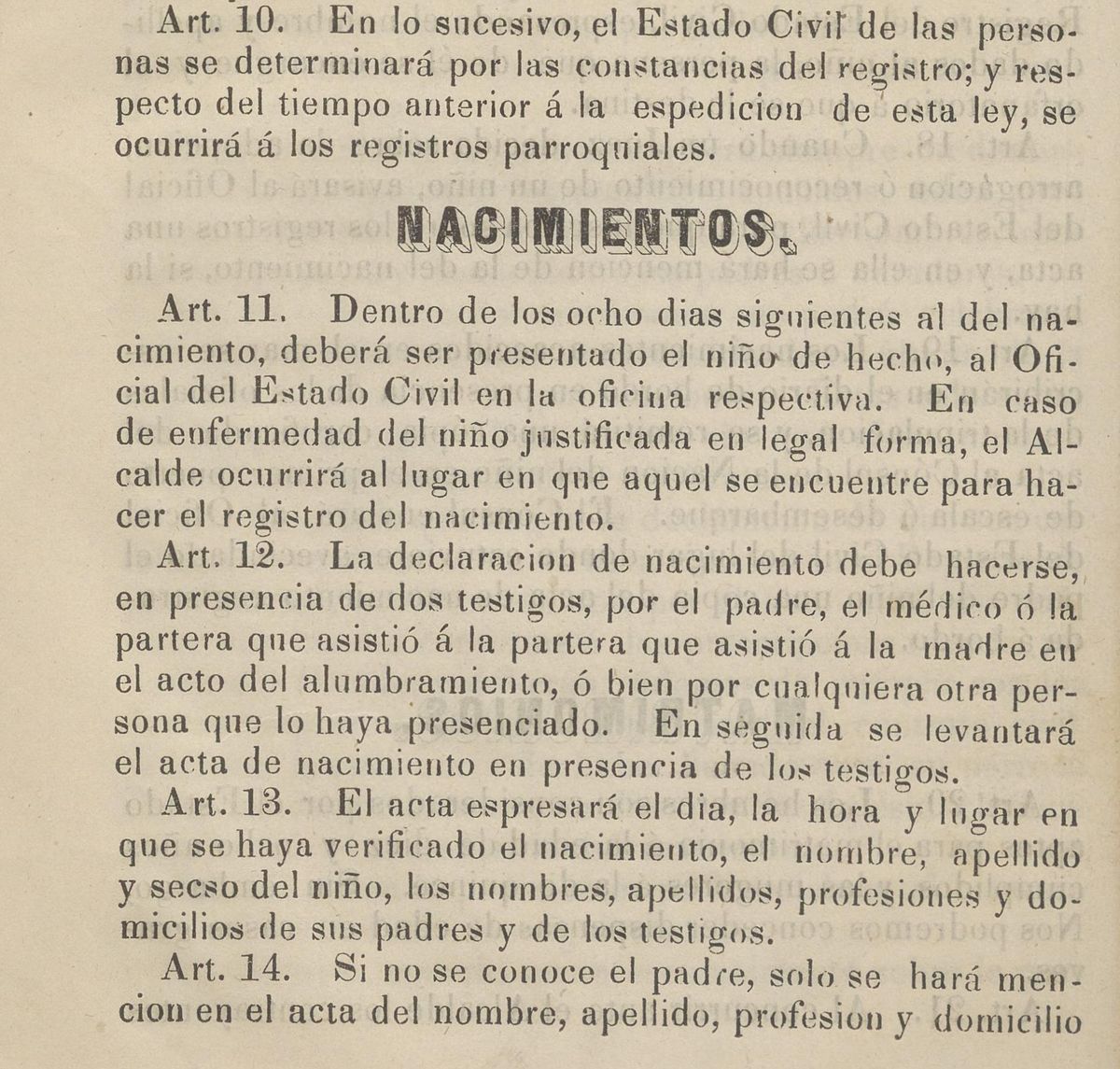
What it states: article 11 gives eight days after a birth to present the child to the Oficial del Estado Civil, the civil registry officer. Article 12 has the father, the doctor, the midwife or anyone else who was present declare the birth before two witnesses. Article 13 says the entry gives the day, hour and place, the child's name, surname and sex, and the names, surnames, professions and homes of the parents and witnesses. Article 10 adds that for any time before the law, you go to the parish registers.
What it proves is that in 1865 the empire told its clerks what to write down. It does not prove that the clerk in your ancestors' town did, or that an entry survives, and article 13 names no grandparents, so only the entry itself can show whether they appear. My next step would be to find the town's civil register for the year and set it beside the church baptism.
How far back do South Texas church records go?
To 1731 on the reels in Corpus Christi, and deeper once the line crosses the river.
Tejano is the word for Texans of Spanish and Mexican descent, families who were here before the Rio Grande became a border. The Corpus Christi Public Libraries, a FamilySearch affiliate, hold microfilm that their page says runs from 1731 to 1957 for South Texas places including San Antonio and Laredo, and from 1500 to the early 1900s for northern Mexico, including Coahuila, Nuevo León and Tamaulipas.
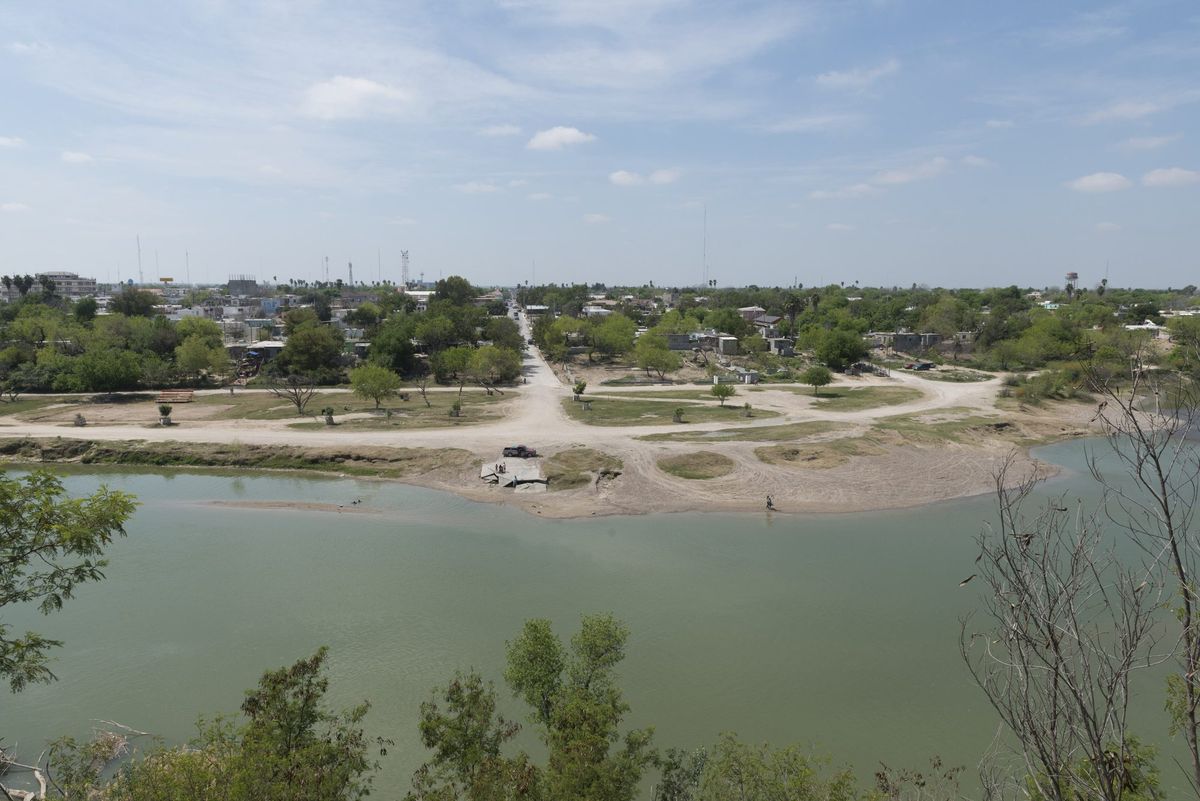
San Antonio has a real 1731 date. On 9 March 1731 fifteen families and four unmarried men, 56 people, reached the presidio, or frontier fort, of San Antonio de Béxar, the Texas State Historical Association's Handbook of Texas says, and became the core of the town of San Fernando de Béxar. They joined a community that dated to 1718, so I take 1731 as the edge of the Texas range, not proof that one book starts that day.
The river towns are younger. Nuevo Santander, the colony that became Tamaulipas and part of South Texas, was the last part of northeastern Mexico to be settled, the Handbook says. José de Escandón founded Camargo on 5 March 1749, Reynosa on 14 March and Mier on 6 March 1753, and in 1755 gave permission to found Laredo.
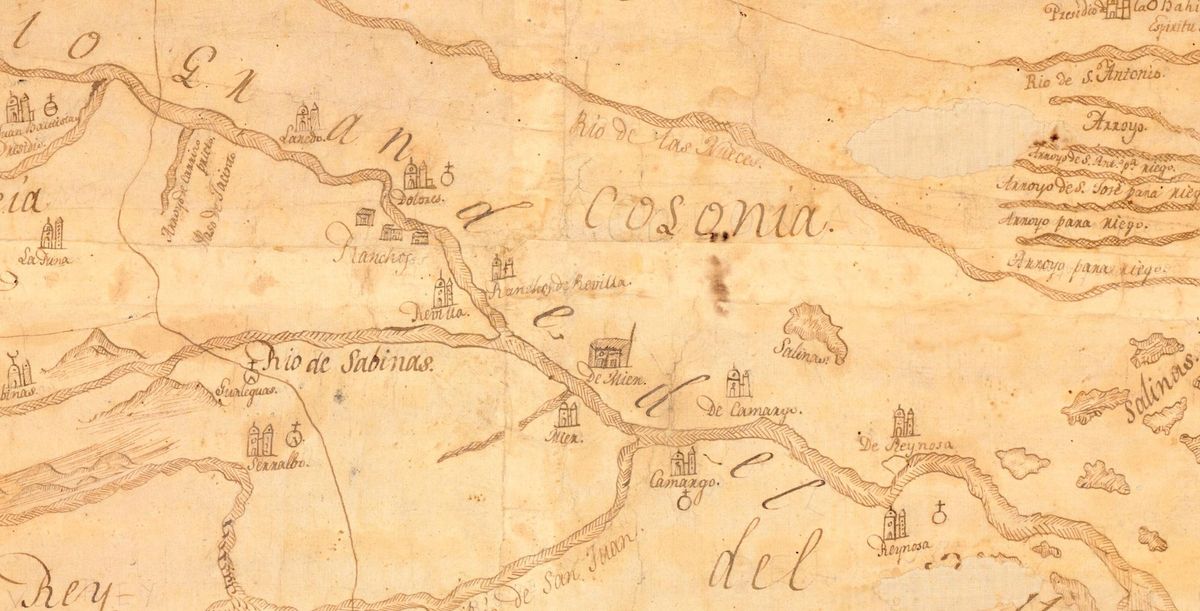
Its legend, outside this detail, counts 23 settlements and 12 missions on what it calls this unknown coast. The Library of Congress catalogs the map as [1747?], but it shows Mier, founded in 1753, and Laredo, permitted in 1755, so it was almost certainly drawn later.
A founding date is a hard floor: a town cannot have a book older than itself. The Texas side gives the 1700s. The Mexican side gives the 1600s and sometimes the 1500s, because the Nuevo León and Coahuila towns that sent settlers north are older.
Try this in 10 minutes:
- Write down the town where your earliest known Mexican or Tejano ancestor was born or married.
- Look up its founding date; the Handbook of Texas gives them for Texas and Nuevo Santander towns.
- On FamilySearch's Search Records page, use Browse by Location, pick Mexico, then the state (a free account is needed), and note the earliest year of any church book there.
- If your ancestor predates that year, find where the first settlers came from and repeat. A gap is a ceiling for now, not a failure.
What is an información matrimonial, and what else do the books record?
A baptism entry gives the basics. A marriage investigation gives the generation above.
A baptism entry usually gives the child's name, the date and place, the parents and godparents, and sometimes the grandparents and a racial label. Before independence most church records noted race, and Nuestros Ranchos lists 32 terms, among them mestizo (Spanish and Indian). The guide says a label may have been set by the people present or arbitrarily by the priest, so I treat it as an impression, not a measurement.
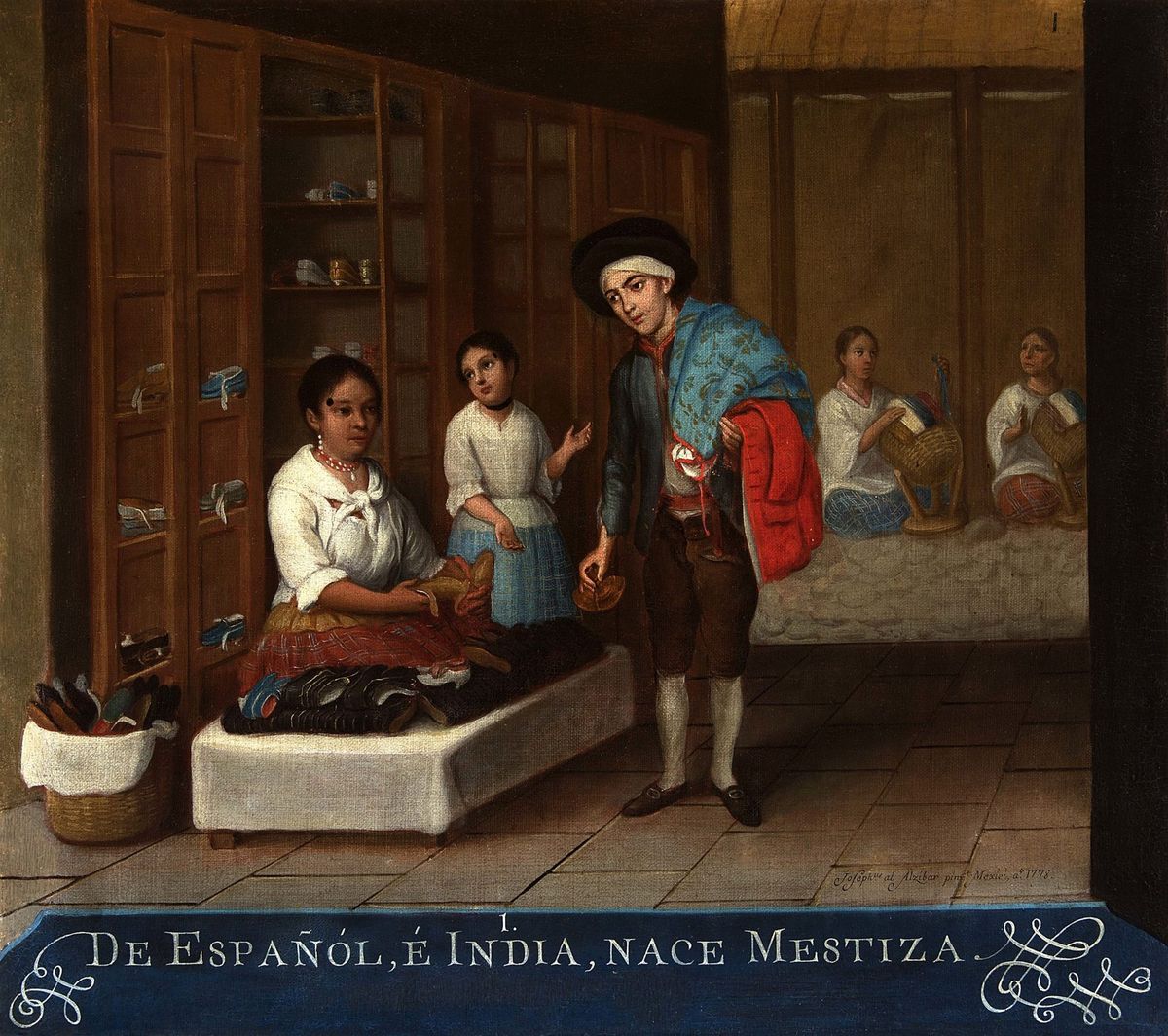
Before a Catholic couple married, the parish also gathered an información matrimonial, a marriage investigation. The guide lists the couple's names, ages, marital status, residence and parents, sometimes their birthplaces and grandparents, and two to four witnesses. The register entry is a few lines. The investigation can run three or four pages, and a birthplace in another town can appear there.
When the couple were related, the Church required a dispensation, a formal exemption from the rule against marrying close kin. The guide says the file may then include genealogical graphs, sometimes a line of ascent up to the common ancestors. It is also the paper trail of pedigree collapse, the same couple appearing twice in a tree.
Example: a settler's life in the Handbook of Texas
The record is the Handbook of Texas entry for Capt. Blas María de la Garza Falcón (1712 to 1767), who founded Camargo. It states that he was born in 1712 at Real de las Salinas, Nuevo León, to Blas de la Garza Falcón, twice governor of Coahuila, and Beatriz de Villarreal, and that he married Catarina Gómez de Castro on 4 January 1731 at Boca de Leones.
It is a summary, and its bibliography lists books, not parish entries, so none of those dates is proven yet. Next I would look for the baptism near 1712, the 1731 marriage and the información behind it, which should confirm the bride's parents.
What happens to a line when its books are lost?
It stops at the last book that survives, because books are lost one volume at a time.
Nuestros Ranchos lists the causes: humidity, insects, fires, floods, earthquakes and civil strife. It adds that many records called lost have only been misplaced, so a failed search is not always the end.
Example: a burial book that was counted, then lost
The record is a 1758 report by Governor Jacinto Barrios y Jauregui on Mission San José in San Antonio, quoted by the National Park Service. It says the priest showed him three large folio books holding 964 baptisms, 145 marriages and 466 burials.
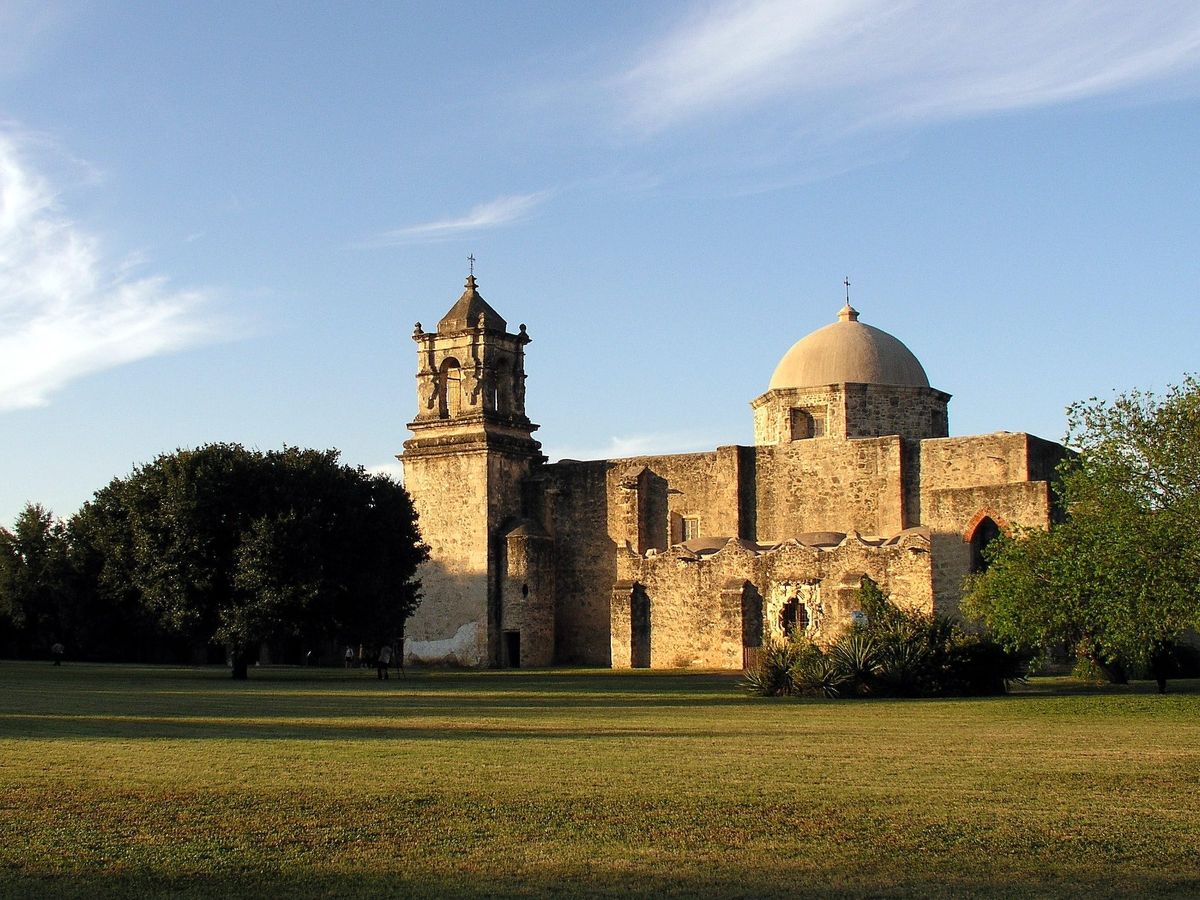
It proves the books existed and how full they were in 1758. It names no one. The Park Service says the burial book itself no longer exists; the oldest surviving colonial burial book for the mission starts in 1781 and holds 352 entries.
Example: a burial entry that names no age
The clearest case is a line I am working in public, File 001: the search for the birth year of Padre José Nicolás Ballí, the priest Padre Island is named for. Both Texas state markers print his birth year as 177?. He was born in Reynosa, the town whose founding opened this post.
The record is his burial entry of 16 April 1829 in the Nuestra Señora del Refugio book, Matamoros, on FamilySearch.
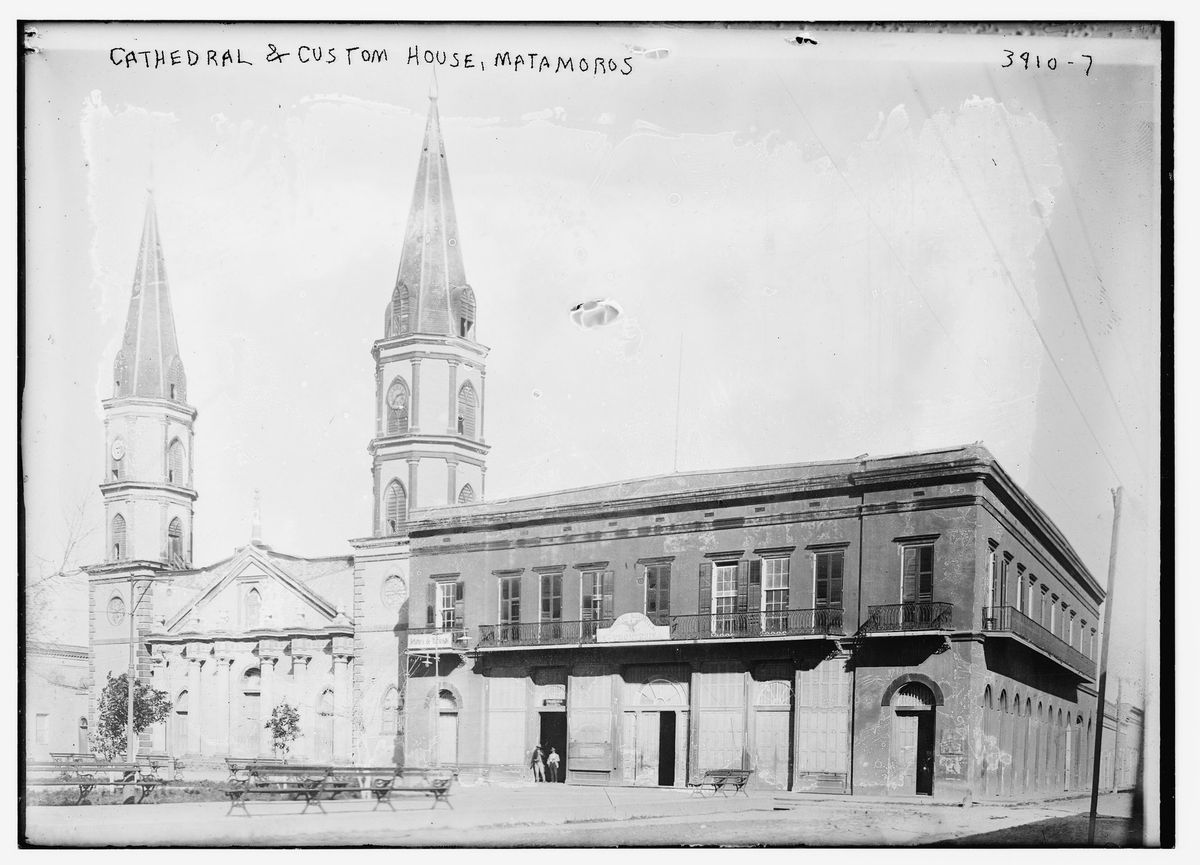
It states that the priest in charge buried him with full rite, for a church fee of twenty-five pesos, and that he died of apoplexy, a stroke. It gives no age. An entry of 11 April already calls him the late parish priest, so the date printed as his death is really his burial.
Example: a signature that sets a ceiling
The record is page 78 of the Reynosa marriage register for 1790 to 1810, free in the University of Texas Rio Grande Valley's digital library. In early 1807 he signs as interim parish priest of his own birthplace, so he was ordained by then. It gives no age, but church law set 24 as the minimum for a priest, which points to a birth by about 1783 unless he had an exception.
Example: the book that went missing
His baptism would be in Reynosa's books from the 1760s or 1770s. The case file says the earliest books were likely lost when a flood destroyed Reynosa in 1800. A UNAM history says the first site turned into an island whenever the river rose, and the town was not moved, eight kilometers east, until 4 July 1802. The marriage book that opens in 1790 survives, and the baptism, as far as anyone has found, does not.
Around the flood, his ordination file should hold proof of his age. It may sit in the Archdiocese of Monterrey's archive, with Guadalajara as the other candidate. The Monterrey director said the archive is open to the research but could not confirm the file survives. I don't know yet whether it does.
His mother's will of 1798 names his grandfather, also Nicolás Ballí. In my file that stays a pointer until a record ties them together. So the 1800s are proven and the 1700s are reached, and a flood holds the line there.
Can a Tejano line reach the 1500s, and what does each depth cost?
Sometimes, and only after someone has looked at the parishes.
A line through the old cities can reach the 1500s on parish books alone. A frontier line usually cannot, because a river town's first settlers were baptized somewhere else, and the información matrimonial can be the paper that says where. Reynosa's first families came from four Nuevo León towns, a UNAM history says. Monterrey itself was founded in 1596, and a published list of early residents names 82 settlers who arrived by 1626, leaving out the founder and other leading figures.
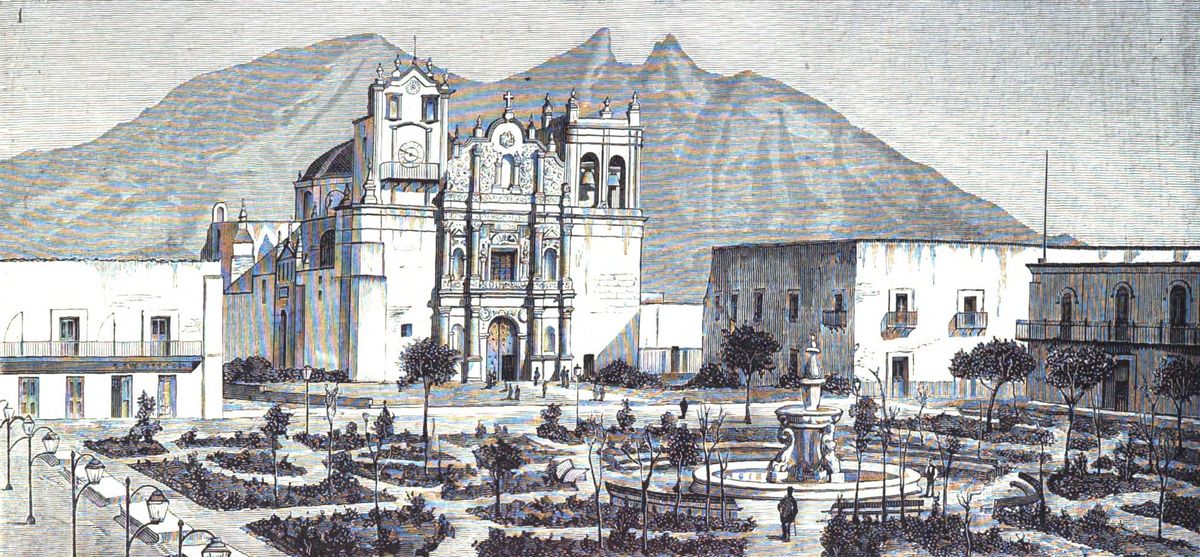
Before 1600 a Dutch genealogist's warning about her own country's records applies here: you may find the name, but the records often do not give enough detail to prove the relationship. A name on a page is not a parent.
That is why I quote the deepest work only after seeing the registers. On my pricing page, both sides of a family back into the 1800s starts at $2,500, with a 25% deposit of $625 to start. One or two direct lines into the 1700s starts at $5,500, billed in four equal parts: at the start, when a line reaches 1800, when it reaches 1700, and on delivery.
One direct line into the 1600s is $6,500, and the flagship, both sides into the 1600s, is $9,500, with $2,375 to start. The 1500s and earlier are quoted case by case.
Every 1600s request begins with the $300 Discovery assessment, credited in full toward the package. At the checkout your card is authorized, not charged. After a short call you get the scope and total in writing, and the payment is captured only when you accept them and I accept the case; if either of us says no, the hold is released.
You can do most of this post for free: the founding dates are in the Handbook of Texas, the books on FamilySearch, the reels at a public library. What I add is the Spanish, whole-book reading when an index misses a spelling, the dispensation files, and a record of every search, dead ends included. What I cannot add is a baptism book a flood destroyed, and if a line hits a true wall, billing stops at the last milestone reached and you keep everything found. How to break a brick wall before 1800 has the workarounds; how far back you can trace your family tree shows where a Mexican line stands against the rest of the world.
The tiers show what each depth includes and how it is billed, so you can see where your own lines would land. See what each depth costs.
Questions people also ask
When do Mexican parish registers start?
Some of the earliest recorded baptisms of Mexico City's cathedral parish date to 1536, by the Nuestros Ranchos guide, and other early parishes started in Mérida (1543), Puebla (1545) and Pachuca (1568). The Council of Trent standardized the books in 1563. A parish's books cannot begin before the parish does, so a frontier town's registers start much later than the capital's. FamilySearch's national Mexican indexes are titled 1560 for baptisms, 1570 for marriages and 1680 for deaths.
When did Mexican civil registration begin?
On 28 July 1859, when President Benito Juárez issued the Registro Civil law at Veracruz. It could not take effect in Mexico City until 1861, and FamilySearch says it was not strictly enforced until 1867. Coverage is good but not complete; FamilySearch says its State of Mexico collection covers about 90 to 95 percent of the population. The Church kept its own books after 1859, so for an event after that year there can be two records, and the civil one may add the grandparents' names.
What is an información matrimonial?
The investigation a parish made before a wedding. It records the couple's intent to marry, their names, ages, marital status, residence and parents, sometimes their birthplaces and grandparents, and the testimony of two to four witnesses. When the couple were related, the file could include a genealogical chart up to the common ancestor. These files sit apart from the marriage register and can be where a line first crosses into another town.
How far back do South Texas church records go?
The Corpus Christi Public Libraries' microfilm of South Texas church and civil records runs from 1731 to 1957, for San Antonio, Laredo, Victoria, Corpus Christi, Beeville, Port Lavaca and Seguin. The library's reels for Coahuila, Nuevo León, Tamaulipas, Jalisco and Guanajuato run from 1500 to the early 1900s. A Tejano line that reaches the 1700s in Texas usually continues in a Mexican parish.
Can a Tejano line reach the 1500s?
Sometimes, through the older cities of central and northern Mexico, where the registers go back far enough and a marriage investigation or dispensation names where a settler's family came from. Frontier parishes were founded later and lost books to floods and fires, so many lines stop in the 1700s. Before 1600 a record may hold the name without proving the parent-child link. I quote the 1500s case by case, after seeing the parishes.
Sources
- Nuestros Ranchos, "Guide to Mexican Church Records"
- Corpus Christi Public Libraries, "Hispanic Genealogy Resources"
- FamilySearch, "Mexico, Baptisms, 1560-1950" (collection page)
- FamilySearch, "Mexico, Marriages, 1570-1950" (collection page)
- FamilySearch, "Mexico, Deaths, 1680-1940" (collection page)
- FamilySearch, "Mexico, México, Civil Registration, 1861-1941" (collection page)
- "Legalidad y práctica del Registro Civil a mediados del siglo XIX," Signos Históricos 34 (2015)
- Council of Trent, Twenty-Fourth Session (Waterworth translation, 1848), Hanover Historical Texts Project
- INAH, "Lorenzo Rodríguez y el Sagrario de la Catedral Metropolitana"
- California Office of Historic Preservation, "Mission San Buenaventura"
- Handbook of Texas, "Escandon, Jose de"
- Handbook of Texas, "Nuevo Santander"
- Handbook of Texas, "Canary Islanders"
- Handbook of Texas, "Garza Falcon, Blas Maria de la"
- "Nuestra Señora de Guadalupe de Reynosa," in Nuevo Santander 1748-1766 (UNAM, 2014)
- Library of Congress, "Mapa de la Sierra Gorda y Costa del Seno Mexicano desde la Cuidad de Queretaro"
- Library of Congress, "A look at Mexico from bluffs above Roma" (photograph, 2014)
- Library of Congress, "Cathedral & Custom House, Matamoros" (Bain News Service glass negative)
- National Park Service, "The Camposanto at Mission San José"
- "Los primeros vecinos de Monterrey (1596-1626)," Humanitas 32 (2005)
- Library of Congress, "Ley sobre el registro del estado civil en el imperio" (Maximilian's civil registry law, Oaxaca printing, 1866)
- GCatholic, "Catedral de Nuestra Señora del Refugio, Matamoros"
- Wikimedia Commons, file page for the 1880 engraving of Monterrey's cathedral (reproduces the printed caption)
- Dutch Genealogy, "Ask Yvette: How Far Can You Go Back?"
- Skeleton Files, File 001, The Padre Ballí Birthdate
- Skeleton Files, Packages and Pricing