Decade Files · No. 05 · 1980 to 1989

The 1980s.

Between 1984 and 1989, the share of American households with a computer went from 8.2% to 15.0%, and U.S. cellphone subscribers went from 91,600 (January 1985) to 3.5 million. Challenger was lost, Chernobyl happened, Live Aid reached an estimated 1.5 billion viewers and the Berlin Wall fell. The decade of the arcade, the compact disc and the home video tape, as a case file: every fact sourced, and what it means for the records your family left behind.

  • 226.5 millionpeople counted in the 1980 U.S. census (226,545,805 on April 1, 1980)[1]
  • 4.44 → 5.21 billionworld population, 1980 vs 1989 (4,437,473,406 and 5,207,378,374, World Bank estimates)[2]
  • 8.2% → 15.0%share of U.S. households with a computer, 1984 vs 1989 (Census Bureau Current Population Survey; 1984 was the first year the Census Bureau collected the data)[3]
  • 91,600 → 3.5 millionmobile telephone subscribers in the United States, January 1985 vs December 1989 (91,600 and 3,508,944, CTIA estimates reported by the FCC)[4]
  • 73.7 → 75.1 yearslife expectancy at birth in the United States, 1980 vs 1989 (both sexes, all races)[5]
Year by year

Ten years, one tap at a time

Tap a year to see its moments, who TIME honoured, its biggest song and film, and what everyone was doing.

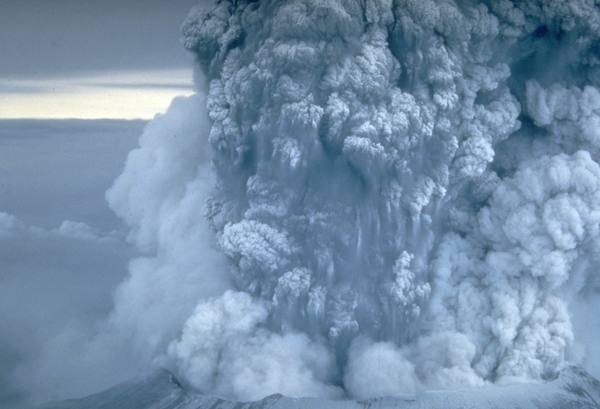
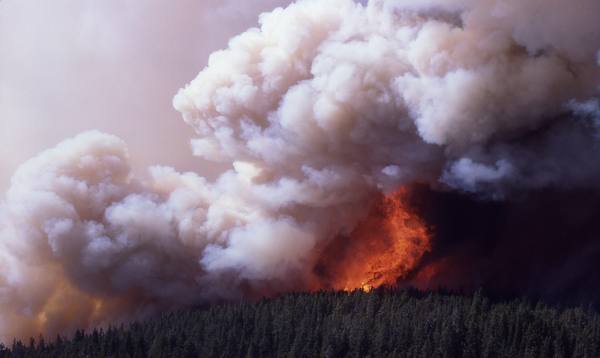
A close-up of the ash plume rising from Mount St. Helens during the May 18, 1980 eruption. USGS says the plume lasted more than nine hours and reached 12 to 15 miles above sea level.

1980

  1. February 22, 1980The Miracle on Ice

    At the Winter Olympics in Lake Placid, New York, a youthful U.S. hockey team beat the four-time defending gold medal winners from the Soviet Union 4-3 on February 22, 1980. Two days later the Americans beat Finland 4-2 to win the gold medal.[6]

    Henry Zbyszynski (Flickr: hankzby) · CC BY 2.0
  2. May 18, 1980Mount St. Helens erupts

    Mount St. Helens erupted on May 18, 1980. The U.S. Geological Survey says the eruption killed 57 people and destroyed over 200 square miles of forest.[7]

  3. July 19, 1980The Moscow Olympics open amid a boycott

    The Summer Olympics opened in Moscow on 19 July 1980, with 5,255 athletes from 80 countries. After the Soviet invasion of Afghanistan, President Jimmy Carter called for a boycott of the Games, and Olympedia says approximately 63 countries eventually boycotted.[8]

    Yu. Korolev / Moscow Main Archive (Главархив Москвы), via mos.ru · CC BY 4.0
  4. December 8, 1980John Lennon is shot and killed

    Mark David Chapman shot and killed John Lennon, who was 40, outside Lennon's New York City apartment building, the Dakota, on December 8, 1980. Lennon was pronounced dead at Roosevelt Hospital around 11:15 p.m.[9]

TIME’s honour of the year
  • Man of the Year: Ronald ReaganTIME[10]

No. 1 songCall Me · Blondie[11]

Top film at the U.S. box officeStar Wars: Episode V - The Empire Strikes Back[12]

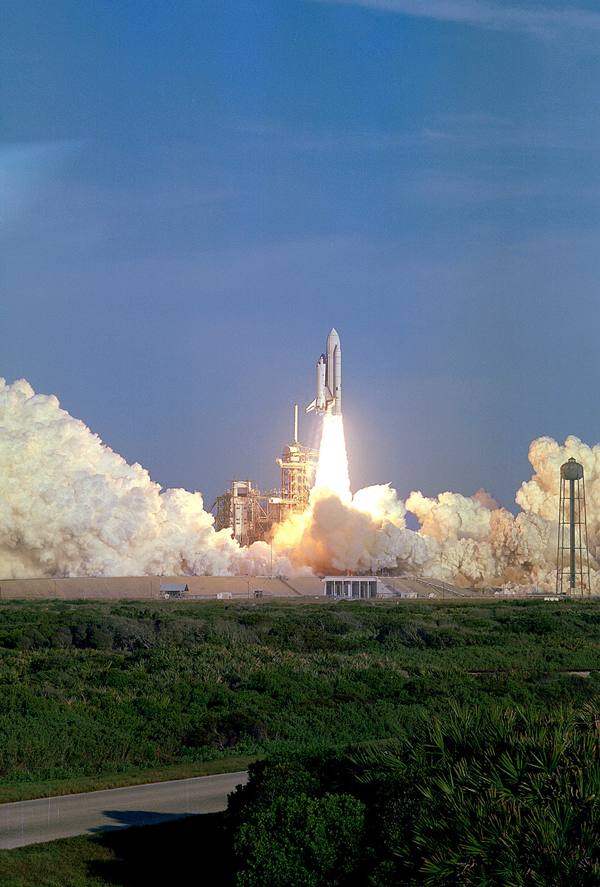
Space Shuttle Columbia lifting off from Launch Complex 39A on April 12, 1981, the first launch of the Space Shuttle.

1981

  1. January 20, 1981Reagan is inaugurated and the Iran hostages are released

    Ronald Reagan was inaugurated as the fortieth President of the United States on January 20, 1981. The same day, the 52 American hostages held in Iran since November 1979 were released, ending a 444-day hostage situation that began during Jimmy Carter's presidency.[16]

  2. March 30, 1981President Reagan is shot

    On March 30, 1981, John Warnock Hinckley Jr. shot President Ronald Reagan, who was hit under his left arm by a bullet that ricocheted off his limousine. The Miller Center says the bullet missed his heart by an inch, and that Press Secretary James Brady, Secret Service agent Timothy McCarthy and Washington police officer Thomas Delahanty were also wounded.[16]

  3. April 12, 1981The first Space Shuttle flight

    Space Shuttle Columbia lifted off on April 12, 1981, on the first Space Shuttle mission, with John Young as commander and Robert Crippen as pilot. It landed at Edwards Air Force Base in California on April 14, after a flight of 2 days, 6 hours and 20 minutes.[17]

  4. June 5, 1981The first report of what became known as AIDS

    On June 5, 1981, the CDC's Morbidity and Mortality Weekly Report published a report of Pneumocystis carinii pneumonia in five previously healthy young men in Los Angeles, California; two had died. The report was later acknowledged as the first published scientific account of what became known as AIDS.[18]

  5. July 29, 1981The Prince of Wales marries Lady Diana Spencer

    Lady Diana Spencer married the Prince of Wales at St Paul's Cathedral in London on 29 July 1981. The Royal Family's website says the ceremony drew a global television and radio audience estimated at around 1,000 million people.[19]

    Acabashi · CC BY-SA 4.0
TIME’s honour of the year
  • Man of the Year: Lech WalesaTIME[20]

No. 1 songBette Davis Eyes · Kim Carnes[11]

Top film at the U.S. box officeRaiders of the Lost Ark[21]

A joint services color guard displays state flags beside the wall during the dedication of the Vietnam Veterans Memorial in Washington, D.C., in November 1982.

1982

  1. April 2, 1982The Falklands War begins

    The Falkland Islands, a British overseas territory about 300 miles off the east coast of Argentina, were invaded on 2 April 1982. Argentine forces surrendered at Stanley on 14 June, and the National Army Museum lists 255 British servicemen, three female civilians and 649 Argentines killed.[25]

    John5199 (Flickr) · CC BY 2.0
  2. June 11, 1982E.T. the Extra-Terrestrial opens

    Steven Spielberg's science-fiction film E.T. the Extra-Terrestrial was released on June 11, 1982. HISTORY says it eventually earned some $435 million, and that the film was re-released in 1985 and a special 20th-anniversary edition was issued in 2002. It won four Academy Awards.[26]

  3. September 29, 1982Tylenol poisonings in the Chicago area

    On September 29, 1982, three Chicago-area residents became ill and died after taking Extra-Strength Tylenol that was later found to be poisoned with cyanide; they were the first of seven victims. Bottles were recalled nationwide, and the case led to new tamper-proof medicine containers.[27]

  4. November 13, 1982The Vietnam Veterans Memorial is dedicated

    The Vietnam Veterans Memorial was dedicated in Washington, D.C., on November 13, 1982. HISTORY says it was designed by Maya Lin, a Yale University architecture student, and was a black-granite wall inscribed with the names of the 57,939 Americans who died in the war.[28]

  5. December 2, 1982The first permanent artificial heart is implanted

    On December 2, 1982, a surgical team led by Dr. William DeVries at the University of Utah Medical Center implanted a Jarvik-7 artificial heart in Barney Clark. The University of Utah's health sciences library calls it the first-ever permanent artificial heart implant, and says Clark lived 112 days in the hospital.[29]

    Ben P L, "In Memory of Dr. Barney Clark" (Flickr) · CC BY-SA 2.0
TIME’s honour of the year
  • Machine of the Year: The ComputerTIME[30]

No. 1 songPhysical · Olivia Newton-John[11]

Top film at the U.S. box officeE.T. the Extra-Terrestrial[31]

Space Shuttle Challenger touching down at Edwards Air Force Base, California, on June 24, 1983, at the end of the STS-7 mission, the flight that carried Sally Ride.

1983

  1. February 28, 1983The M*A*S*H finale airs

    The two-and-a-half-hour final episode of M*A*S*H, titled Goodbye, Farewell and Amen, ran on February 28, 1983. The Television Academy says it drew 105.9 million viewers.[35]

  2. June 18, 1983Sally Ride becomes the first American woman in space

    Space Shuttle Challenger lifted off on June 18, 1983, on the STS-7 mission. NASA says the five-person crew included Sally Ride, the first American woman to fly in space, and that Challenger landed at Edwards Air Force Base in California on June 24.[36]

  3. September 1, 1983Korean Air Lines Flight 007 is shot down

    On September 1, 1983, a Soviet jet fighter shot down Korean Air Lines Flight 007 near Sakhalin Island, killing all 269 people on board. The State Department's Office of the Historian says the airliner had mistakenly strayed into Soviet airspace.[37]

    Kambui (M. Oertle), Flickr · CC BY 2.0
  4. October 23, 1983The Beirut barracks bombing

    On October 23, 1983, a truck bomb struck the U.S. Marine barracks in Beirut, killing 241 U.S. military personnel. HISTORY says 58 French soldiers were killed in their barracks two miles away.[38]

    Leonard J. DeFrancisci · CC BY-SA 4.0
TIME’s honour of the year
  • Men of the Year: Ronald Reagan and Yuri AndropovTIME[39]

No. 1 songEvery Breath You Take · The Police[11]

Top film at the U.S. box officeStar Wars: Episode VI - Return of the Jedi[40]

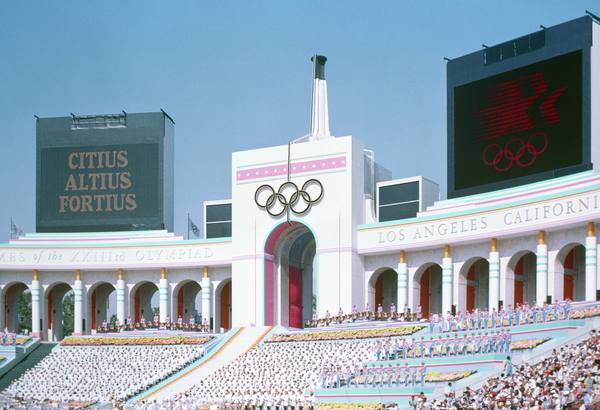
The Olympic torch tower above the peristyle gate of the Los Angeles Memorial Coliseum on the day of the opening ceremonies of the 1984 Summer Olympics, 28 July 1984.

1984

  1. July 12, 1984Geraldine Ferraro is chosen as a vice presidential candidate

    On July 12, 1984, Walter Mondale, the leading Democratic presidential candidate, announced Representative Geraldine Ferraro as his running mate. At the Democratic National Convention in San Francisco she became the first woman nominated for vice president by a major party.[44]

    Los Angeles Times Photographic Collection, UCLA Library Special Collections · CC BY 4.0
  2. July 28, 1984The Los Angeles Olympics open

    The Los Angeles Summer Olympics opened on 28 July 1984. Olympedia lists about 6,800 athletes from 140 countries, more than at any earlier Games, while the Soviet Union, East Germany, Cuba and most other Eastern European countries stayed away.[45]

  3. October 31, 1984Indira Gandhi is assassinated

    Indira Gandhi, who had been elected to a fourth term as prime minister in 1980, was assassinated outside her home on October 31, 1984, by two of her bodyguards. HISTORY says her son Rajiv came to power afterward and that extensive anti-Sikh riots followed.[46]

    Madhrakangri / Wikimedia Commons · CC BY 4.0
  4. December 2, 1984The Bhopal gas disaster begins

    A chemical release began at a Union Carbide pesticide plant in Bhopal, India, after water entered a storage tank holding more than 80,000 pounds of methyl isocyanate on December 2, 1984. The U.S. Chemical Safety Board estimates that 3,800 people died immediately and that tens of thousands were injured.[47]

    Julian Nyča / Wikimedia Commons · CC BY-SA 3.0
TIME’s honour of the year
  • Man of the Year: Peter UeberrothTIME[48]

No. 1 songWhen Doves Cry · Prince[11]

Top film at the U.S. box officeBeverly Hills Cop[49]

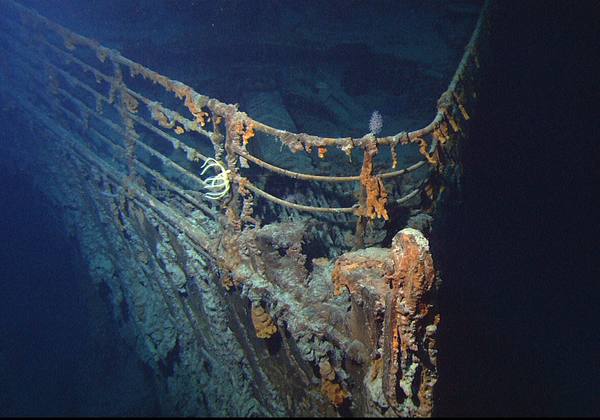
The bow of the RMS Titanic, photographed in June 2004 by the ROV Hercules during an expedition returning to the shipwreck. It is a later image of the wreck, not a photograph from its 1985 discovery.

1985

  1. March 11, 1985Mikhail Gorbachev becomes leader of the Soviet Union

    On March 11, 1985, Mikhail Gorbachev was selected as the new general secretary of the Soviet Union, the day after the death of Konstantin Chernenko. HISTORY says he led the country through domestic reforms and foreign policy changes over the next six years, until he resigned as president in December 1991 and the Soviet Union formally ceased to exist.[53]

  2. July 13, 1985Live Aid

    Live Aid, a charity rock concert proposed by Bob Geldof to raise money and awareness for famine relief in Africa, was held on Saturday, July 13, 1985, at Wembley Stadium in London and JFK Stadium in Philadelphia, with more than 75 acts. HISTORY says the 16-hour concert was linked by satellite to more than a billion viewers in 110 nations and raised more than $100 million.[54]

    Stefan Schäfer, Lich / Wikimedia Commons · CC BY-SA 4.0
  3. September 1, 1985The wreck of the Titanic is found

    On September 1, 1985, a joint U.S.-French expedition, with American oceanographer Robert Ballard and French oceanographer Jean-Louis Michel, located the wreck of the Titanic, about 400 miles east of Newfoundland and some 13,000 feet below the surface, 73 years after the ship sank. HISTORY says the unmanned submersible Argo passed over one of the liner's boilers, and the next day the body of the ship was found nearby, split in two.[55]

  4. September 11, 1985Pete Rose gets his 4,192nd hit

    On September 11, 1985, Cincinnati Reds player-manager Pete Rose hit a first-inning single off pitcher Eric Show of the San Diego Padres for the 4,192nd hit of his career, passing Ty Cobb, whom UPI reported as having 4,191. UPI said it came 57 years to the day after Cobb took his final at-bat in the major leagues.[56]

    William Alden / Flickr (cropped; via Wikimedia Commons) · CC BY-SA 2.0
  5. September 19, 1985Earthquake strikes Mexico City and central Mexico

    A magnitude 8.0 earthquake struck Michoacán, Mexico, on September 19, 1985. The U.S. Geological Survey says at least 9,500 people were killed, about 30,000 were injured and more than 100,000 were left homeless, with severe damage in parts of Mexico City and in several states of central Mexico.[57]

TIME’s honour of the year
  • Man of the Year: Deng XiaopingTIME[58]

No. 1 songCareless Whisper · Wham![11]

Top film at the U.S. box officeBack to the Future[59]

Space Shuttle Challenger, mounted on its external tank and solid rocket boosters, is carried by a crawler-transporter toward its launch pad at the Kennedy Space Center. This undated NASA photograph shows the orbiter before it was lost on 28 January 1986, not the accident.

1986

  1. January 28, 1986Space Shuttle Challenger is lost

    Space Shuttle Challenger launched on mission STS-51L, the 25th Space Shuttle mission, on January 28, 1986. NASA says Challenger and her crew of seven, including Teacher in Space Christa McAuliffe, were lost in an explosion 73 seconds after liftoff, and the investigation found the cause was an o-ring failure in the right solid rocket booster, aggravated by extreme cold weather in Florida before the launch.[63]

  2. April 26, 1986Chernobyl nuclear accident

    On 26 April 1986, an accident at the Chernobyl nuclear power plant destroyed a reactor and released considerable amounts of radioactive material. UNSCEAR says 30 workers died within a few weeks, about 115,000 people were evacuated in 1986, and about 220,000 more were relocated afterward from Belarus, the Russian Federation and Ukraine.[64]

    Vadim Mouchkin / IAEA Imagebank (via Flickr and Wikimedia Commons) · CC BY-SA 2.0
  3. July 4, 1986The Statue of Liberty's centennial

    The Statue of Liberty's centennial was celebrated on July 4, 1986, with fireworks and fanfare, after a restoration that began with scaffolding in 1984 and was completed in 1986. The National Park Service says workers replaced the rusting iron armature bars with stainless steel and the damaged flame and upper part of the torch with a replica of Bartholdi's original, and a new exhibit opened in the pedestal on July 5.[65]

  4. October 25, 1986The Mets win Game 6 of the World Series

    On October 25, 1986, the New York Mets beat the Boston Red Sox 6-5 in 10 innings in Game 6 of the World Series at Shea Stadium. With two outs in the bottom of the 10th, the Mets tied the game when a pitch went to the backstop and Kevin Mitchell scored from third, and then a ground ball from Mookie Wilson went through first baseman Bill Buckner's legs, letting Ray Knight score the winning run.[66]

    George Garrigues (GeorgeLouis) / Wikimedia Commons · CC BY-SA 3.0
  5. November 25, 1986The Iran-Contra connection is revealed

    Three weeks after a Lebanese magazine reported that the United States had secretly sold arms to Iran to try to free seven American hostages in Lebanon, Attorney General Edwin Meese announced on November 25, 1986, that proceeds from the sales had been diverted to the Contras in Nicaragua. The same day, President Reagan accepted the resignation of national security adviser John Poindexter and fired Oliver North; Reagan accepted responsibility for the arms-for-hostages deal but denied knowing of the diversion.[67]

TIME’s honour of the year
  • Woman of the Year: Corazon AquinoTIME[68]

No. 1 songThat's What Friends Are For · Dionne & Friends (Dionne Warwick, Gladys Knight, Elton John & Stevie Wonder)[11]

Top film at the U.S. box officeTop Gun[69]

President Ronald Reagan speaks from a podium on a platform in front of the Brandenburg Gate in West Berlin on June 12, 1987. The photograph is by the White House Photographic Office and is held by the National Archives.

1987

  1. June 12, 1987Reagan speaks at the Brandenburg Gate

    On June 12, 1987, President Ronald Reagan spoke at the Brandenburg Gate in Berlin and called on General Secretary Mikhail Gorbachev to open the gate and tear down the wall that, since 1961, had completely encircled West Berlin. Speechwriter Peter Robinson wrote in the National Archives' Prologue magazine that State Department and National Security Council staff submitted alternate drafts without the line, but Reagan decided to keep it in.[73]

  2. September 16, 1987The Montreal Protocol is signed

    The Montreal Protocol on Substances that Deplete the Ozone Layer was signed on 16 September 1987, and the UN says it requires the control of nearly 100 chemicals, with timetables to phase them out. On 16 September 2009 the protocol and the Vienna Convention became the first treaties in United Nations history to achieve universal ratification.[74]

  3. October 16, 1987Baby Jessica is rescued from a well

    On October 16, 1987, 18-month-old Jessica McClure was rescued after 58 hours trapped in an abandoned well in Midland, Texas, into which she had fallen about 22 feet on October 14. HISTORY says crews drilled a parallel shaft and tunneled across to reach her, and that the rescue was carried out on live television before a massive audience.[75]

    Quintin Soloviev · CC BY 4.0
  4. October 19, 1987Black Monday stock market crash

    On October 19, 1987, a day known as Black Monday, the Dow Jones Industrial Average finished down 508 points, or 22.6 percent, in a single trading session. The Federal Reserve History essay says stock markets in and around Asia began falling before U.S. markets opened, and calls the drop the largest one-day stock market decline in history.[76]

TIME’s honour of the year
  • Man of the Year: Mikhail GorbachevTIME[77]

No. 1 songWalk Like an Egyptian · The Bangles[11]

Top film at the U.S. box officeThree Men and a Baby[78]

A firestorm rages across Mirror Plateau in Yellowstone National Park in 1988, in a National Park Service slide by Jim Peaco. The slide is dated only to the 1988 fire season, not to August 20.

1988

  1. June 23, 1988James Hansen testifies on global warming

    On June 23, 1988, NASA scientist James E. Hansen testified before the U.S. Senate Committee on Energy and Natural Resources about climate. NASA says he said global warming had reached a level at which a cause-and-effect relationship with the greenhouse effect could be ascribed with a high degree of confidence, and that his testimony was widely reported and popular use of the term "global warming" grew rapidly afterward.[82]

  2. August 20, 1988Yellowstone fires reach "Black Saturday"

    The National Park Service lists Black Saturday, August 20, 1988, as the day the Yellowstone fires doubled to more than 480,000 acres. It says the 1988 fires affected 36 percent (793,880 acres) of the park, more than $120 million was spent fighting them in the Greater Yellowstone Ecosystem, and one-quarter inch of snow on September 11 stopped their advance.[83]

  3. September 17, 1988Seoul Olympics open

    The Seoul Olympics opened on 17 September 1988. Olympedia lists 8,453 participants from 159 countries in 237 medal events, and says it was the first Summer Games in 12 years in which the United States, the Soviet Union and East Germany all competed; Canadian sprinter Ben Johnson won the 100 metres in a world record 9.79 but was disqualified days later after testing positive for the steroid stanozolol, and Carl Lewis received the gold.[84]

  4. November 8, 1988George H. W. Bush is elected president

    George Bush was elected the 41st President of the United States on November 8, 1988, winning 426 electoral votes, according to the George Bush Presidential Library. He was inaugurated on January 20, 1989.[85]

  5. December 21, 1988Pan Am Flight 103 is bombed over Lockerbie

    On December 21, 1988, Pan Am Flight 103, a Boeing 747 flying from London's Heathrow Airport toward New York City, exploded in the air over Lockerbie, Scotland, killing 270 people. HISTORY says a bomb hidden in a radio-cassette player inside a suitcase detonated at 7:03 p.m., no one aboard survived, and the dead included 35 Syracuse University students returning from a semester abroad.[86]

TIME’s honour of the year
  • Planet of the Year: Endangered EarthTIME[87]

No. 1 songFaith · George Michael[11]

Top film at the U.S. box officeRain Man[88]

A crowd of West German citizens gathers at the newly created opening in the Berlin Wall at Potsdamer Platz on November 14, 1989, in a U.S. Department of Defense photograph held by the National Archives.

1989

  1. March 24, 1989The Exxon Valdez oil spill

    On March 24, 1989, the tanker Exxon Valdez grounded on Bligh Reef in Alaska's Prince William Sound, rupturing its hull and spilling nearly 11 million gallons of Prudhoe Bay crude oil. NOAA says that, before the 2010 Deepwater Horizon spill, it was the largest single oil spill in U.S. coastal waters, and that the oil spread over a wide area in Prince William Sound and beyond.[92]

    NOAA's National Ocean Service (NOAA Office of Response and Restoration) · CC BY 2.0
  2. June 4, 1989Tiananmen Square

    On June 4, 1989, the People's Liberation Army used tanks and armored cars to suppress a pro-democracy movement that had encamped in Beijing's Tiananmen Square. The Miller Center says estimates of the number of demonstrators killed vary between 700 and 2,700, and that on June 5 President Bush announced condemnatory actions, including suspending the sale of American weapons to China.[93]

    BabelStone (Andrew West) · CC BY-SA 4.0
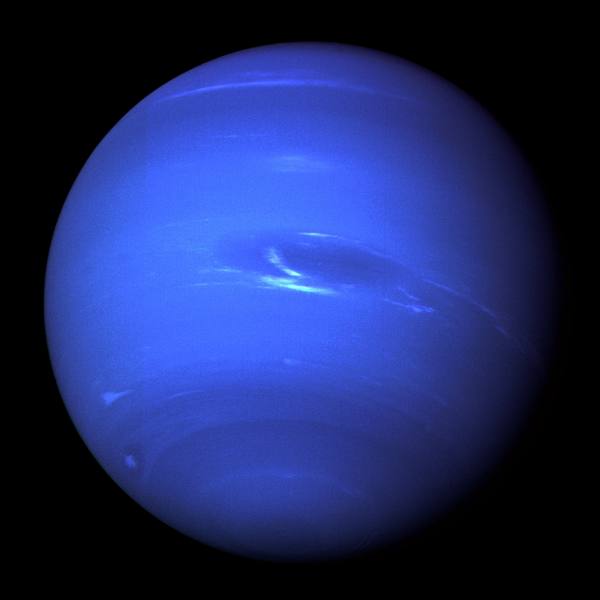
  3. August 25, 1989Voyager 2 flies past Neptune

    On August 25, 1989, NASA's Voyager 2 flew about 2,980 miles (4,800 kilometers) over the cloud tops of Neptune, the closest of its four planetary flybys and the first time a human-made object had flown by the planet. NASA says the spacecraft found four new rings, winds of 680 miles per hour (1,100 kilometers per hour) and a nitrogen ice "volcano" on the moon Triton, and that the flyby concluded its planetary encounters.[94]

  4. October 17, 1989Loma Prieta earthquake strikes before a World Series game

    A magnitude 6.9 earthquake struck the California coast from Monterey to San Francisco on October 17, 1989, minutes before the scheduled start of the third game of the World Series in San Francisco. The U.S. Geological Survey says the quake, centered near Loma Prieta peak, killed 63 people and caused an estimated $6 billion to $10 billion in property loss, and 42 people died when part of the Cypress freeway in Oakland collapsed.[95]

  5. November 9, 1989The Berlin Wall falls

    On November 9, 1989, East Germany fully opened its borders, including the gate at the Berlin Wall, and thousands of Germans from East and West climbed over the wall and began to dismantle it with shovels and hammers. The Miller Center says the wall had stood since 1961 as a symbolic barrier between East and West, and that Hungary and Austria had opened their border earlier in 1989.[93]

TIME’s honour of the year
  • Man of the Decade: Mikhail GorbachevTIME[96]

No. 1 songLook Away · Chicago[11]

Top film at the U.S. box officeBatman[97]

New

What it brought

Things that arrived or took off in the 1980s. Swipe through them.

  • Photo: inunami, via Wikimedia Commons · CC BY 2.0
    New1980Pac-Man

    Toru Iwatani created Pac-Man in 1980. Namco released it in Japan and Midway released it in the United States. The Strong National Museum of Play calls it the best-selling arcade video game ever. ABC aired an animated Pac-Man television show, and the song Pac-Man Fever reached the top 10 of the Billboard Hot 100 in March 1982.[101]

  • Photo: Michael Barera, via Wikimedia Commons · CC BY-SA 4.0
    NewJune 1, 1980CNN

    CNN signed on the air on June 1, 1980, with a news telecast anchored by the husband-and-wife team of Dave Walker and Lois Hart. Britannica calls it television's first 24-hour all-news service. Ted Turner created it as part of his Turner Broadcasting System, and its headquarters are in Atlanta. Britannica says CNN scooped the competition in 1986 with its on-the-spot coverage of the Challenger space shuttle disaster.[102]

  • NewAugust 1, 1981MTV

    MTV debuted just after midnight on August 1, 1981, with the Buggles' Video Killed the Radio Star. Video disc jockeys, called veejays, introduced the videos. Britannica says the network struggled in its early years and then took off, and that singles such as Billie Jean and Beat It from Michael Jackson's Thriller showed that exposure on MTV could propel artists to superstardom.[103]

  • Photo: The wub, via Wikimedia Commons · CC BY-SA 4.0
    NewAugust 12, 1981The IBM PC

    On August 12, 1981, Don Estridge unveiled the IBM PC at New York's Waldorf Hotel. It was priced at $1,565 and had 16 kilobytes of RAM and no disk drive. It used an Intel 8088 chip and an operating system from Microsoft that later became known as MS-DOS. IBM says that within a year of launch more than 750 software packages were available for it.[104]

  • Photo: Alessandro Nassiri, Museo Nazionale della Scienza e della Tecnologia Leonardo da Vinci, via Wikimedia Commons · CC BY-SA 4.0
    New1982The compact disc

    Britannica says Philips and Sony coinvented the compact disc in 1980 and that it was introduced commercially in 1982. A laser beam scans the disc to reproduce recorded sound. Britannica says the audio CD has almost completely replaced the phonograph disc for high-fidelity recorded music.[105]

  • NewJanuary 1, 1983The ARPANET switches to TCP/IP

    On January 1, 1983, the ARPANET host protocol changed from NCP to TCP/IP. The Internet Society calls it a flag-day style transition that required all hosts to convert at the same time or be left communicating by ad hoc means. It was planned carefully over several years and went surprisingly smoothly, and buttons were handed out for people who had survived the switch.[106]

  • Jamshid Nurkulov · CC BY 4.0
    NewSeptember 21, 1983The Motorola DynaTAC 8000X

    On September 21, 1983, the FCC approved the Motorola DynaTAC 8000X, which Motorola calls the world's first commercial portable cell phone. Motorola says it took more than 10 years and a $100 million investment. Motorola had publicly demonstrated the first working DynaTAC prototype in New York City on April 3, 1973.[107]

  • NewJanuary 24, 1984The Apple Macintosh

    Apple released the Macintosh on January 24, 1984, with a media campaign that included a TV commercial during the 1984 Super Bowl. It sold for about $2,500 and used a Motorola 68000 microprocessor with 128k of RAM. The Computer History Museum calls its graphical user interface revolutionary and says 70,000 units sold in the first one hundred days.[108]

  • New1985The Nintendo Entertainment System

    Nintendo says the Nintendo Entertainment System launched in North America in 1985, two years after the Family Computer launched in Japan. The system included R.O.B. and the games Duck Hunt and Super Mario Bros. In 1987 the NES became the number one selling toy in North America, and The Legend of Zelda became the first NES game to sell more than 1 million units.[109]

  • MBlairMartin, "IBM PC AT" · CC BY-SA 4.0
    NewNovember 20, 1985Windows 1.0

    Microsoft released Windows 1.0 on November 20, 1985. Its first code name was Interface Manager. It required 256 kilobytes, two double-sided floppy disk drives and a graphics adapter card. Instead of typing MS-DOS commands, users could use a mouse to click through screens with drop-down menus, scroll bars and icons.[110]

  • New1989The Game Boy

    Nintendo says the Game Boy, the first portable, handheld game system with interchangeable Game Paks, launched in the U.S. in 1989, along with Zelda II: The Adventure of Link for the NES. By 2000 Game Boy had topped 110 million units sold worldwide and made up 47% of all U.S. game hardware system sales, which Nintendo calls an all-time high for a portable device.[109]

Gone

What went away

Things the 1980s ended. Swipe through them.

  • Ajay Suresh · CC BY 2.0
    GoneFebruary 2, 1980Studio 54

    On February 2, 1980, Studio 54, the New York City disco that opened on April 26, 1977, closed with a goodbye party. Britannica says this was two days before owners Steve Rubell and Ian Schrager were to begin prison sentences. They had been charged with tax evasion in December 1978, and both were found guilty. The club reopened in 1981 under new owners and closed for good as a disco in 1986.[111]

  • clipperarctic · CC BY-SA 2.0
    GoneApril 18, 1980Southern Rhodesia

    Zimbabwe attained independence on April 18, 1980, according to the U.S. State Department's Office of the Historian. It had been under British sovereignty as Southern Rhodesia. The colony's minority white government had proclaimed a state called Rhodesia in a unilateral declaration of independence in 1965, which the United States never recognized. The United States recognized Zimbabwe on April 18, 1980, when its embassy in Salisbury, now Harare, was established.[112]

  • GoneMay 8, 1980Smallpox

    On 8 May 1980, the 33rd World Health Assembly officially declared the world free of smallpox. WHO says the disease had plagued humanity for at least 3,000 years and killed 300 million people in the 20th century alone. A global commission had certified that smallpox was eradicated on 9 December 1979. WHO says it was ended by a 10-year global effort that it spearheaded, involving thousands of health workers and half a billion vaccinations.[113]

  • Aero Icarus · CC BY-SA 2.0
    GoneMay 12, 1982Braniff International

    Braniff International, an airline that began flying in 1928 with a single tiny plane and became a major international carrier, suspended all flights on Wednesday, May 12, 1982, and told employees to go home. UPI reported it had plunged $1 billion into debt. The board held an emergency meeting before the airline announced that all operations would cease. A spokesman declined to say if a formal bankruptcy petition had been or would be filed.[114]

  • Gone1983The home video game boom

    The Strong National Museum of Play says the video game boom of the late 1970s and early 1980s gave way to the market crash of 1983. More and more third-party developers filled the home console market with new games, and many rushed poorly designed games into stores. The new games also could not compete with increasingly powerful personal computers. Companies went bankrupt, many game developers lost their jobs, and the North American console industry nearly folded. By 1985 the Nintendo Entertainment System filled the home-console void.[115]

  • Ajay Suresh · CC BY 4.0
    GoneJanuary 1, 1984The Bell System

    On January 1, 1984, the American Telephone and Telegraph Company (AT&T) divested itself of a major portion of its organizational structure and functions. A Congressional Research Service report of April 11, 1984, said the once fully integrated Bell System was now reorganized into the new AT&T and seven independent regional holding companies: American Information Technologies, Bell Atlantic, BellSouth, NYNEX, Pacific Telesis, Southwestern Bell and U.S. West.[116]

  • DXR · CC BY-SA 4.0
    GoneJuly 11, 1985New Coke

    On April 23, 1985, The Coca-Cola Company announced a reformulated Coca-Cola, often called new Coke, the first formula change in 99 years. The company says the change set off a firestorm of consumer protest. By June 1985 its consumer hotline was getting 1,500 calls a day, compared with 400 a day before the change. The original formula returned on July 11, 1985, as Coca-Cola classic, ending a period of 79 days.[117]

  • Kev22 · CC BY-SA 4.0
    GoneAugust 5, 1987American Motors

    On Wednesday, August 5, 1987, American Motors Corp. shareholders approved a $2 billion merger with Chrysler Corp. UPI called it the first merger in the U.S. auto industry in more than 30 years. More than 76 percent of all outstanding AMC shares were cast in favor, allowing Chrysler to acquire AMC for $4.50 a share. UPI reported that the vote officially made that day the last day of business for AMC as an independent auto company.[118]

  • GoneDecember 8, 1987Intermediate-range missiles

    On December 8, 1987, President Reagan and General Secretary Gorbachev signed the Intermediate-Range Nuclear Forces (INF) Treaty at a summit meeting in Washington. The State Department says the treaty requires destruction of the two countries' ground-launched ballistic and cruise missiles with ranges of between 500 and 5,500 kilometers, along with their launchers and associated support structures and equipment, within three years after it enters into force. The State Department says its verification regime was the most detailed and stringent in the history of nuclear arms control at the time.[119]

  • Einaz80 · CC BY-SA 4.0
    GoneNovember 9, 1989The Berlin Wall

    For 28 years, from its hasty construction on August 13, 1961, the Berlin Wall stood as a symbol of the Iron Curtain. On November 9, 1989, the government of East Germany released a press statement that was incorrectly interpreted to mean it would grant exit visas from East Germany to West Germany without exception. The National Archives says thousands of East Germans overwhelmed the border guards at the Bornholmer Strasse crossing in Berlin, and the guards made a bloodless decision to let them go.[120]

In memory

Who we lost

Public figures who died in the 1980s, in date order. Tap a photo to see it full size.

  • Jesse Owens1913–1980

    Track-and-field athlete, four gold medals at the 1936 Olympic Games in Berlin

    Died March 31, 1980[121]
  • Alfred Hitchcock1899–1980

    Film director of suspenseful movies and television programs

    Died April 29, 1980[122]
  • John Lennon1940–1980

    Co-leader of the Beatles, solo recording artist

    Died December 8, 1980[123]Tony Barnard, Los Angeles Times, UCLA Library Special Collections (Los Angeles Times Photographic Collection) · CC BY 4.0
  • Joe Louis1914–1981

    Boxer, world heavyweight champion from 1937 to 1949, the longest reign in the history of any weight division

    Died April 12, 1981[124]
  • Bob Marley1945–1981

    Jamaican reggae singer-songwriter

    Died May 11, 1981[125]ETH-Bibliothek Zürich, Bildarchiv / Fotograf: Lüthy, Patrick / Com_L29-0351-0006-0007 · CC BY-SA 4.0
  • Anwar Sadat1918–1981

    President of Egypt from 1970 until his assassination in 1981, shared the Nobel Peace Prize

    Died October 6, 1981[126]
  • Natalie Wood1938–1981

    Film actress who moved from child star (Miracle on 34th Street) to leading roles (Splendor in the Grass, West Side Story)

    Died November 29, 1981[127]Allan Warren · CC BY-SA 3.0
  • John Belushi1949–1982

    Comic actor, original cast member of Saturday Night Live

    Died March 5, 1982[128]
Show 22 more
  • Henry Fonda1905–1982

    Actor in more than 90 films (The Grapes of Wrath, 12 Angry Men)

    Died August 12, 1982[129]Los Angeles Times, Los Angeles Times Photographic Collection, UCLA Library · CC BY 4.0
  • Ingrid Bergman1915–1982

    Swedish actress (Casablanca)

    Died August 29, 1982[130]Digitala stadsmuseet (Stockholm City Museum), photographer unknown · CC BY 4.0
  • Grace Kelly1929–1982

    Oscar-winning actress who married Rainier III, prince de Monaco, in 1956

    Died September 14, 1982[131]
  • Leonid Brezhnev1906–1982

    Soviet statesman and Communist Party official, in effect the leader of the Soviet Union for 18 years

    Died November 10, 1982[132]
  • Karen Carpenter1950–1983

    Pop singer, known for her pure voice

    Died February 4, 1983[133]
  • R. Buckminster Fuller1895–1983

    Engineer, architect and futurist who developed the geodesic dome

    Died July 1, 1983[134]Steve Yelvington · CC BY-SA 4.0
  • Marvin Gaye1939–1984

    Soul singer-songwriter-producer (I Heard It Through the Grapevine)

    Died April 1, 1984[135]Los Angeles Times, Los Angeles Times Photographic Collection, UCLA Library · CC BY 4.0
  • Truman Capote1924–1984

    Writer, In Cold Blood and Breakfast at Tiffany's

    Died August 25, 1984[136]
  • Indira Gandhi1917–1984

    First female prime minister of India

    Died October 31, 1984[137]
  • Rock Hudson1925–1985

    Actor (Giant, Pillow Talk)

    Died October 2, 1985[138]
  • Orson Welles1915–1985

    Actor, director and writer of Citizen Kane

    Died October 10, 1985[139]
  • Dian Fossey1932–1985

    Zoologist, the world's leading authority on the mountain gorilla

    Died December 26, 1985[140]Emmanuel Kwizera (Wikimedia Commons user Emmanuelkwizera) · CC BY-SA 4.0
  • Christa McAuliffe1948–1986

    Teacher chosen to be the first private citizen in space, died in the Challenger disaster

    Died January 28, 1986[141]
  • Liberace1919–1987

    Pianist known for flamboyant costumes and ornate pianos

    Died February 4, 1987[142]Allan Warren · CC BY-SA 3.0
  • Andy Warhol1928–1987

    Artist and filmmaker, leading figure of Pop art

    Died February 22, 1987[143]
  • Fred Astaire1899–1987

    Dancer onstage and in motion pictures, best known for musical comedy films with Ginger Rogers

    Died June 22, 1987[144]Los Angeles Daily News, UCLA Library Special Collections · CC BY 4.0
  • Jackie Gleason1916–1987

    Comedian, Ralph Kramden in The Honeymooners

    Died June 24, 1987[145]Los Angeles Times Photographic Archive, UCLA Library Special Collections / Wikimedia Commons · CC BY 4.0
  • Richard Feynman1918–1988

    Theoretical physicist

    Died February 15, 1988[146]
  • Roy Orbison1936–1988

    Singer-songwriter with an operatic voice (Crying)

    Died December 6, 1988[147]
  • Hirohito1901–1989

    Emperor of Japan from 1926 until his death in 1989

    Died January 7, 1989[148]
  • Lucille Ball1911–1989

    Comedy star of television, I Love Lucy

    Died April 26, 1989[149]
  • Irving Berlin1888–1989

    Composer and songwriter

    Died September 22, 1989[150]
Prices

What it cost

U.S. prices at the end of the decade, and how far they moved from the start of it.

  • A gallon of regular gas[151]
    $0.98▼ 13%
    Dec 1989 · was $1.13 (Jan 1980)

    Peaked at $1.42 in March 1981 and fell to 82.1¢ in November 1986.

  • Famartin · CC BY-SA 4.0
    A dozen eggs[152]
    $1.14▲ 30%
    Dec 1989 · was $0.88 (Jan 1980)

    Peaked at $1.32 in February 1984.

  • rpavich (Flickr) · CC BY 2.0
    A pound of white bread[153]
    $0.69▲ 38%
    Dec 1989 · was $0.50 (Jan 1980)

    December 1989 was the highest month of the decade.

  • A new house (median sale price)[154]
    $124,800▲ 96%
    Q4 1989 · was $63,700 (Q1 1980)

    Q4 1989 was the highest quarter of the decade.

  • G. Edward Johnson · CC BY 4.0
    The federal minimum wage[155]
    $3.35▲ 8%
    Dec 1989 · was $3.10 (Jan 1980)

    Rose to $3.35 on 1 January 1981 and stayed there for the rest of the decade. The next step, to $3.80, came on 1 April 1990.

  • A first-class stamp[156]
    25¢▲ 67%
    Dec 1989 · was 15¢ (Jan 1980)

    Four rate increases in the decade: 18¢ on March 22, 1981, 20¢ on Nov 1, 1981, 22¢ on Feb 17, 1985 and 25¢ on April 3, 1988.

  • Median gross rent[157]
    $447▲ 84%
    1990 census · was $243 (1980 census)

    Census-year medians, not adjusted for inflation.

  • RobbieIanMorrison · CC BY 4.0
    Electricity, per kilowatt-hour[158]
    8.1¢▲ 53%
    Dec 1989 · was 5.3¢ (Jan 1980)

    Peaked at 8.9¢ in August 1984.

By the numbers

The 1980s in numbers

Big numbers from the decade of the arcade and the compact disc.

  • 1.5 billionTelevision viewers Live Aid is estimated to have drawn worldwide on July 13, 1985, for the famine-relief concerts at Wembley Stadium in London and JFK Stadium in Philadelphia. Britannica counts 16 hours of broadcast on 13 satellites and more than 70 performers.[159]
  • 颐园居 · CC BY-SA 4.0
    22.6%How far the Dow Jones Industrial Average fell on October 19, 1987, known as Black Monday. It finished down 508 points, and the Federal Reserve's history says the loss remains the largest one-day stock market decline in history.[76]
  • Ellinor Algin / Tekniska museet · CC BY 4.0
    $1,565Price of the IBM PC when it was unveiled on August 12, 1981, with 16 kilobytes of RAM and no disk drive. Adding a display, two diskette drives and a printer cost nearly $3,000 more. At the peak, IBM says, machines were selling at a rate of one every minute of every business day.[104]
  • Bjoertvedt · CC BY-SA 4.0
    $3,995Price of the Motorola DynaTAC 8000x, which Britannica says Motorola introduced in 1983 as the first portable cell phone for consumers. Britannica adds that the phone was a success despite its price.[160]
  • 61.91 millionFamily Computer/NES game consoles sold worldwide, life to date as of June 30, 2026, according to Nintendo's investor data, which also lists 500.01 million NES games sold.[161]
  • 100,000+AIDS cases reported to the CDC by July 1989, along with more than 59,000 AIDS-related deaths. The first cases were reported in June 1981 from Los Angeles. The first 50,000 cases were reported from 1981 to 1987, and the second 50,000 between December 1987 and July 1989.[162]
  • 60.3%Share of all U.S. households that watched the M*A*S*H finale, "Goodbye, Farewell and Amen," on CBS on February 28, 1983, which Guinness World Records lists as the largest U.S. TV audience rating share. Guinness says some 125 million people were estimated to tune in, a 77% share of all viewing.[163]

Words the decade gave us

  • yuppieA young college-educated adult with a well-paying profession who lives and works in or near a large city. Merriam-Webster dates the first known use to 1980.[164]
  • gridlockA traffic jam in which a grid of intersecting streets is so congested that no vehicle can move; also a situation resembling it, such as political gridlock. Merriam-Webster dates the first known use of the noun to 1980 and of the verb to 1981.[165]
  • spreadsheetA computer program for entering, calculating and storing data in columns and rows; also the ledger layout modeled by such a program. Merriam-Webster dates the first known use to 1980.[166]
  • boom boxA usually large portable stereo radio with a tape or CD player. Merriam-Webster dates the first known use to 1981.[167]
  • cyberspaceThe online world of computer networks, especially the Internet. Merriam-Webster dates the first known use to 1982.[168]
  • moshTo engage in uninhibited, often frenzied activity, such as intentional collision, with others near the stage at a rock concert. Merriam-Webster dates the first known use to 1983.[169]
  • cocooningThe practice of spending leisure time at home in preference to going out. Merriam-Webster dates the first known use to 1986.[170]
  • road rageA motorist's uncontrolled anger, usually triggered by another motorist's action and expressed in aggressive or violent behavior. Merriam-Webster dates the first known use to 1988.[171]
Your records

The paper trail of the 1980s

What changed for family history this decade.

  • April 15, 19821910 U.S. census opens

    On April 15, 1982, the National Archives opened the 1910 census to researchers in Washington, DC, and for sale through its Publications Sales Branch. Archivist of the United States Robert Warner opened it with his wife and his mother-in-law, who found her six-year-old self listed. The census was reproduced on 1,784 rolls of microfilm, which were made available at the regional archives branches later that year. It estimated the U.S. population at 92,228,496, a 21 percent increase over the 76,212,168 counted in 1900.[172]

  • National Park Service · CC BY 2.0
    November 1982The Vietnam Veterans Memorial's names

    The Vietnam Veterans Memorial Fund says 57,939 names were inscribed when the Wall was dedicated in 1982. The names are in chronological order by date of casualty. The Fund says this lets veterans, friends and family members find a loved one by that date, and lets veterans find friends who died in the same incident. The inscription at the end of the names is dated November 11, 1982.[173]

  • Rama and Musée Bolo · CC BY-SA 2.0
    1984Personal Ancestral File is released

    FamilySearch says its genealogy database application, Personal Ancestral File (PAF), was originally released in the spring of 1984. More than 3.2 million copies were distributed. In a post dated June 21, 2013, FamilySearch said PAF had not been updated since 2002 and would be retired beginning July 15, 2013.[174]

  • Wellcome Collection (Science Museum object 1989-870 Pt1) · CC BY 4.0
    1984DNA fingerprinting is discovered

    The University of Leicester says Professor Sir Alec Jeffreys was the first to discover DNA fingerprinting, in 1984. Its chronology lists the first immigration case and the first paternity case solved by DNA fingerprinting, and the first identification of identical twins using it, in 1985. It lists the first criminal investigation to implement DNA fingerprinting evidence in 1986.[175]

  • April 1, 1985The National Archives becomes independent

    The National Archives and Records Administration became an independent agency again on April 1, 1985. Congress had moved the National Archives into the General Services Administration on June 30, 1949. President Reagan signed the bill into law on October 19, 1984, effective April 1, 1985, and the head of the agency became a presidential appointee again. The National Archives says groups of genealogists, educators and other professionals lobbied Congress for the change.[176]

  • October 23, 1985A new Family History Library building

    FamilySearch says its present 142,000-square-foot library building in Salt Lake City was dedicated on October 23, 1985, after which the library was renamed the Family History Library. FamilySearch began in 1894 as the Genealogical Society of Utah, and the library was then known as the Genealogical Library. In January 2023 FamilySearch announced that the Family History Library would be renamed the FamilySearch Library.[177]

  • October 22, 1986Social Security numbers for dependents

    On October 22, 1986, President Reagan signed the Tax Reform Act of 1986. The Social Security Administration says the law required every dependent age 5 or older listed on a tax return to have their own Social Security number. SSA says this doubled its enumeration workload in the following year.[178]

  • November 1986The Immigration Reform and Control Act

    The Library of Congress says Congress enacted the Immigration Reform and Control Act and President Reagan signed it in November 1986. People who had lived in the U.S. continuously since 1982 could apply for legal status in a one-year window from May 1987 to May 1988. They had to pay a fee and provide documents including fingerprints, employment history and proof of continuous residency. The Library estimates that about 3 million people gained legal status. After 1986, employers also had to have new hires fill out an I-9 form.[179]

How your family will be found in 100 years
  • 1980What the 1980 U.S. census asked

    The Census Bureau says about 95 percent of the U.S. population was counted by mail-out/mail-back questionnaire in 1980. The short form had 7 population questions and 11 housing questions, and the long form added 26 population and 10 housing questions. A question on Spanish or Hispanic origin or descent was added to the questions asked of everyone for the first time. Place of birth, naturalization, when the person came to the U.S. to stay, language spoken at home and ancestry were asked of a sample.[180]

  • 2015Color snapshots fade

    The National Archives says the life expectancy of photographs depends on their type and on how they were processed, stored and handled. The dyes in color photographs can fade, shift or discolor, and because cyan fades faster than the other dyes, old images can often look red. Prints that were not thoroughly washed during processing can have yellow or brownish stains. It advises storing photographs in cool, dry areas, away from hot attics and damp basements and garages, and wearing cotton or nitrile gloves when handling them.[181]

  • Zalasem1 · CC BY 4.0
    August 15, 2018Home videotapes and cassettes need digitizing

    On August 15, 2018, the Library of Congress's American Folklife Center announced Memory XFR, a one-day event on August 24 at a DC Public Library branch in Washington. Audiovisual archivists and librarians were to help people digitize analog formats including VHS, VHS-C, S-VHS, MiniDV, DVCAM and audio compact cassettes, as well as slides, negatives and photos. The organizers warned that old and obsolete equipment is not 100 percent reliable even after testing, and that older equipment may also be slower.[182]

  • Gareth Halfacree (Flickr) · CC BY-SA 2.0
    August 23, 2021Floppy disks need special tools to read

    The Library of Congress said in August 2021 that the vast majority of the hundreds of thousands of removable media items in its collections are optical disks and floppy disks. It said finding hardware and software to recover data from floppy disks is a more specialized skill. Its Preservation Services Division uses a KryoFlux to create disk images from floppy disks, and says the KryoFlux can recover data from damaged disks, including one that was partially melted. The Library said that without a tool like the KryoFlux or the original computer, the data on a rare 5.25-inch disk format in one collection might have been lost forever.[183]

  • 20521980 census returns should open around 2052

    Under the 72-year rule (Public Law 95-416, 5 October 1978), the U.S. government does not release personally identifiable information from the decennial census until 72 years after it was collected. The 1940 census was released on April 2, 2012, and the 1950 census on April 1, 2022. Counting 72 years from the 1980 census points to about 2052.[184]

Ask your family

Questions to ask while you can

Ask someone who lived it, and write the answers down. That’s how a family history starts.

Skeleton Files → your family

  1. Do you remember getting the 1980 census form in the mail, and who was living in your home that spring?
  2. What was the first computer, video game console or VCR in our house, and where are the tapes, cartridges and disks from it now?
  3. Which family wedding, birth, move, graduation or trip of the 1980s do you remember most, and where are the photos, home movies or videotapes from that day now: in an album, a shoebox, on a VHS tape or on a floppy disk?
  4. What from the 1980s is already gone that you miss, like a store, a TV show, a toy or a place you hung out, and what do you remember about it?
Start your family’s file

Get the free guide to hiring a genealogist, or open a case and let us trace your family back through the decades.

Sources

Every source on this page

Numbered in the order they first appear.

Show all 184 sources
  1. [1] U.S. Census Bureau: 1980 Census: Population & Housing, Procedural History
  2. [2] World Bank: Population, total, World (SP.POP.TOTL), 1980-1989
  3. [3] U.S. Census Bureau: Home Computers and Internet Use in the United States: August 2000 (Current Population Reports P23-207), Figure 1
  4. [4] Federal Communications Commission: Sixth Report on mobile services competition (FCC 01-192, July 17, 2001), Appendix C, Table 1 (CTIA Semi-Annual Mobile Telephone Industry Survey)
  5. [5] CDC National Center for Health Statistics: Deaths: Final Data for 1999, National Vital Statistics Reports, vol. 49, no. 8, Table 7 (archived copy)
  6. [6] HISTORY: U.S. hockey team beats the Soviets in the Miracle on Ice (This Day in History, February 22)
  7. [7] U.S. Geological Survey: Volcano Watch, Huge eruption of Mount St. Helens recalled
  8. [8] Olympedia: 1980 Summer Olympics Overview
  9. [9] HISTORY: John Lennon's killer sentenced (This Day in History, August 24)
  10. [10] TIME: Person of the Year: A Photo History, Ronald Reagan: 1980, 1983
  11. [11] Billboard: Here's Every Billboard Hot 100 Year-End No. 1 Song
  12. [12] Box Office Mojo: Domestic Box Office For 1980 (In-year releases)
  13. [13] The Strong National Museum of Play: Rubik's Cube
  14. [14] HISTORY: Millions tune in to find out who shot J.R. (This Day in History, November 21, 1980)
  15. [15] TIME: The Walkman (July 1, 2009)
  16. [16] Miller Center, University of Virginia: Ronald Reagan: Key Events (January 20, 1981)
  17. [17] NASA: STS-1
  18. [18] CDC Morbidity and Mortality Weekly Report: Thirty Years of HIV, 1981-2011
  19. [19] The Royal Family: Diana, Princess of Wales
  20. [20] TIME: Person of the Year: A Photo History, Lech Walesa: 1981
  21. [21] Box Office Mojo: Domestic Box Office For 1981 (In-year releases)
  22. [22] The Strong National Museum of Play: Donkey Kong
  23. [23] Britannica: Fernando Valenzuela
  24. [24] Lambiek Comiclopedia: Peyo (Pierre Culliford)
  25. [25] National Army Museum: The British Army and the Falklands War
  26. [26] HISTORY: "E.T. the Extra-Terrestrial" released (This Day in History, June 11)
  27. [27] HISTORY: Cyanide-laced Tylenol kills first three of seven victims (This Day in History, September 29)
  28. [28] HISTORY: Vietnam Veterans Memorial dedicated (This Day in History, November 13)
  29. [29] University of Utah Eccles Health Sciences Library: Utah and the Artificial Heart: Impact and Reflections Forty Years Later
  30. [30] TIME: A Letter From The Publisher (Jan. 3, 1983)
  31. [31] Box Office Mojo: Domestic Box Office For 1982 (In-year releases)
  32. [32] Library of Congress: 'Thriller'--Michael Jackson (1982), essay by Joe Vogel
  33. [33] Computer History Museum: 1982 (Timeline of Computer History)
  34. [34] HISTORY: Jane Fonda's first workout video released (This Day in History, April 24, 1982)
  35. [35] Television Academy: M*A*S*H's Love and War
  36. [36] NASA: STS-7
  37. [37] U.S. Department of State, Office of the Historian: Foreign Relations of the United States, 1981-1988, Volume IV, Soviet Union, January 1983-March 1985, Document 84 (Editorial Note)
  38. [38] HISTORY: Beirut barracks blown up (This Day in History, October 23)
  39. [39] TIME: Men of the Year: Ronald Reagan & Yuri Andropov (Jan. 2, 1984)
  40. [40] Box Office Mojo: Domestic Box Office For 1983 (In-year releases)
  41. [41] HISTORY: What Fueled the 1983 Cabbage Patch Kid Craze?
  42. [42] Britannica: Mr. T
  43. [43] University of Kansas, Cold War in the Heartland: Life and Television in a Cold War Town
  44. [44] HISTORY: Geraldine Ferraro named vice presidential candidate (This Day in History, July 12)
  45. [45] Olympedia: 1984 Summer Olympics Overview
  46. [46] HISTORY: Indira Gandhi (Biography, Achievements & Assassination)
  47. [47] U.S. Chemical Safety Board: On 30th Anniversary of Fatal Chemical Release that Killed Thousands in Bhopal, India, CSB Safety Message Warns it Could Happen Again
  48. [48] TIME: Feeling Proud Again: Olympic Organizer Peter Ueberroth (Jan. 7, 1985)
  49. [49] Box Office Mojo: Domestic Box Office For 1984 (In-year releases)
  50. [50] The Strong National Museum of Play: Trivial Pursuit
  51. [51] Library of Congress: Ghostbusters, essay by Adam Bertocci
  52. [52] The Strong National Museum of Play: Transformers (National Toy Hall of Fame)
  53. [53] HISTORY: Mikhail Gorbachev picked to succeed Konstantin Chernenko (This Day in History, March 11)
  54. [54] HISTORY: Live Aid concert raises more than $100 million for famine relief in Africa (This Day in History, July 13)
  55. [55] HISTORY: Wreck of the Titanic found (This Day in History, September 1)
  56. [56] UPI Archives: Cincinnati Reds player-manager Pete Rose toppled one of baseball's mightiest... (11 Sep 1985)
  57. [57] USGS: Today in Earthquake History, September 19 (M8.0 Michoacan, Mexico, 1985)
  58. [58] TIME: China: Old Wounds Deng Xiaoping (Jan. 6, 1986)
  59. [59] Box Office Mojo: Domestic Box Office For 1985 (In-year releases)
  60. [60] The Strong National Museum of Play: Super Mario Bros.
  61. [61] Young V&A (V&A Collections): Teddy Ruxpin, animated talking teddy bear
  62. [62] HISTORY: First Blockbuster store opens
  63. [63] NASA: STS-51L
  64. [64] UNSCEAR: Assessments of the radiation effects from the Chernobyl nuclear reactor accident
  65. [65] National Park Service: Statue of Liberty National Monument: Restoring the Statue (1982 - 1986)
  66. [66] SABR Games Project: October 25, 1986: 'A little roller up along first': Mets win wild Game Six on Buckner error
  67. [67] HISTORY: Iran-Contra connection revealed (This Day in History, November 25)
  68. [68] TIME: Person of the Year: A Photo History, Corazon Aquino: 1986
  69. [69] Box Office Mojo: Domestic Box Office For 1986 (In-year releases)
  70. [70] CBS News: May 25, 1986: Millions participate in Hands Across America
  71. [71] HISTORY: Oprah goes national (This Day in History, September 8, 1986)
  72. [72] Library of Congress: National Film Registry, Brief Descriptions and Expanded Essays (Ferris Bueller's Day Off entry)
  73. [73] National Archives, Prologue Magazine (Summer 2007): Peter Robinson, "Tear Down This Wall"
  74. [74] United Nations: International Day for the Preservation of the Ozone Layer, 16 September
  75. [75] HISTORY: Baby Jessica rescued from a well as the world watches (This Day in History, October 16)
  76. [76] Federal Reserve History: Stock Market Crash of 1987
  77. [77] TIME: Mikhail Gorbachev of the Soviet Union (Jan. 4, 1988)
  78. [78] Box Office Mojo: Domestic Box Office For 1987 (In-year releases)
  79. [79] Library of Congress: 'The Joshua Tree'--U2 (1987), essay by Stephen Catanzarite
  80. [80] Virginia Tourism Corporation: Dirty Dancing
  81. [81] Television Academy Interviews: Star Trek: The Next Generation (from the Museum of Broadcast Communications Encyclopedia of Television)
  82. [82] NASA Global Precipitation Measurement: What's in a Name? Global Warming vs. Climate Change
  83. [83] National Park Service: Yellowstone National Park: 1988 Fires
  84. [84] Olympedia: 1988 Summer Olympics Overview
  85. [85] George Bush Presidential Library and Museum: Mr. President
  86. [86] HISTORY: Pan Am Flight 103: The Lockerbie Bombing
  87. [87] TIME: Planet Of The Year: What on EARTH Are We Doing? (Jan. 2, 1989)
  88. [88] Box Office Mojo: Domestic Box Office For 1988 (In-year releases)
  89. [89] Library of Congress: Die Hard, essay by Eric Lichtenfeld
  90. [90] HISTORY: 'Roseanne' debuts (This Day in History, October 18, 1988)
  91. [91] Library of Congress: 'Who Framed Roger Rabbit': National Film Registry #28 (Now See Hear!, December 2018)
  92. [92] NOAA Office of Response and Restoration: Exxon Valdez Oil Spill
  93. [93] Miller Center, University of Virginia: George H. W. Bush: Key Events (Tiananmen Square Massacre, June 4, 1989)
  94. [94] NASA: Voyager 2
  95. [95] USGS: Progress Toward a Safer Future Since the 1989 Loma Prieta Earthquake (Fact Sheet 151-99)
  96. [96] TIME: Gorbachev: The Unlikely Patron of Change (Jan. 1, 1990)
  97. [97] Box Office Mojo: Domestic Box Office For 1989 (In-year releases)
  98. [98] Library of Congress: Page From the Past: A Show About Nothing (Timeless blog, May 2015)
  99. [99] MLB.com: The lasting impact of the film Field of Dreams
  100. [100] Library of Congress National Film Registry essay: Do the Right Thing, by David Sterritt
  101. [101] The Strong National Museum of Play: Pac-Man (World Video Game Hall of Fame)
  102. [102] Britannica: CNN
  103. [103] Britannica: MTV
  104. [104] IBM: The IBM PC
  105. [105] Britannica: Compact disc (CD)
  106. [106] Internet Society: A Brief History of the Internet
  107. [107] Motorola Solutions: Cell Phone Development
  108. [108] Computer History Museum: This Day in History, January 24
  109. [109] Nintendo of America Press Center: Company History
  110. [110] Microsoft UK TechNet blog (Microsoft Learn archive): History of Windows
  111. [111] Britannica: Studio 54
  112. [112] U.S. Department of State, Office of the Historian: Zimbabwe (Countries)
  113. [113] WHO: Commemorating Smallpox Eradication, a legacy of hope, for COVID-19 and other diseases (8 May 2020)
  114. [114] UPI Archives: Braniff International, an upstart airline that began flying in... (12 May 1982)
  115. [115] The Strong National Museum of Play: What Video Game Crash?
  116. [116] Congressional Research Service (via EveryCRSReport): The American Telephone and Telegraph Divestiture: Background, Provisions, and Restructuring (11 April 1984)
  117. [117] The Coca-Cola Company: New Coke, The Most Memorable Marketing Blunder Ever?
  118. [118] UPI Archives: American Motors Corp. shareholders Wednesday overwhelmingly approved a historic... (5 Aug 1987)
  119. [119] U.S. Department of State, Bureau of Arms Control, Verification and Compliance: Intermediate-Range Nuclear Forces Treaty (INF Treaty)
  120. [120] National Archives: Marking the 30th Anniversary of the Berlin Wall's Fall
  121. [121] Britannica: Jesse Owens
  122. [122] Britannica: Alfred Hitchcock
  123. [123] Britannica: John Lennon
  124. [124] Britannica: Joe Louis
  125. [125] Britannica: Bob Marley
  126. [126] Britannica: Anwar Sadat
  127. [127] Britannica: Natalie Wood
  128. [128] Britannica: John Belushi
  129. [129] Britannica: Henry Fonda
  130. [130] Britannica: Ingrid Bergman
  131. [131] Britannica: Grace Kelly
  132. [132] Britannica: Leonid Brezhnev
  133. [133] Encyclopedia.com (Women in World History): Carpenter, Karen (1950-1983)
  134. [134] Britannica: R. Buckminster Fuller
  135. [135] Britannica: Marvin Gaye
  136. [136] Britannica: Truman Capote
  137. [137] Britannica: Indira Gandhi
  138. [138] Britannica: Rock Hudson
  139. [139] Britannica: Orson Welles
  140. [140] Britannica: Dian Fossey
  141. [141] Britannica: Christa Corrigan McAuliffe
  142. [142] Britannica: Liberace
  143. [143] Britannica: Andy Warhol
  144. [144] Britannica: Fred Astaire
  145. [145] Britannica: Jackie Gleason
  146. [146] Britannica: Richard Feynman
  147. [147] Britannica: Roy Orbison
  148. [148] Britannica: Hirohito
  149. [149] Britannica: Lucille Ball
  150. [150] Britannica: Irving Berlin
  151. [151] U.S. Energy Information Administration, Monthly Energy Review, Table 9.4: Retail Motor Gasoline and On-Highway Diesel Fuel Prices (Unleaded Regular Gasoline, U.S. City Average Retail Price, monthly)
  152. [152] U.S. Bureau of Labor Statistics, Average Price Data, series APU0000708111 (1980 to 1989)
  153. [153] U.S. Bureau of Labor Statistics, Average Price Data, series APU0000702111 (1980 to 1989)
  154. [154] FRED (U.S. Census Bureau and HUD): Median Sales Price of New Houses Sold for the United States (MSPUS), quarterly
  155. [155] U.S. Department of Labor, Wage and Hour Division: History of Federal Minimum Wage Rates Under the Fair Labor Standards Act, 1938 - 2009
  156. [156] USPS: Rates for Domestic Letters Since 1863
  157. [157] U.S. Census Bureau, Historical Census of Housing Tables: Median Gross Rents, Unadjusted (1940 to 2000)
  158. [158] U.S. Bureau of Labor Statistics, Average Price Data, series APU000072610 (1980 to 1989)
  159. [159] Britannica: Live Aid
  160. [160] Britannica: Martin Cooper
  161. [161] Nintendo: Dedicated Video Game Sales Units (investor relations)
  162. [162] CDC MMWR, Aug. 18, 1989: First 100,000 Cases of Acquired Immunodeficiency Syndrome, United States
  163. [163] Guinness World Records: Largest US TV audience, rating share
  164. [164] Merriam-Webster: yuppie (entry)
  165. [165] Merriam-Webster: gridlock (entry)
  166. [166] Merriam-Webster: spreadsheet (entry)
  167. [167] Merriam-Webster: boom box (entry)
  168. [168] Merriam-Webster: cyberspace (entry)
  169. [169] Merriam-Webster: mosh (entry)
  170. [170] Merriam-Webster: cocooning (entry)
  171. [171] Merriam-Webster: road rage (entry)
  172. [172] National Archives, Prologue blog: Public Access to Census Records at the National Archives (17 Mar 2022)
  173. [173] Vietnam Veterans Memorial Fund: The Names
  174. [174] FamilySearch Blog: Personal Ancestral File (PAF) Discontinued (21 June 2013)
  175. [175] University of Leicester: Chronology of DNA fingerprinting at Leicester
  176. [176] National Archives, Prologue blog: NARA Turns 40 (26 Mar 2025)
  177. [177] FamilySearch Blog: The Family History Library Is Now the FamilySearch Library, All About the New Name (10 Jan 2023)
  178. [178] Social Security Administration, Social Security History: Tax Reform Act of 1986 (archived copy)
  179. [179] Library of Congress Research Guides: 1986: Immigration Reform and Control Act of 1986 (A Latinx Resource Guide)
  180. [180] U.S. Census Bureau: Decennial Census Questionnaires & Instructions, 1980 Census
  181. [181] National Archives, Prologue (Fall 2015): Preserving Family Photos
  182. [182] Library of Congress, Folklife Today: Memory XFR offers a chance to learn about digitizing family memories captured on tape, slides or video (15 Aug 2018)
  183. [183] Library of Congress, Guardians of Memory: Kilobytes of Cultural Heritage, Preserving Collections on Floppy Disks (23 Aug 2021)
  184. [184] U.S. Census Bureau: The 72-Year Rule
Show the credits for all 151 pictures
  • Alfred Hitchcock, head-and-shoulders portrait: Fred Palumbo, New York World-Telegram and the Sun Newspaper Photograph Collection, Library of Congress Prints and Photographs Division (LC-USZ62-121483; digital ID cph.3c21483). Public domain · Source
  • Amoco Gas, Lincoln, Nebraska: John Margolies, John Margolies Roadside America photograph archive (1972-2008), Library of Congress, Prints and Photographs Division (LC-MA05-5304; LCCN 2017707397). No known restrictions on publication · Source
  • Apartment complex, Washington, D.C.: Carol M. Highsmith, Library of Congress, Prints and Photographs Division (LC-HS503-5386; LCCN 2011634088). No known restrictions on publication · Source
  • 1980 census short-form questionnaire (page 2): U.S. Census Bureau. U.S. federal government work · Source
  • CNN Center, Atlanta: Photo: Michael Barera, via Wikimedia Commons (CC BY-SA 4.0). CC BY-SA 4.0 (license) · Source
  • An open carton of a dozen eggs: Famartin, CC BY-SA 4.0, via Wikimedia Commons. CC BY-SA 4.0 (license) · Source
  • A Siemens electromechanical electricity meter: RobbieIanMorrison, CC BY 4.0, via Wikimedia Commons. CC BY 4.0 (license) · Source
  • Jesse Owens with President Gerald Ford at the Presidential Medal of Freedom ceremony: White House Photographic Office, Gerald R. Ford Presidential Library; National Archives and Records Administration (NAID 7062576). Public domain · Source
  • John Lennon being interviewed in Los Angeles: Tony Barnard, Los Angeles Times, UCLA Library Special Collections (Los Angeles Times Photographic Collection), CC BY 4.0, via Wikimedia Commons; restored (dust and scratches removed). CC BY 4.0 (license) · Source
  • U.S. Department of Labor headquarters: G. Edward Johnson, CC BY 4.0, via Wikimedia Commons. CC BY 4.0 (license) · Source
  • USA - Soviet Union hockey match, Lake Placid, February 22, 1980: Henry Zbyszynski (Flickr: hankzby), CC BY 2.0, via Wikimedia Commons. Cropped from the original.. CC BY 2.0 (license) · Source
  • Opening ceremony of the 1980 Summer Olympics, Moscow: Yu. Korolev / Moscow Main Archive (Главархив Москвы), via mos.ru, CC BY 4.0, via Wikimedia Commons. CC BY 4.0 (license) · Source
  • Mount St. Helens ash plume, May 18, 1980: Donald A. Swanson, USGS Cascades Volcano Observatory (U.S. Geological Survey, public domain). U.S. federal government work · Source
  • Pac-Man arcade machine, Nagoya City Museum: Photo: inunami, via Wikimedia Commons (CC BY 2.0). CC BY 2.0 (license) · Source
  • A scrambled 3x3 Rubik's Cube: Thenror, CC BY-SA 4.0, via Wikimedia Commons. CC BY-SA 4.0 (license) · Source
  • Smallpox vaccination kit components: James Gathany / Centers for Disease Control and Prevention (CDC), Public Health Image Library #2674, public domain, via Wikimedia Commons. U.S. federal government work · Source
  • Sony Walkman TPS-L2 on display, Tokyo: Yoshikazu TAKADA, via Flickr and Wikimedia Commons, CC BY 2.0. CC BY 2.0 (license) · Source
  • Air Rhodesia Boeing 720 at Salisbury Airport: clipperarctic, CC BY-SA 2.0, via Wikimedia Commons. CC BY-SA 2.0 (license) · Source
  • Main house at Southfork Ranch, Parker, Texas: Carol M. Highsmith, Library of Congress, Prints and Photographs Division (The Lyda Hill Texas Collection of Photographs in Carol M. Highsmith's America Project). No known restrictions on publication · Source
  • Studio 54 theatre, Midtown Manhattan: Ajay Suresh, CC BY 2.0, via Wikimedia Commons. CC BY 2.0 (license) · Source
  • Suburban cul-de-sac: Carol M. Highsmith, Library of Congress, Prints and Photographs Division (LC-HS503-5613; LCCN 2011635725). No known restrictions on publication · Source
  • South entrance of the Dakota, 1 West 72nd Street, New York (1965): Jack Boucher, Historic American Buildings Survey, National Park Service; Library of Congress, Prints and Photographs Division (HABS NY,31-NEYO,74--4). Cropped to remove the negative border.. U.S. federal government work · Source
  • A blue U.S. Postal Service mailbox: Elliott R. Plack, CC0, via Wikimedia Commons. CC0 1.0 (license) · Source
  • A Pullman loaf of bread: rpavich (Flickr), CC BY 2.0, via Wikimedia Commons. CC BY 2.0 (license) · Source
  • President Anwar Sadat of Egypt: Warren K. Leffler or Marion S. Trikosko, U.S. News & World Report Magazine Photograph Collection, Library of Congress Prints and Photographs Division (LC-DIG-ppmsca-09814). Public domain · Source
  • Bob Marley performing in Zürich: ETH-Bibliothek Zürich, Bildarchiv / Fotograf: Lüthy, Patrick / Com_L29-0351-0006-0007 / CC BY-SA 4.0. CC BY-SA 4.0 (license) · Source
  • Nintendo Donkey Kong arcade circuit board: Cyberjobe, via Wikimedia Commons, public domain. Public domain · Source
  • Fernando Valenzuela pitching, 1986: Marsha Traeger, Los Angeles Times, via UCLA Library Digital Collections and Wikimedia Commons, CC BY 4.0. CC BY 4.0 (license) · Source
  • HIV-1 budding from a cultured lymphocyte (scanning electron micrograph, 1984): CDC / C. Goldsmith, P. Feorino, E. L. Palmer, W. R. McManus, CDC Public Health Image Library (PHIL #1197). U.S. federal government work · Source
  • IBM Personal Computer Model 5150 in the Tekniska museet collection: Ellinor Algin / Tekniska museet, CC BY 4.0; via DigitaltMuseum and Wikimedia Commons. CC BY 4.0 (license) · Source
  • IBM PC (1981), Computer History Museum: Photo: The wub, via Wikimedia Commons (CC BY-SA 4.0). CC BY-SA 4.0 (license) · Source
  • Portrait of boxer Joe Louis: Carl Van Vechten, Van Vechten Collection, Library of Congress Prints and Photographs Division (LC-USZ62-109776). Public domain · Source
  • On the set of MTV Music Television, New York, 1982: Photo: Bernard Gotfryd, 1982. Library of Congress, Prints and Photographs Division (LC-DIG-gtfy-00094), via Wikimedia Commons. No known restrictions on publication.. No known restrictions on publication · Source
  • Natalie Wood at her London home: Allan Warren, CC BY-SA 3.0, via Wikimedia Commons. CC BY-SA 3.0 (license) · Source
  • President Reagan at his first Cabinet meeting after the assassination attempt, April 24, 1981: White House Photographic Office, Ronald Reagan Presidential Library / National Archives (public domain). U.S. federal government work · Source
  • President Ronald Reagan giving the inaugural address, January 20, 1981: White House Photographic Office, Ronald Reagan Presidential Library / National Archives (public domain). U.S. federal government work · Source
  • Smurf figurines in the Museum of Childhood, London: Cristian Bortes, via Flickr and Wikimedia Commons, CC BY 2.0. CC BY 2.0 (license) · Source
  • Space Shuttle Columbia lifts off on STS-1, April 12, 1981: NASA. U.S. federal government work · Source
  • West front of St Paul's Cathedral, London: Acabashi, CC BY-SA 4.0, via Wikimedia Commons. CC BY-SA 4.0 (license) · Source
  • Memorial to Dr. Barney Clark, Provo, Utah: Ben P L, "In Memory of Dr. Barney Clark" (Flickr), CC BY-SA 2.0, via Wikimedia Commons (resized). CC BY-SA 2.0 (license) · Source
  • Braniff International Boeing 747-200 at London Gatwick: Aero Icarus, CC BY-SA 2.0, via Wikimedia Commons. CC BY-SA 2.0 (license) · Source
  • A 1910 census population schedule sheet from Odessa Precinct, Washington: U.S. Census Bureau (U.S. federal government work); via Wikimedia Commons. U.S. federal government work · Source
  • Commodore 64: Evan-Amos, via Wikimedia Commons, public domain. Public domain · Source
  • The 1982 Liberation Memorial in Stanley, Falkland Islands: John5199 (Flickr), CC BY 2.0, via Wikimedia Commons. CC BY 2.0 (license) · Source
  • Princess Grace of Monaco at the Floriade, 1972: Hans Peters for Anefo, Nationaal Archief (Dutch National Archives, item 925-8823), CC0 1.0, via Wikimedia Commons. CC0 1.0 (license) · Source
  • Henry Fonda at his Los Angeles home with one of his paintings: Los Angeles Times, Los Angeles Times Photographic Collection, UCLA Library, CC BY 4.0, via Wikimedia Commons. CC BY 4.0 (license) · Source
  • Ingrid Bergman, 1939: Digitala stadsmuseet (Stockholm City Museum), photographer unknown, CC BY 4.0, via Wikimedia Commons; cropped. CC BY 4.0 (license) · Source
  • Jane Fonda at the 2025 Cannes Film Festival: Gabriel Hutchinson (WikiPortraits), CC BY-SA 4.0, via Wikimedia Commons. CC BY-SA 4.0 (license) · Source
  • Johnson & Johnson headquarters, New Brunswick, New Jersey: Daderot / Wikimedia Commons (public domain). Public domain · Source
  • Leonid Brezhnev, 1972: Fotocollectie Anefo, Nationaal Archief (Dutch National Archives, item 925-6564), photographer not named by the archive, CC0 1.0, via Wikimedia Commons. CC0 1.0 (license) · Source
  • Michael Jackson at the White House, 1984: Ronald Reagan Presidential Library (White House photograph C21788-18), via Wikimedia Commons. U.S. federal government work · Source
  • Sony CDP-101 compact disc player: Photo: Alessandro Nassiri, Museo Nazionale della Scienza e della Tecnologia Leonardo da Vinci, via Wikimedia Commons (CC BY-SA 4.0). CC BY-SA 4.0 (license) · Source
  • The Reagans with Steven Spielberg before a White House showing of E.T., June 27, 1982: White House Photographic Office, Ronald Reagan Presidential Library / National Archives (public domain). U.S. federal government work · Source
  • Joint services color guard at the dedication of the Vietnam Veterans Memorial, November 1982: Mickey Sanborn, U.S. Department of Defense (DefenseImagery.mil, DF-ST-84-11922). U.S. federal government work · Source
  • Names etched into the Vietnam Veterans Memorial: National Park Service, CC BY 2.0; via Flickr and Wikimedia Commons. CC BY 2.0 (license) · Source
  • BBN map of the ARPANET, August 25, 1983: Map: BBN Technologies, Cambridge, Massachusetts, 1983. Photograph uploaded to Wikimedia Commons by Daderot (public domain).. Public domain · Source
  • Babyland General Hospital, Cleveland, Georgia: Michael Rivera, via Wikimedia Commons, CC BY-SA 4.0 (cropped). CC BY-SA 4.0 (license) · Source
  • Beirut Memorial, Jacksonville, North Carolina: Leonard J. DeFrancisci, CC BY-SA 4.0, via Wikimedia Commons. CC BY-SA 4.0 (license) · Source
  • Space Shuttle Challenger lands at Edwards Air Force Base, STS-7, June 24, 1983: NASA (image s83-35790), via NASA on The Commons. U.S. federal government work · Source
  • Nintendo Family Computer (Famicom) console with controllers: Evan-Amos, public domain; via Wikimedia Commons. Public domain · Source
  • Atari 2600 four-switch console with joystick: Evan-Amos, public domain, via Wikimedia Commons. Public domain · Source
  • Karen and Richard Carpenter at the White House, 1972: White House Photographic Office (Nixon Administration), photographer Robert L. Knudsen; National Archives and Records Administration (NAID 194770); cropped. Public domain · Source
  • Korean Air Lines Boeing 747-230B HL7440 at Honolulu, January 1985: Kambui (M. Oertle), Flickr, CC BY 2.0, via Wikimedia Commons. CC BY 2.0 (license) · Source
  • M*A*S*H filming site crossroads sign, Malibu Creek State Park: National Park Service, Santa Monica Mountains National Recreation Area (public domain), via Flickr and Wikimedia Commons. U.S. federal government work · Source
  • 3rd Republic of Korea Mobile Army Surgical Hospital, Wonju, Korea, September 1951: U.S. Army photograph (Signal Corps series 111-SC), National Archives, NARA ID 531416 (file 111-SC-380826), public domain. U.S. federal government work · Source
  • Minuteman missile in its silo, Whiteman Air Force Base: TSgt Bob Wickley, U.S. Air Force (DoD Defense Visual Information Center, ID DFST8203511), via Wikimedia Commons. U.S. federal government work · Source
  • Mobira Cityman 450 handheld mobile phone (representative, not a DynaTAC): Jamshid Nurkulov, CC BY 4.0, via Wikimedia Commons (resized). CC BY 4.0 (license) · Source
  • R. Buckminster Fuller with his domed city design: Steve Yelvington, CC BY-SA 4.0, via Wikimedia Commons; cropped. CC BY-SA 4.0 (license) · Source
  • Simonsen (Simrad) NMT carry-bag mobile phone (representative, not a DynaTAC): Bjoertvedt, CC BY-SA 4.0, via Wikimedia Commons (resized; Norwegian Telecom Museum exhibit). CC BY-SA 4.0 (license) · Source
  • The A-Team cast at Circuit Zandvoort, 1984: Fotopersbureau De Boer, Noord-Hollands Archief, via Wikimedia Commons, CC0. CC0 1.0 (license) · Source
  • AT&T Long Lines Building, 33 Thomas Street: Ajay Suresh, CC BY 4.0, via Wikimedia Commons. CC BY 4.0 (license) · Source
  • The abandoned Bhopal plant site: Julian Nyča / Wikimedia Commons, CC BY-SA 3.0. CC BY-SA 3.0 (license) · Source
  • Delegates at the 1984 Democratic National Convention: Los Angeles Times Photographic Collection, UCLA Library Special Collections, CC BY 4.0 (via Wikimedia Commons). CC BY 4.0 (license) · Source
  • Autoradiograph of the first genetic fingerprint, 1984: Wellcome Collection (Science Museum object 1989-870 Pt1), CC BY 4.0; via Wikimedia Commons. CC BY 4.0 (license) · Source
  • Ghostbusters Firehouse (Hook & Ladder No. 8), Manhattan: Chris6d, via Wikimedia Commons, CC BY-SA 4.0. CC BY-SA 4.0 (license) · Source
  • Assassination spot, Indira Gandhi Memorial Museum: Madhrakangri / Wikimedia Commons, CC BY 4.0. CC BY 4.0 (license) · Source
  • Indira Gandhi: White House Photographic Office (Reagan Administration), National Archives and Records Administration, via Digital Public Library of America; cropped. U.S. federal government work · Source
  • Los Angeles Coliseum on opening day, 1984 Olympics: U.S. Air Force photo, U.S. Department of Defense (VIRIN DD-SC-85-08929). U.S. federal government work · Source
  • Macintosh 128K, 1984: Photo: Bernard Gotfryd. Library of Congress, Prints and Photographs Division (LC-DIG-gtfy-01855); cropped and retouched version on Wikimedia Commons. No known restrictions on publication.. No known restrictions on publication · Source
  • Marvin Gaye performing at the Forum, 1974: Los Angeles Times, Los Angeles Times Photographic Collection, UCLA Library, CC BY 4.0, via Wikimedia Commons; cropped. CC BY 4.0 (license) · Source
  • Takara Masterpiece MP-10 Convoy (Optimus Prime) toy: Carlos Pacheco, via Flickr and Wikimedia Commons, CC BY 2.0 (cropped). CC BY 2.0 (license) · Source
  • Compaq Portable computer at the Musée Bolo: Rama and Musée Bolo, CC BY-SA 2.0 FR; cropped from the original; via Wikimedia Commons. CC BY-SA 2.0 (license) · Source
  • Trivial Pursuit played aboard Air Force One, 1985: White House Photographic Office, Ronald Reagan Library (National Archives), via DPLA and Wikimedia Commons. U.S. federal government work · Source
  • Truman Capote: Roger Higgins, New York World-Telegram and the Sun Newspaper Photograph Collection, Library of Congress Prints and Photographs Division (cph.3c19336). No known restrictions on publication · Source
  • A Blockbuster Video store in Anchorage, Alaska (2018): Jon Konrath, CC BY 2.0, via Wikimedia Commons. CC BY 2.0 (license) · Source
  • Bob Geldof, organiser of Live Aid: Stefan Schäfer, Lich / Wikimedia Commons, CC BY-SA 4.0; resized. CC BY-SA 4.0 (license) · Source
  • Nintendo Family Computer (Famicom) console: Evan-Amos, via Wikimedia Commons (public domain). Public domain · Source
  • Family History Library, Salt Lake City, Utah: Ricardo630, public domain; via Wikimedia Commons. Public domain · Source
  • Gorbachev with Reagan at the Geneva summit: White House Photographic Office, National Archives and Records Administration (via DPLA and Wikimedia Commons). U.S. federal government work · Source
  • IBM Personal Computer/AT on display at the Living Computer Museum: MBlairMartin, "IBM PC AT", CC BY-SA 4.0, via Wikimedia Commons. CC BY-SA 4.0 (license) · Source
  • Collapsed Nuevo Leon building, Mexico City: U.S. Geological Survey, USGS Photographic Library (ID Celebi, M. 34). U.S. federal government work · Source
  • Mountain gorilla, Volcanoes National Park, Rwanda: Emmanuel Kwizera (Wikimedia Commons user Emmanuelkwizera), CC BY-SA 4.0; resized. CC BY-SA 4.0 (license) · Source
  • Pennsylvania Avenue facade of the National Archives Building: Carol M. Highsmith, Library of Congress, Prints and Photographs Division (Carol M. Highsmith Archive). No known restrictions on publication · Source
  • Nintendo Entertainment System console: Photo: Evan-Amos, via Wikimedia Commons (public domain). Public domain · Source
  • Coca-Cola headquarters tower, Atlanta: DXR, CC BY-SA 4.0, via Wikimedia Commons. CC BY-SA 4.0 (license) · Source
  • Orson Welles: Carl Van Vechten, Library of Congress Prints and Photographs Division (digital ID van.5a52776). No known restrictions on publication · Source
  • Riverfront Stadium, Cincinnati: William Alden / Flickr (cropped; via Wikimedia Commons), CC BY-SA 2.0. CC BY-SA 2.0 (license) · Source
  • Rock Hudson: White House Photographic Office (Reagan Administration), National Archives and Records Administration, via Digital Public Library of America. U.S. federal government work · Source
  • Teddy Ruxpin Mechanical Animal (1985): Courtesy of Science History Institute, CC BY 4.0. CC BY 4.0 (license) · Source
  • Telesat-1 communications satellite leaving the Space Shuttle payload bay, April 1985: NASA (U.S. federal government work), photo 51D-31-050; via Wikimedia Commons. U.S. federal government work · Source
  • The bow of the Titanic wreck: Courtesy of NOAA/Institute for Exploration/University of Rhode Island (NOAA/IFE/URI). U.S. federal government work · Source
  • Bronze lion at the Art Institute of Chicago (2020): Raed Mansour, CC BY 2.0, via Wikimedia Commons. CC BY 2.0 (license) · Source
  • Space Shuttle Challenger on its crawler-transporter: NASA, Glenn Research Center collection (via DVIDS and Wikimedia Commons). U.S. federal government work · Source
  • The Chernobyl sarcophagus from above: Vadim Mouchkin / IAEA Imagebank (via Flickr and Wikimedia Commons), CC BY-SA 2.0. CC BY-SA 2.0 (license) · Source
  • Christa McAuliffe: NASA (photo S85-41239). U.S. federal government work · Source
  • Fireworks at Liberty Weekend, 1986: White House Photographic Office, National Archives and Records Administration (via DPLA and Wikimedia Commons). U.S. federal government work · Source
  • Oprah Winfrey, 2016: U.S. Embassy South Africa (U.S. Department of State), public domain, via Wikimedia Commons. U.S. federal government work · Source
  • Reagan announces the Iran policy statement, 25 November 1986: White House Photographic Office, National Archives and Records Administration (via DPLA and Wikimedia Commons). U.S. federal government work · Source
  • President Reagan signs the Immigration Reform and Control Act of 1986: White House Photographic Office; National Archives and Records Administration (U.S. federal government work); via DPLA and Wikimedia Commons. U.S. federal government work · Source
  • President Reagan signs the Tax Reform Act of 1986: White House Photographic Office; National Archives and Records Administration (U.S. federal government work); via DPLA and Wikimedia Commons. U.S. federal government work · Source
  • Aerial view of Shea Stadium, 1981: George Garrigues (GeorgeLouis) / Wikimedia Commons, CC BY-SA 3.0. CC BY-SA 3.0 (license) · Source
  • AMC Eagle Wagon Elegance (1982): Kev22, CC BY-SA 4.0, via Wikimedia Commons. CC BY-SA 4.0 (license) · Source
  • Andy Warhol: Bernard Gotfryd, Library of Congress Prints and Photographs Division (Bernard Gotfryd photograph collection, gtfy.00023). No known restrictions on publication · Source
  • Trading floor of the New York Stock Exchange, 1980s: Carol M. Highsmith, Carol M. Highsmith Archive, Library of Congress, Prints and Photographs Division. No known restrictions on publication · Source
  • Fred Astaire: Los Angeles Daily News, UCLA Library Special Collections, CC BY 4.0; cropped, via Wikimedia Commons. CC BY 4.0 (license) · Source
  • Launching unit for BGM-109G Gryphon missiles: TSGT Rob Marshall, U.S. Air Force (public domain), via Wikimedia Commons / DoD imagery DF-ST-84-09185. U.S. federal government work · Source
  • Jackie Gleason in 1962: Los Angeles Times Photographic Archive, UCLA Library Special Collections / Wikimedia Commons, CC BY 4.0; cropped. CC BY 4.0 (license) · Source
  • Joshua trees in fog, Joshua Tree National Park (2016): NPS / Hannah Schwalbe, Joshua Tree National Park (public domain). U.S. federal government work · Source
  • Liberace: Allan Warren, CC BY-SA 3.0, via Wikimedia Commons. CC BY-SA 3.0 (license) · Source
  • Downtown Midland, Texas: Quintin Soloviev, CC BY 4.0, via Wikimedia Commons. CC BY 4.0 (license) · Source
  • Antarctic ozone hole, October 3, 1985 (NASA visualization): NASA/Goddard Space Flight Center Scientific Visualization Studio. U.S. federal government work · Source
  • Mountain Lake Lodge, Mountain Lake, Virginia (2013): Rolfmueller, CC BY-SA 3.0, via Wikimedia Commons (cropped). CC BY-SA 3.0 (license) · Source
  • New York Stock Exchange building, Broad Street facade: 颐园居, CC BY-SA 4.0; via Wikimedia Commons. CC BY-SA 4.0 (license) · Source
  • Patrick Stewart at Comic-Con, 2013: Gage Skidmore, CC BY-SA 3.0, via Wikimedia Commons (cropped from the original). CC BY-SA 3.0 (license) · Source
  • President Reagan speaking at the Brandenburg Gate, West Berlin: White House Photographic Office, 1981-1989 (National Archives and Records Administration, via the Digital Public Library of America). U.S. federal government work · Source
  • Reagan with the newly elected Bush and Quayle, November 9, 1988: White House Photographic Office, 1981-1989 (National Archives and Records Administration, via the Digital Public Library of America). U.S. federal government work · Source
  • Fox Plaza, 2121 Avenue of the Stars, Century City (2024): Alexis Doine, CC0, via Wikimedia Commons. CC0 1.0 (license) · Source
  • James E. Hansen speaking in Denmark, 2009: Bill Ebbesen (public domain), via Wikimedia Commons. Public domain · Source
  • Pan Am Flight 103 memorial cairn, Arlington National Cemetery: U.S. Army photo by Elizabeth Fraser / Arlington National Cemetery. U.S. federal government work · Source
  • Robert Zemeckis, Tokyo, 2015: Dick Thomas Johnson, CC BY 2.0, via Wikimedia Commons (cropped from the original). CC BY 2.0 (license) · Source
  • Roy Orbison: Jack de Nijs / Anefo, Nationaal Archief (Dutch National Archives), CC0. CC0 1.0 (license) · Source
  • Torchbearers at the Seoul Olympics opening ceremony, 1988: Ken Hackman, U.S. Air Force (via Defense Imagery). U.S. federal government work · Source
  • Firestorm on Mirror Plateau, Yellowstone, 1988: Jim Peaco, National Park Service (Yellowstone Digital Slide Files). U.S. federal government work · Source
  • Row houses on Gates Avenue, Bedford-Stuyvesant, Brooklyn (2022): Andre Carrotflower, CC BY-SA 4.0, via Wikimedia Commons. CC BY-SA 4.0 (license) · Source
  • Crowd at the new opening in the Berlin Wall, Potsdamer Platz, November 14, 1989: Staff Sgt. F. Lee Corkran, U.S. Department of Defense; National Archives (NARA ID 6460115, Record Group 330), public domain. U.S. federal government work · Source
  • Berlin Wall segment along Bernauer Strasse: Einaz80, CC BY-SA 4.0, via Wikimedia Commons. CC BY-SA 4.0 (license) · Source
  • The tanker Exxon Valdez in Prince William Sound, 1989: NOAA's National Ocean Service (NOAA Office of Response and Restoration), CC BY 2.0, via Flickr and Wikimedia Commons. CC BY 2.0 (license) · Source
  • Field of Dreams movie site, Dyersville, Iowa: NOAA/NWS/Quad Cities Weather Service Forecast Office (NOAA Photo Library, Small World Collection). U.S. federal government work · Source
  • Original Nintendo Game Boy: Photo: Evan-Amos, via Wikimedia Commons (public domain). Public domain · Source
  • Hirohito: White House Photographic Office (Reagan Administration), National Archives and Records Administration, via Digital Public Library of America. U.S. federal government work · Source
  • Irving Berlin: Al Aumuller, New York World-Telegram and the Sun Newspaper Photograph Collection, Library of Congress Prints and Photographs Division (cph.3c26707); cropped. No known restrictions on publication · Source
  • Collapsed Cypress Viaduct after the Loma Prieta earthquake: H. G. Wilshire, U.S. Geological Survey. U.S. federal government work · Source
  • Lucille Ball: Harry Warnecke and Robert F. Cranston, National Portrait Gallery, Smithsonian Institution; gift of Elsie M. Warnecke (NPG.94.40). CC0 1.0 (license) · Source
  • First page of the CDC Morbidity and Mortality Weekly Report, July 3, 1981: Centers for Disease Control, Morbidity and Mortality Weekly Report (U.S. federal government work); via Wikimedia Commons. U.S. federal government work · Source
  • Tiananmen (Gate of Heavenly Peace) from Tiananmen Square, September 1984: BabelStone (Andrew West), CC BY-SA 4.0, via Wikimedia Commons (resized). CC BY-SA 4.0 (license) · Source
  • Tom's Restaurant, New York (2005): GabboT, CC BY-SA 2.0, via Wikimedia Commons. CC BY-SA 2.0 (license) · Source
  • Neptune from Voyager 2, August 1989: NASA/JPL. U.S. federal government work · Source
  • Faded color snapshot print of two dogs: RodRabelo7 / Wikimedia Commons (CC0). CC0 1.0 (license) · Source
  • A VHS-C camcorder and cassette: Zalasem1, CC BY 4.0, via Wikimedia Commons. CC BY 4.0 (license) · Source
  • A KryoFlux floppy drive controller: Gareth Halfacree (Flickr), CC BY-SA 2.0, via Wikimedia Commons. CC BY-SA 2.0 (license) · Source
  • Archives II, National Archives research and storage facility: Carol M. Highsmith, Library of Congress, Prints and Photographs Division (LC-HS503-3652; LCCN 2011633193). No known restrictions on publication · Source
Next in the seriesThe 1970s, coming soon. Then the 1960s and on back in time.

Updated October 19, 2026.

Credit:

Rights: